
If there is one thing the British monarchy excels at, it is the illusion of eternal Britishness. The crowns stay polished, the speeches stay gentle, and the castles stay photogenic. But the royal family itself? That’s a different story. Because the Windsors — the quintessentially British Windsors — used to be so German that Oktoberfest might as well have been a royal family reunion.And nothing makes this irony sharper than the modern Britain–Germany camaraderie you see at state banquets, where chandeliers glow, orchestras play, and royal conversation politely avoids mentioning that the family tree once spoke flawless High German. So let’s dive in.Once upon a time, they were the House of Saxe-Coburg and GothaThe Windsors weren’t always Windsors. Their original name was the extremely German Saxe-Coburg and Gotha, a dynastic title straight out of a Wagner opera. It started with Queen Victoria, whose mother was German, and whose beloved Prince Albert was so thoroughly German that he practically radiated orderliness and efficient Christmas tree placement. The Victorian era might feel like a golden age of Britishness now, but genealogically, it was as German as pretzels and philosophy.When Victoria died in 1901, her son Edward VII inherited the throne — and the German surname. But the real plot twist arrived with his son.
King George V: the king who rebranded the monarchy
George V inherited a country at war with Germany. Londoners were smashing sauerkraut barrels, dachshunds were being renamed “liberty hounds,” and a royal family with a German surname was not the vibe.Cue 1917: The greatest royal PR move in history. With one proclamation, George V dumped Saxe-Coburg and Gotha and adopted a name so aggressively British it could have worn tweed: Windsor.Inspired by Windsor Castle, it sounded ancient, noble and patriotic — despite being brand new. The ink dried on the paperwork, the palace letterheads were destroyed, and Britain exhaled in relief. The monarchy was now officially British… at least on paper.
But the German roots didn’t magically vanish
The rebrand was brilliant, but the genealogy? Still very German.Some highlights: Prince Philip, Queen Elizabeth II’s husband, was born into the Greek royal family but descended from German houses with names that could fill three pages of a passport.Queen Mary, wife of George V, was born Mary of Teck — another German branch. Charles III descends from a dense web of German royals stretching across Bavaria, Hanover, Hesse and more. If you printed the family tree and colour-coded the German connections, Buckingham Palace would glow a healthy bratwurst shade. Even today, royal DNA is basically a European buffet.
The irony of modern royal diplomacy
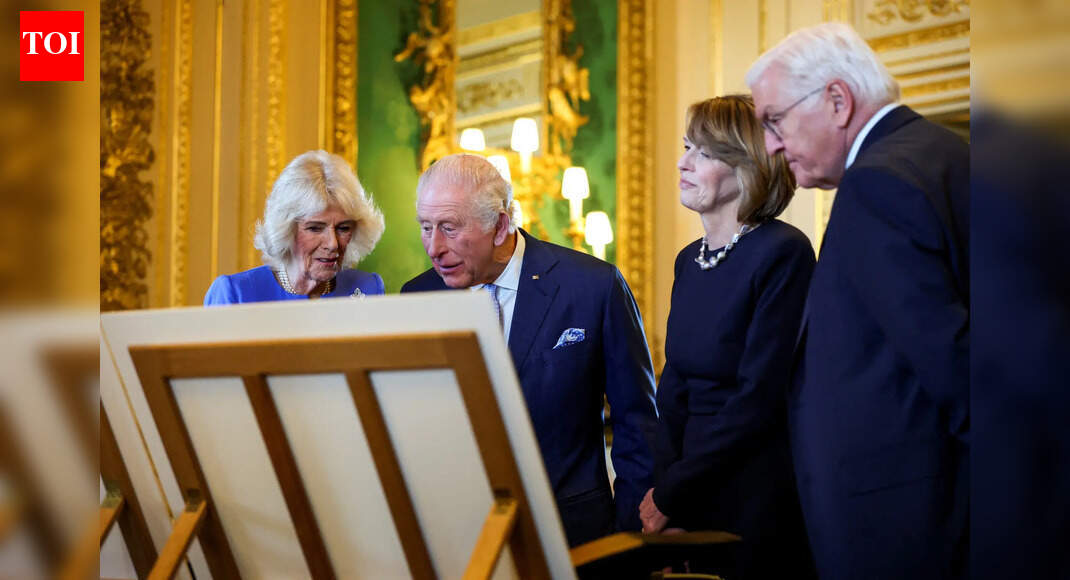
Today, when British monarchs host German leaders with warm speeches about shared values, defence cooperation, and European unity, history quietly smiles. The royal family, once so German it had to rename itself to survive, now plays host with the confidence of a dynasty that has fully assimilated — yet never fully forgotten its origins.You can picture the scene: chandeliers twinkling, musicians playing, German guests mingling with British aristocrats, and a monarch whose ancestors once came from the very lands his guests represent.If there were ever a moment for history to wink, this is it.
How German were the Windsors?
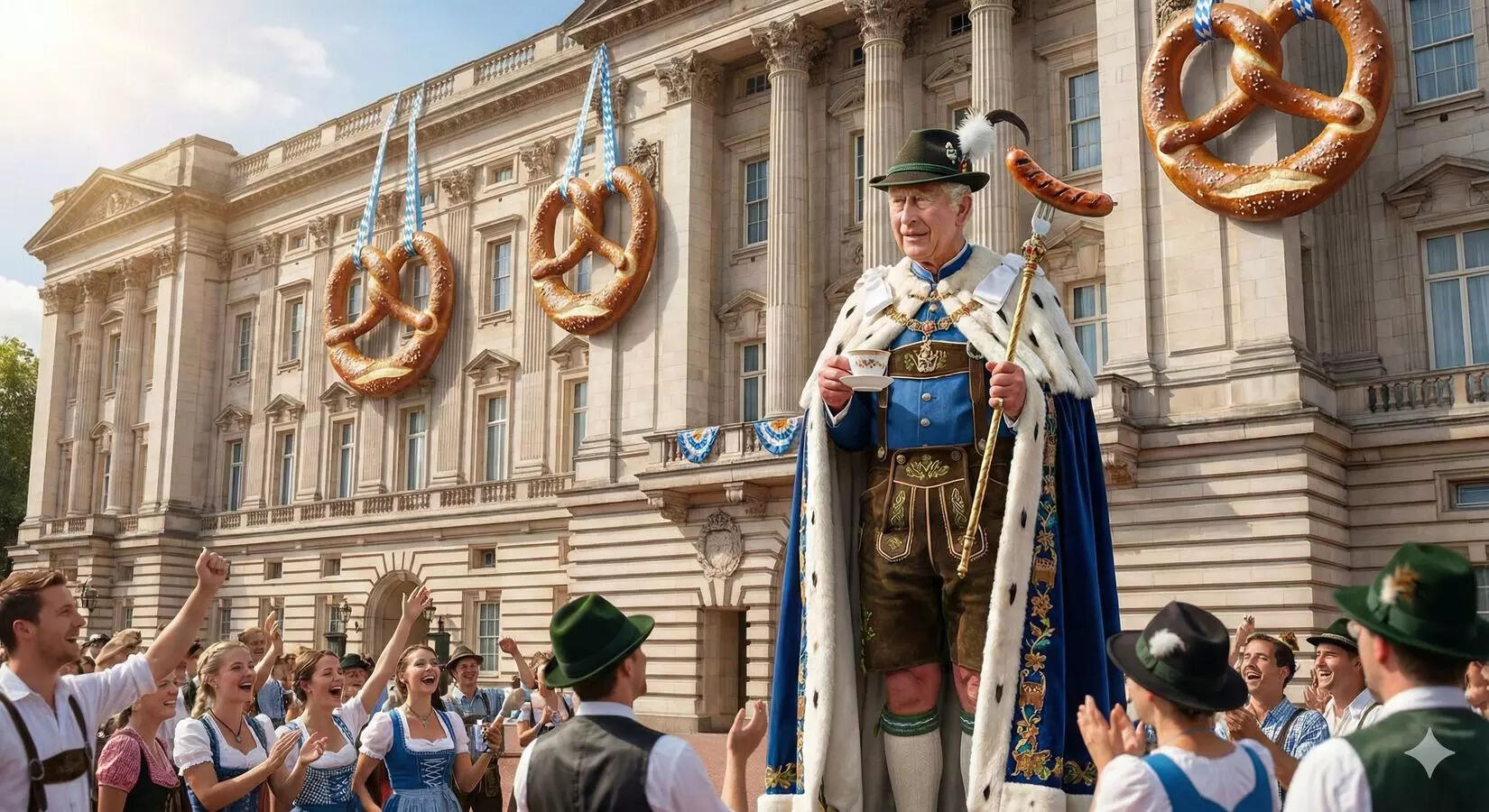
On a scale from 1 to schnitzel: a firm bratwurst-with-sauerkraut.Their original house — Saxe-Coburg and Gotha — was authentically, unmistakably German. Even the Christmas tree tradition Britain loves so dearly was imported directly by Prince Albert. Victorian Christmas? Basically a festive German cultural takeover wrapped in tinsel.During World War I, anti-German sentiment became so strong that the press openly questioned whether the monarchy was too German to rule. The rebrand to Windsor wasn’t just cosmetic — it was survival.
Windsor today: British by name, European by blood
Today the Windsors stand as a symbol of British stability. They sip tea, wave from balconies, and look as though their roots stretch back to Roman Britain. But behind the curated iconography is a family assembled by centuries of intermarriage across Europe.Britishness, in their case, is more costume than chromosome. And that is exactly why their history is so deliciously ironic.In conclusion: the Windsors are Britain’s most successful German importBavarian beer is great, German engineering is legendary, but the most successful German export to the UK was the British royal family itself.A dynasty that began with a German prince and a half-German queen reinvented itself with one stroke of marketing genius — and became the very embodiment of British identity. They may be the Windsors now, but their roots stretch deep into the forests of central Europe. Long live the British monarchy. Or in the original tongue: Lang lebe die Windsors.
About the Author