
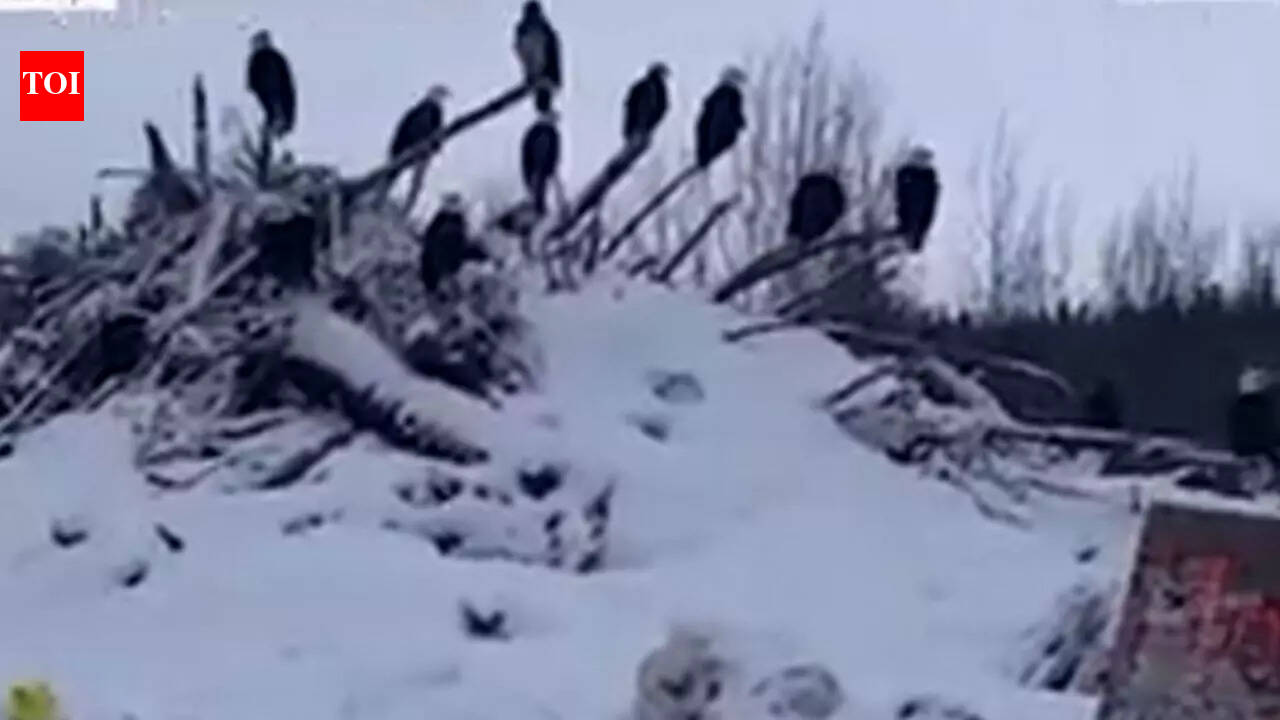
In the frozen mountains of northern British Columbia, there was the unusual occurrence of a rare incident in the wildlife scene where the bald eagles were gathered in their hundreds in one spot, and in the middle of winter. Against the background of mountains laden with snow and the icy river valley, the sight was quite outstanding and unusual. For bald eagles, which stand out in their status as symbols of freedom, power, and dominance in nature, it was highly unusual for them to congregate in such huge numbers because they were predominantly lone animals and territorial in their behaviour patterns. The severity of the weather seemed to have had a huge effect on the eagles, as only limited spaces were available and where their feeds were still accessible.
Why British Columbia’s winter landscapes draw bald eagles together
The northern area of British Columbia is important to the wintering survival of bald eagles. Though much of this area will freeze, there will always be fast-moving rivers that are partially open, providing the eagles with readily available fish. Rivers that support salmon are usually connected, forming pathways to life-sustaining riverways. As winter approaches and the temperature cools, bald eagles from an increasingly vast area will migrate to these feeding grounds, and many will be seen in one small area.The harsh environment imposed by winter causes a shift in bald eagles’ normal habits. The immobility brought by snow, the uninhabitability of lakes due to ice, and the shorter daylight hours make energy conservation essential. The habit of securing territories disappears, with eagles seeking locations close to food sources. The movement of prey through the snow-covered environment is predictable, helping the eagles modify their hunting patterns. What seems like a rare concentration of birds is, in actual fact, a decision based on survival that is influenced by the environment.
Bald eagles and rare winter group behaviour
In areas outside breeding colonies or feeding grounds, however, bald eagles tend to be alone. Adults do not compete with each other, particularly around feeding areas. To witness so many of them assemble at one place is a clear indication that their social norms have been temporarily overlooked. Experts say that it is possible only in areas where food is plentiful and accessible. In such areas, even though competition may be a disadvantage, it is a once-in-a-lifetime opportunity to observe their flexibility in handling their socialisation.The group behaviours exhibited during winter are very advantageous in several ways. The eagles can view each other in search of food, thus saving time looking for it in the frozen land. Additionally, the dominant eagles will either jump over the ice or find a source of food first as an indirect means of providing for the rest of the group members. The younger and weaker eagles are able to get protection by staying in a group, thus minimising the chances of starvation.
What winter eagle gatherings reveal to scientists
Large winter gatherings offer a unique opportunity to study bald eagles under environmental stress. Scientists are able to estimate population size, age structure, feeding patterns, and social tolerance. It helps them to get an idea about the resiliency of the species towards extreme weather and habitat pressure. This kind of data is very crucial in view of changing climatic cycles that disturb food availability and migration behaviour in an ecosystem.The sight of hundreds of eagles in one place often plays the role of a sign of ecological vigour: healthy fish populations, undisrupted waterways, and preserved forest habitats. These aggregations are the natural barometers by which environmental health is spotlighted, emphasising those areas where ecosystems are healthy and working.
About the Author