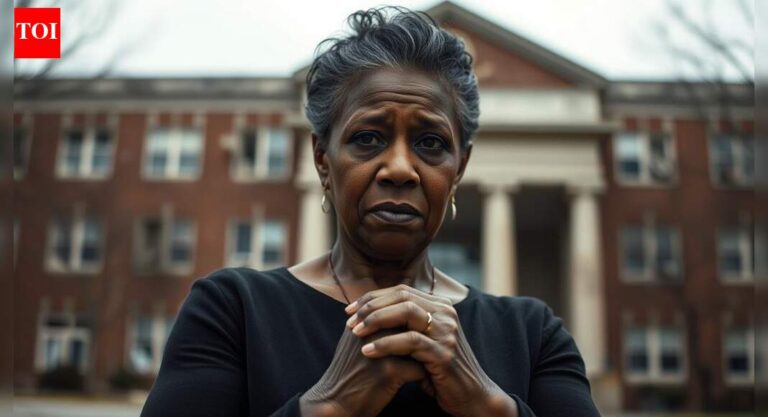


There was a time when the college you studied at defined your worth in society. This is not the telling of an obsolete fable; it was quite recent that parents prayed their children would enter an elite institution. And what followed? A silver platter of opportunities.Now comes the present moment, when parents are no longer questioning which college they should send their children to but whether they should send them to college at all. Yes, you read that right. This is the reality of the land of opportunity, abode to some of the world’s most prestigious universities.The apprehension parents feel is anchored in sobering job market realities. Entry-level vacancies are dangerously thinning, credential inflation is widespread, and degrees no longer serve as the passports they once were. While graduates struggle to find their footing, a growing number of high-paying roles, particularly in skilled trades and technical fields, require no four-year degree at all. The old hierarchy of education and employment has blurred, and families are responding accordingly. Parents watching the job market today see a paradox taking shape.
Survey data that signals a cultural shift
This change in thinking is no longer anecdotal. According to new survey findings from American Student Assistance (ASA), which surveyed over 2,200 parents of middle and high school students, one in three parents is now open to the idea of their child attending a trade school instead of college.Even more telling is the speed of the shift. ASA data shows that 35% of parents now believe career and technical education is best suited for their child, up sharply from just 13% in 2019. Traditional four-year college remains the most preferred option, but its dominance has eroded. The share of parents favouring it has fallen to 58%, a 16-percentage-point decline since 2019, according to the same ASA findings.
When cost becomes a deterrent, not a sacrifice
Few factors have added fuel to the parietal scepticism as powerfully as the cost. Data from the Education Data Initiative shows that the average annual cost of college in the US now exceeds $38,000 per student, including tuition, room, and board. Over the span of a degree, that figure often escalates into six-figure territory. Private institutions, almost without exception, cost significantly more.Crucially, this price escalation has not been matched by commensurate labour-market outcomes. The average cost of college has more than doubled this century, while wage growth and job security for young graduates have failed to keep pace. For parents, the question has shifted from How do we pay for college? to Is it worth paying for at all?
A decision made with, not for, teenagers
This rethinking is not confined to parents alone. ASA’s summer research reveals that 70% of teens say their parents are now more supportive of alternatives to college, including apprenticeships and trade-based education. Young people, too, are absorbing the signals around them.More than four million Gen Z Americans are currently unemployed, many openly questioning the value of degrees they were told would secure their future. Parents see this disillusionment firsthand, at home, in their communities, and across social media, and are increasingly reluctant to steer their children toward the same uncertainty.
Not anti-education, but deeply sceptical
What is unfolding is often mischaracterised as hostility toward education. In reality, it is a crisis of confidence, not aspiration. Parents still want their children to learn, to develop skills, and to build stable, meaningful careers. What they no longer accept unquestioningly is the assumption that a four-year college degree is the only credible route.The hesitation is rational, rooted in data and lived experience. Debt has become heavier, timelines longer, and outcomes less predictable.
A choice no longer taken on faith
College in America has not lost its value, but it has lost its monopoly. Parents are asking institutions to justify their costs, employers to clarify what credentials truly matter, and policymakers to confront a widening gap between education and employment.The result is a generational pause. College is no longer a rite of passage automatically embraced. It is a decision weighed carefully, sometimes postponed, and increasingly challenged.
About the Author