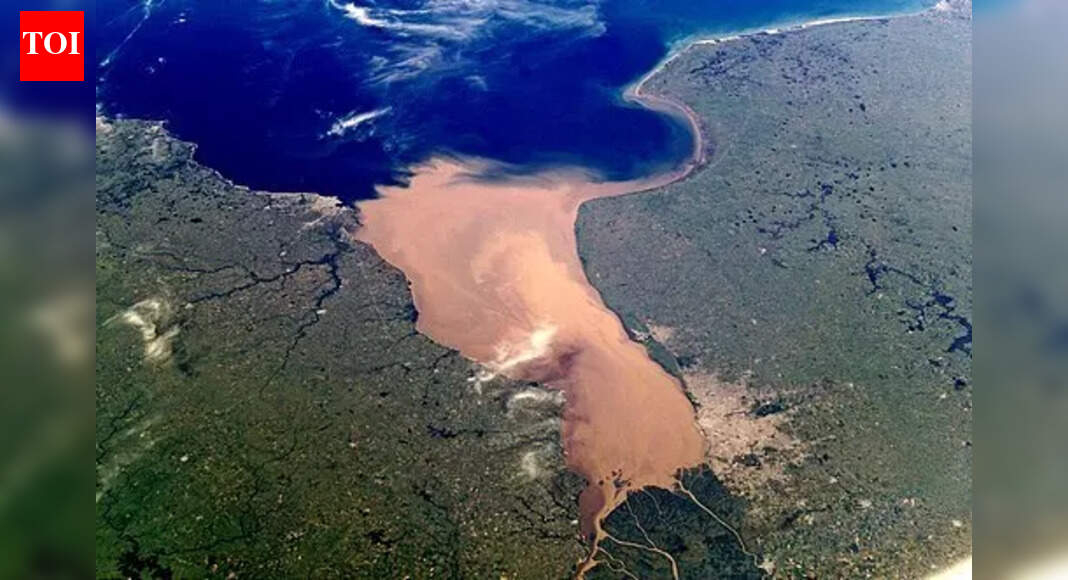
The river known as the Silver River is the Río de la Plata, a major water body located in South America. This vast waterway sits between Argentina and Uruguay and has shaped the history of southern South America for centuries. Early European explorers believed it marked a route to great riches, a belief that influenced maps, language, and even the name of a nation. Today, scientists describe it as an estuary rather than a true river, yet the older title persists. Wide, shallow, and slow-moving, the Río de la Plata connects inland rivers to the Atlantic and continues to define trade, culture, and daily life on both of its shores.
Río de la Plata river carries the name Silver River
The river known as the Silver River is the Río de la Plata. It lies on the southeastern edge of South America, between Argentina and Uruguay. It forms where two large rivers meet, the Paraná and the Uruguay. From that point, the water spreads outward and moves slowly towards the Atlantic Ocean. Many people call it a river out of habit, but it does not behave like most rivers. It is wide almost from the start and grows wider still as it approaches the sea.
Technically Río de la Plata is not a river but an estuary
Geographically, Río de la Plata is an estuary. This means it is a place where freshwater and seawater mix. Tides move in and out. The water depth stays fairly shallow over a large area. Instead of narrowing as it flows, it opens out. In some places near its mouth, the distance from one shore to the other is more than 200 kilometres. That scale is part of what confuses people. It looks like open water, yet it still carries the flow of inland rivers.The silver river crosses two countriesThe Río de la Plata stretches for approximately 290 kilometres from its inland meeting point to the Atlantic Ocean. Along the way, it forms a natural border between two countries. Argentina lies on one side. Uruguay on the other. Large cities grew where the water offered access to trade and travel. Buenos Aires sits on the western bank. Montevideo faces it from the east. The river shapes daily life in both places, even when it fades into the background.
Why was it named after silver
The name comes from early European exploration. When Spanish explorers arrived in the sixteenth century, they noticed local people wearing silver ornaments. Stories spread quickly. The belief grew that this wide waterway led to lands filled with precious metal. In Spanish, Río de la Plata means River of Silver. No large silver mines were ever found along its banks, but the idea stuck. Even the name Argentina comes from the Latin word for silver. In this case, belief mattered as much as fact.
History of the silver river
The Silver River has seen quiet trade and open conflict. It served as a route for explorers, settlers, and merchants moving inland. In 1939, it became the site of the Battle of the River Plate, the first major naval clash of the Second World War. Over time, ports expanded and cities grew. The waterway helped shape politics, culture, and movement across the region. Much of that history is still visible in the cities that face each other across the water.
Why does the river sometimes look silvery
The silvery look is not caused by metal. It comes from fine sediment carried by the Paraná and Uruguay rivers. Sand, clay, and silt stay suspended in the shallow water. When the surface is calm, light reflects strongly, especially at sunrise and sunset. The flat expanse acts like a mirror. For a short time, the river shines. Then the light changes and the colour fades back to brown. The name remains, even when the silver disappears.
About the Author