
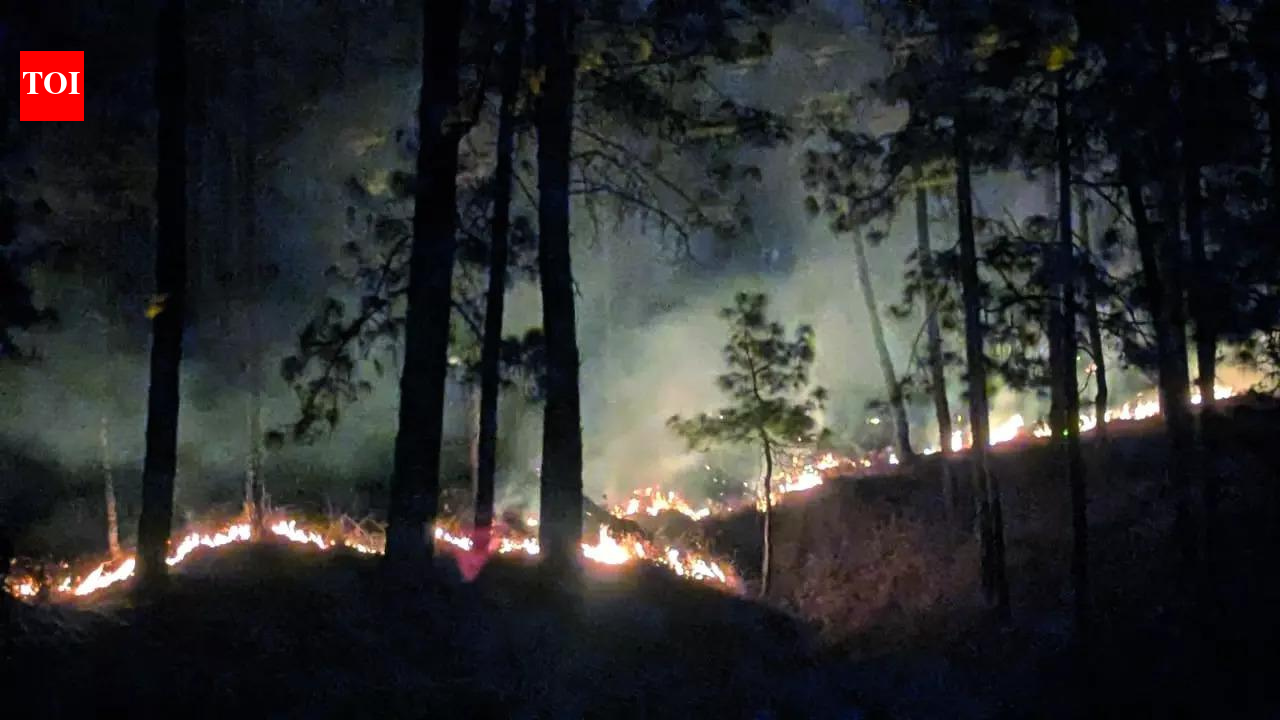
DEHRADUN/KULLU/SRINAGAR: For decades, forest fires in the Himalayas followed a predictable calendar. They started simmering in late spring and early summer, when rising temperatures, dry winds and accumulated leaf litter turned forests combustible. Winter, by contrast, was the season of snow, moisture and relative calm. That rhythm has been breaking for the past few years.This winter, forests across Uttarakhand – and increasingly Himachal Pradesh and Jammu & Kashmir – have been burning with an intensity and frequency that forest officials and scientists say is no longer an anomaly, but indicative of a shifting ecological pattern. “Forest fires are part of a natural cycle, but climate variability is compressing and intensifying that cycle,” said Amit Kumar Verma, senior scientist at Dehradun’s Forest Research Institute, who is involved in a five-year study to understand shifting forest fire regimes across the country.
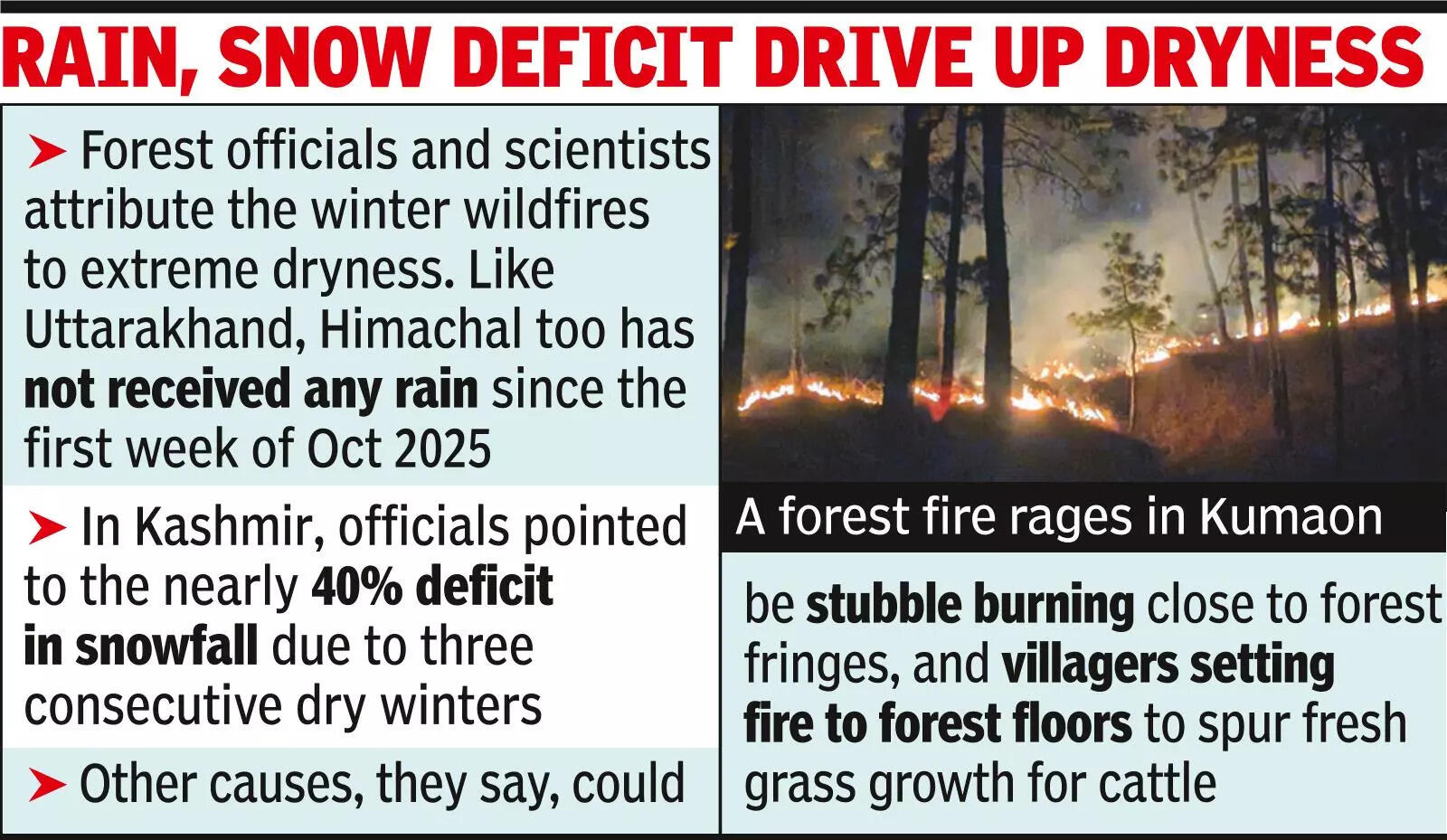
Data from Doon-based Forest Survey of India (FSI) shows that since the onset of the winter wildfire season on Nov 1, Uttarakhand has recorded the highest number of fire alerts in the country – 1,756 – surpassing states traditionally more forest fire-prone, such as Maharashtra (1,028), Karnataka (924), Madhya Pradesh (868) and Chhattisgarh (862).While officials emphasise that not every satellite alert translates into an active forest fire, the pattern itself is difficult to dismiss.December, typically a low-fire month, emerged as the most active in the state in nearly three years.
About the Author