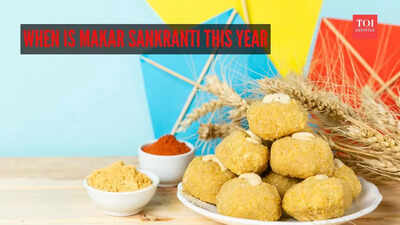
Makar Sankranti is a festival that is highly revered and is one of the most ancient in India. Interestingly, unlike other Indian festivals that mostly follow the lunar calendar, Makar Sankranti, as a solar calendar-based festival, marks the entry of the Sun into the Capricorn sign that is traditionally known as Makara.It marks the onset of Uttarayan, the Sun’s move towards the north, and is a highly auspicious occasion in Hindu mythology. On this day, people take sacred baths, engage in charity or daan, perform worship of the Sun god, which denotes purity, rejuvenation, happiness, and the end of winter. But the questions which are present in the hearts of people is: When is Makar Sankranti, 14th or 15th of January?Many people are confused each year about whether Makar Sankranti falls on 14th or 15th January. According to Drik Panchang and other calendars also, Makar Sankranti will be celebrated on 14th January 2026.According to Drik Panchang:Makar Sankranti falls on 14 January 2026.The exact moment of Sankranti (when the Sun enters Makara Rashi) is around 3:13 PM IST.The Punya Kaal (auspicious period) is a few hours after this moment, during which sacred rituals like holy baths, Surya Arghya (offering to the Sun), and charity are traditionally performed.Because this transition happens during the daytime on 14th January, all major festivities and rituals connected with Makar Sankranti will be observed on that same day, and not on the 15th.
Why the confusion between 14th and 15th January?

Credit: Canva
Regional panchangs and ritual timingsSome traditional Hindu calendars calculate the tithi differently or use local sunrise or sunset times. If the auspicious part of Sankranti starts late in the day, some observances or rituals might fall into the next calendar day, the 15th. However, in 2026, the transit of the Sun happens pretty much within the daytime on the 14th, so most major panchangs fix the festival on 14 January.Interpretation of ritual periods (Punya Kaal)When Sankranti falls very close to sunset, then some traditions extend ritual periods into the next day. Since this year’s event is in the afternoon, there is no need to shift observances forward, supporting firmly 14th January.Despite multiple viewpoints, the mainstream and widely accepted date in official Hindu calendars for national observance remains,14 January 2026.
What exactly happens on Makar Sankranti?

Credit: Canva
Sun’s transit – a celestial eventThe day of Makar Sankranti heralds the beginning of the Sun’s journey into Makara or Capricorn from its southern movement, or Dakshinayan, toward the northern path, or Uttarayan. As per popular beliefs and astrology, the transitional phase promises rising positive energy, spiritual growth, and gain in prosperity.Rituals and PracticesOn this day, people across India follow certain practices:Holy Bath (Snan): Early morning dips in sacred rivers like the Ganga, Yamuna, Godavari, etc., are believed to wash away sins and bring spiritual merit.Surya Dev Puja: Devotees offer water and prayers to the Sun God, often facing the rising Sun.Charity (Daan): Giving food, clothes, grains, and sesame (til) to the needy is considered especially meritorious on this day.Festive Foods: Special dishes, like til laddoo, khichdi, and other traditional sweets, are prepared and shared, symbolising sweetness, warmth, and togetherness.Regional variationsMakar Sankranti is celebrated differently across India:Gujarat and Rajasthan:Kite flying festivals and cultural gatherings.Tamil Nadu: Celebrated as Pongal, a multi-day harvest festival.Assam and Bengal:Magh Bihu and Poush Parbon reflect the harvest and harvest feasts.
Why is Makar Sankranti so important?
Makar Sankranti is not just a date, it is a symbol of nature’s rhythm and human gratitude. It connects:Astronomy: With the Sun’s movement and the seasonal cycle.Spirituality: Believed to be a time when positive efforts yield greater spiritual benefits.Agriculture: Harvest festivals across India reflect thanks for nature’s abundance.Cultural Unity: Despite regional variations, it brings communities together in worship, feasting, and celebration.Although there may exist some local traditions or ritual dates that occasionally refer to related ceremonies around 15th January, the key or official observance remains on the 14th based on the solar transit.
About the Author