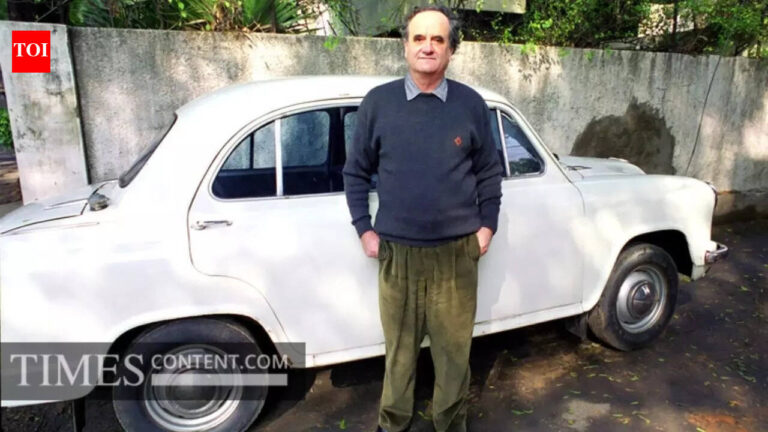
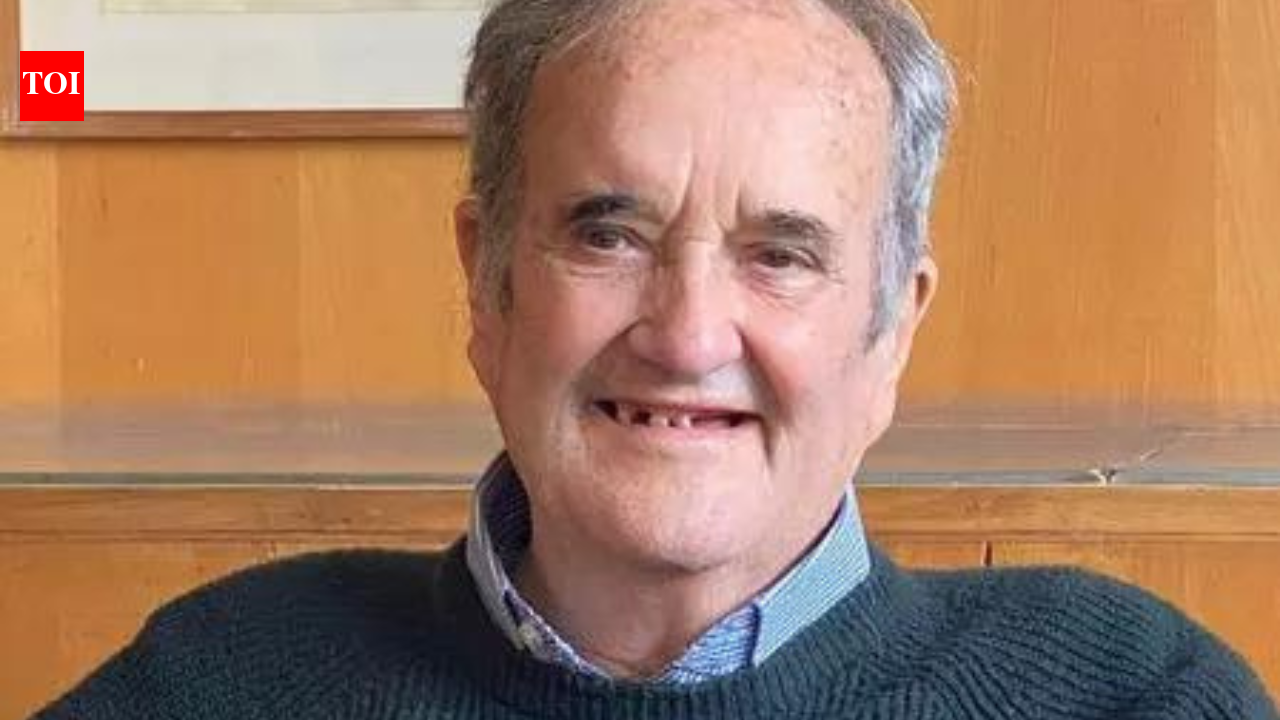
NEW DELHI: Veteran journalist and acclaimed author Mark Tully passed away at the age of 90 on Sunday at Max Hospital in Saket. The news was confirmed by his close friend and fellow journalist Satish Jacob. “Mark passed away at Max Hospital Saket this afternoon,” Jacob said. “He (Tully) was admitted to Max Hospital, Saket, on January 21, and died today. He (Tully) was admitted under the head of the nephrology department,” a hospital source told PTI.
Life of Mark Tully
Born on October 24, 1935, in Kolkata, Tully spent his early years in India before being sent to England for further education. Returning to India in 1964 as the BBC’s correspondent, he eventually became the New Delhi bureau chief, a position he held for 22 years. A chronicler of India for over five decades, he covered landmark events in post-Independence Indian history, including the Bangladesh war of 1971, the Emergency of 1975-77, Operation Blue Star, the assassinations of Indira and Rajiv Gandhi and the Babri Masjid demolition in 1992.Tully was also an acclaimed author, penning 10 books, including No Full Stops in India, India in Slow Motion and The Heart of India. He presented BBC Radio 4’s programme Something Understood and participated in documentaries on India, the British Raj and the Indian Railways. He was knighted in 2002 and received the Padma Bhushan in 2005.Reflecting on Tully’s career, Satish Jacob said, “Mark was an extraordinary journalist who chronicled India’s history with empathy and insight.” His son Sam Tully, on the journalist’s 90th birthday, had written, “I think my father’s achievements are particularly significant for UK-India ties because of his abiding ties and affection for both countries. While he lives in India, he has powerful connections to the UK as well. ‘Dill hai Hindustani, magar thora Angrezi bhi!’ The heart is Indian but a bit English too!”Tully’s career spanned more than five decades, marked by his fearless reporting and commitment to journalistic integrity. Even after leaving the BBC in 1994, he continued as a freelance journalist in Delhi and remained a keen observer of India’s social and political pulse. Colleagues and readers remembered him as “the voice of truth,” whose reporting earned trust across generations.
About the Author