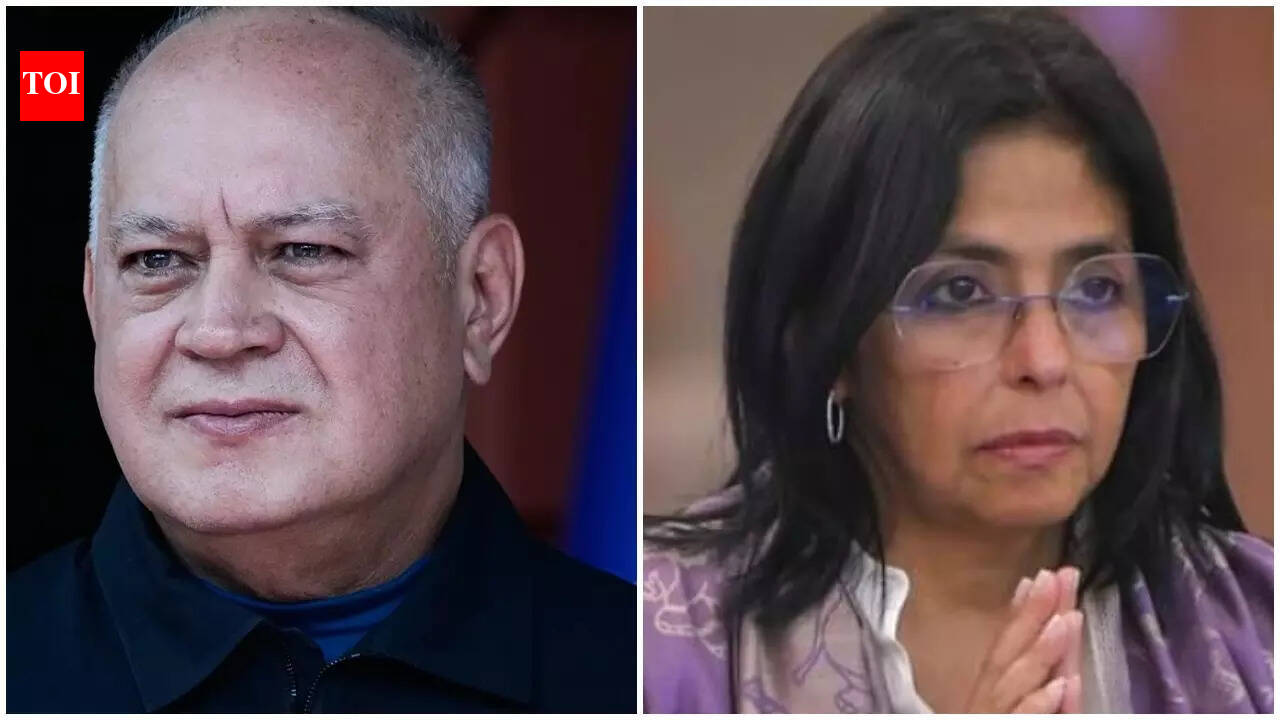

In the 12 days since the US seized Venezuelan President Nicolas Maduro, interim President Delcy Rodriguez worked to consolidate her power by installing loyalists in key positions to protect herself from internal threats, and one of them is interior minister Diosdado Cabello. A new Reuters report revealed a lot about Diosdado Cabello and his connection with the US authorities and also about Rodriguez, who is very firm to secure her position. Rodriguez, 56, a quiet but rigorous technocrat who was vice president and oil minister, named a central banker to help run the economy, a presidential chief of staff and a new head of Venezuela’s feared DGCIM, the military counterintelligence agency built over decades with Cuban assistance.Major General Gustavo Gonzalez, 65, will now head the agency, a move three sources with knowledge of the govt described as an early gambit by Rodriguez to counter what many in Venezuela said was the biggest threat to her leadership: Diosdado Cabello, Venezuela’s hardline interior minister with close ties to the security services and the dreaded “colectivos” motorcycle gangs which have killed opposition supporters.“She is very clear that she doesn’t have the capacity to survive without the consent of the Americans,” said one source close to the govt. “She’s already reforming the armed forces, removing people and naming new officials.”Interviews with seven sources in Venezuela, including diplomats, business people and politicians, revealed in previously unreported detail the fault line at the heart of Venezuela’s govt and the risks it posed to Rodriguez as she tried to consolidate internal control while meeting Trump administration dictates on oil sales. The sources spoke on the condition of anonymity for fear of retribution.The tightrope Rodriguez was attempting to walk was evident in her first major speech since taking office. Addressing parliament in a national annual address on Thursday, she called for unity, stressed her bona fides as Maduro’s loyal deputy, and vowed to forge a new chapter in Venezuela’s politics with increased oil investment.Venezuela’s communications ministry, which handles all press inquiries for the govt and individual officials, did not respond to a request for comment for this story.The White House responded to emailed questions from Reuters by referring the news agency to recent comments made by Trump. In an interview with Reuters on Wednesday, Trump said Rodriguez “has been very good to deal with” and that he expected her to visit Washington at some point.Rodriguez, nicknamed “the tsarina” for her business connections, had broad influence over the country’s civilian levers of power, including the crucial oil industry, and now also enjoyed the backing of the United States. That backing appeared to be reemphasised on Thursday when Rodriguez met with CIA director John Ratcliffe in Caracas.The other main faction was led by Cabello. Cabello, who also heads the ruling PSUV socialist party, is a former soldier with a weekly four-hour show on state television, which has run for 12 years. His first public act after Maduro’s capture was to appear on screen dressed in a flak jacket and surrounded by armed guards as he led a chant of, “To doubt is to betray.”Officials in the Trump administration had contact with Cabello months before the operation to seize Maduro and have also been in communication with him since, four sources familiar with the matter told Reuters, warning him against using the security services or colectivos to target the opposition.Cabello, who was jailed in Venezuela for backing eventual socialist President Hugo Chavez in a failed 1992 coup, is under indictment in the US and has a $25 million reward for his capture.So far Cabello has been conciliatory towards Rodriguez, saying they are “very united” and he arrived at Thursday’s national address alongside Rodriguez and her brother Jorge, the head of the national assembly. But sources with knowledge of their relationship told Reuters that Cabello remained the biggest threat to her ability to govern.In Caracas, security forces were skittish. A few hours after Rodriguez was sworn in, there was a brief burst of anti-aircraft fire outside the presidential palace that some feared could be another US attack. Instead, reports suggested it was a miscommunication between police and the presidential guard, which shot down police drones. The govt said the craft were spy drones, without explaining who they belonged to.Across the country, people were reeling from the shock of Maduro’s capture and unsure whether to be hopeful or scared. In some places, local socialist party branches asked members to spy on their neighbours and report anyone celebrating Maduro’s downfall, according to three party members who spoke on condition of anonymity.In this tense environment, Rodriguez had to persuade party loyalists that she was not a US puppet who betrayed Maduro. She also had to stabilise an economy that saw prices for basic goods soar in the days since the US attack, as well as wrestle some degree of control over the sprawling military-linked patronage networks that developed over decades of Chavismo rule.Venezuela has as many as 2,000 generals and admirals, more than double the number in the United States, a military superpower with 20 times more active duty and reserve troops. Senior and retired officers control food distribution, raw materials and the state oil company PDVSA, while dozens of generals sit on the boards of private firms.Many officials were able to run their regional fiefdoms as they saw fit, ordering patrols or checkpoints by soldiers under their command, and some parts of the country and the capital Caracas saw increased activity by security services since Maduro’s capture.Gonzalez, the new head of the military counterintelligence agency DGCIM, worked closely with Cabello over his long career in Venezuela’s govt, particularly during two stints as head of the separate civilian spy agency.Yet it was to Rodriguez that Gonzalez owed his most recent posts. In 2024, Rodriguez tapped Gonzalez for a top job at the state oil company, Venezuela’s most important company and the engine of the country’s economy.Questions still remained over how much control Gonzalez would be able to exert over DGCIM. Cabello’s allies within the agency could undermine him, the three sources with knowledge of the govt said.One source with knowledge of the inner workings of the security services said Gonzalez’s DGCIM predecessor General Javier Marcano struggled to control the agency.“The role of boss of repression already has a name… Diosdado,” this person said. “Marcano was coordinating with (civilian) militias and with the colectivos, but he had serious difficulties controlling DGCIM because his designation was nominal.”Reuters could not reach Marcano directly and all formal communication with officials in Venezuela is handled through the communications ministry, which did not respond to a list of questions related to this story.The colectivos, closely connected to Cabello, could also make the country ungovernable by implementing a so-called “anarchization” strategy, which was first designed to fend off US intervention but could be directed against Rodriguez, the source close to the govt told Reuters. That strategy would mobilise the intelligence services and colectivos to plunge Caracas into disorder and chaos.Cabello could also slow the pace of prisoner releases that have been hailed by Trump. They have been proceeding much more slowly than demanded by families and rights groups, creating a potential pressure point for Rodriguez.Outside of Venezuela, however, pressure on Cabello continued to mount.“For the Trump administration to achieve a real transition in Venezuela, sooner or later Diosdado Cabello must face U.S. justice,” US Representative Maria Elvira Salazar said on X this month. “When Diosdado is brought to justice, it will be a decisive step toward a democratic transition in Venezuela and the release of all political hostages.”
About the Author