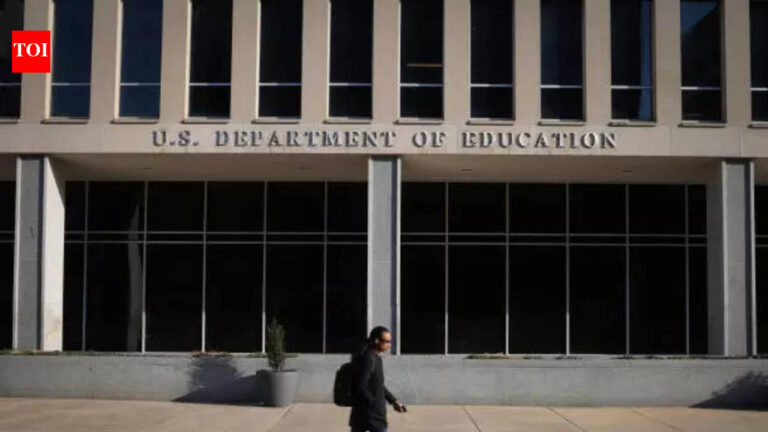


The Trump administration has delayed forced collections on defaulted federal student loans, offering temporary relief to millions of borrowers facing wage garnishment and benefit seizures. The Department of Education confirmed it would pause collection activity after previously signalling that enforcement could resume as early as January.The decision reverses guidance issued in late December and gives borrowers a short window to bring loans back into good standing, enrol in repayment plans and shield tax refunds before collections restart, according to consumer advocates speaking with the CNBC.Pause gives borrowers breathing roomAbout nine million people remain in default on federal student loans, according to an estimate from advocacy group Protect Borrowers cited by the CNBC. The Department of Education said the delay would allow officials to implement recent changes to the federal student loan system included in President Donald Trump’s tax and spending legislation.Michele Zampini, associate vice president of federal policy and advocacy at The Institute for College Access and Success, said the delay “will give borrowers a fighting chance at getting their loan into good standing, enrolling in a more affordable repayment plan and protecting their hard-earned wages from garnishment,” Zampini told the CNBC.Department officials did not specify how long the pause would last. The agency did not immediately respond to a request for comment from the CNBC about the expected duration of the delay.Tax refunds no longer immediately at riskConsumer advocates recently warned that defaulted borrowers risked losing federal tax refunds once collections resumed. That risk has eased temporarily.Higher education expert Mark Kantrowitz said borrowers should still act quickly. Defaulted borrowers should “file their federal income tax returns immediately,” Kantrowitz said in conversation with the CNBC. He noted the Internal Revenue Service would begin accepting returns on January 26, 2026, and electronic filers typically receive refunds within 21 days.The federal government can normally seize entire tax refunds to recover defaulted student loan debt.Steps to get out of defaultBorrowers should also work to bring loans current as soon as possible to avoid future wage or benefit offsets. The Education Department can seize up to 15% of a borrower’s after-tax income, and up to 15% of monthly Social Security retirement or disability benefits.Loan consolidation often provides the fastest route out of default, according to Kyra Taylor, a staff attorney at the National Consumer Law Center. Consolidation can take as little as four weeks, Taylor explained to the CNBC, though some borrowers must make several payments first and not all qualify.Borrowers may also pursue loan rehabilitation, which requires nine voluntary, affordable monthly payments over ten consecutive months, according to the Department of Education.Choosing affordable repayment plansOnce loans return to good standing, borrowers should select a manageable repayment plan to avoid re-default. Income-driven repayment plans cap payments based on income and offer forgiveness after 20 or 25 years.Kantrowitz said most borrowers would benefit from the Income-Based Repayment plan, noting to the CNBC that other options will be phased out in coming years. A new Repayment Assistance Plan will launch in July 2026, offering lower payments for some borrowers but a longer forgiveness timeline.
About the Author