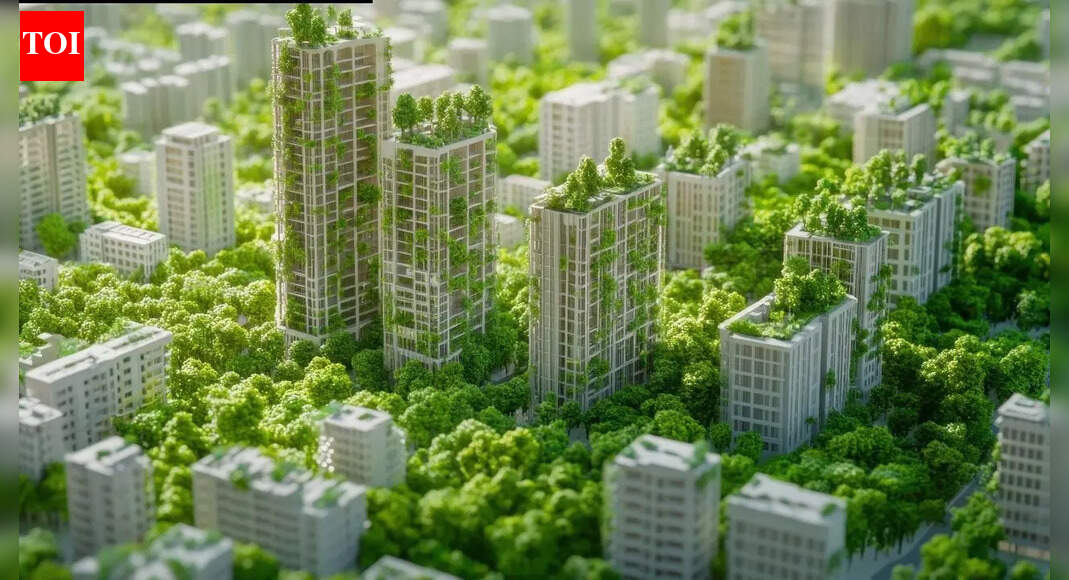
The Miyawaki method can be used in cities where green space has thinned out over decades. Roads, concrete surfaces, parking areas, and compact housing have changed how the land behaves, especially during heat, heavy rain, and long dry spells. In these settings, tree planting often struggles to take hold. The Miyawaki approach has entered planning conversations as a response to that problem. It is not a landscaping style, and it is not slow reforestation. Instead, it is a way of compressing forest growth into smaller areas by adjusting soil, plant choice and spacing. The method does not aim to look orderly. It aims to grow quickly and then be left alone. Urban planners, schools, and local groups have begun testing it on small plots, watching what survives, what spreads, and what settles in place.
This Japanese approach grows forests faster than traditional urban tree planting
The method was developed by Japanese botanist Akira Miyawaki, whose work focused on potential natural vegetation. His idea was that every region has a set of plants that would dominate if human interference stopped. Instead of planting a few hardy species, Miyawaki argued for planting many local species together, allowing competition to shape the forest early. His research influenced restoration projects in Japan and later abroad. Over time, the technique was adapted for urban use, where space is limited, and soil is often degraded. Research named “Evaluating the Miyawaki Afforestation Technique in Urban Landscapes: Opportunities and Challenges” studies the Miyawaki method in detail. Soil preparation changes the outcomeSoil preparation is the most demanding part of the process. Urban soil is usually compacted, low in organic matter and poor at holding water. The Miyawaki method starts by loosening the soil and adding compost to mimic forest conditions. This step raises costs and labour needs, especially in dense cities. Where preparation is rushed or incomplete, survival rates drop. Several projects have reported early losses linked directly to soil quality rather than plant choice. When done well, however, the enriched soil supports faster root development and reduces long-term irrigation needs.Dense planting is central to the methodPlanting density is higher than in conventional tree projects. Saplings are placed close together, often several per square metre. This forces plants to compete for light early on. Instead of spreading outward, growth moves upward. The canopy closes faster, shade builds, and ground moisture is retained. This density also limits the dominance of any single species. While it looks crowded at first, thinning happens naturally as weaker plants fail and stronger ones adapt. The result is uneven but stable growth.Biodiversity plays an important role in small forestsSpecies diversity is not treated as optional. Native trees, shrubs and ground plants are mixed together in layers. Each layer occupies a different height and light range. This structure creates varied habitats and food sources. Research from urban sites shows increased insect and bird activity within months of planting. In some cases, migratory species have been recorded sooner than expected. Compared with monoculture plantations, these plots show greater resilience to pests and weather stress.Miyawaki forests improve urban air qualityStudies suggest dense vegetation can influence air movement at a local scale. Miyawaki forests, because of their thickness, act as filters. Fine particles such as PM2.5 are reduced more effectively than around isolated street trees. Leaves trap pollutants, while airflow slows through the vegetation. This does not solve citywide pollution, but it can improve conditions around schools, housing blocks and roads. The effect depends on placement, surrounding buildings and wind patterns.Miyawaki forests reduce urban heatHeat reduction is one of the strongest claims attached to the method. Dense canopy cover shades surfaces that would otherwise absorb heat. Transpiration from leaves cools the air during the day. Measurements from projects in Europe and Asia show significant temperature differences between Miyawaki plots and surrounding paved areas. At night, the cooling effect remains more stable than in open green spaces with scattered trees. This makes the method appealing in neighbourhoods with limited room for parks.What challenges limit wider adoptionDespite its benefits, the method is not easy to scale. Land availability is a major barrier. Miyawaki forests are not designed for walking or recreation. Their dense structure can feel inaccessible, which affects public acceptance. Maintenance is low after establishment, but the first two years require care and monitoring. Costs are front-loaded, mainly due to soil work and plant diversity. In colder or drier climates, results vary, and long-term performance is still being studied.The method continues to attract attention because it grows fast and asks little once established. Its future in cities depends less on theory and more on how well it fits into everyday urban life.
About the Author