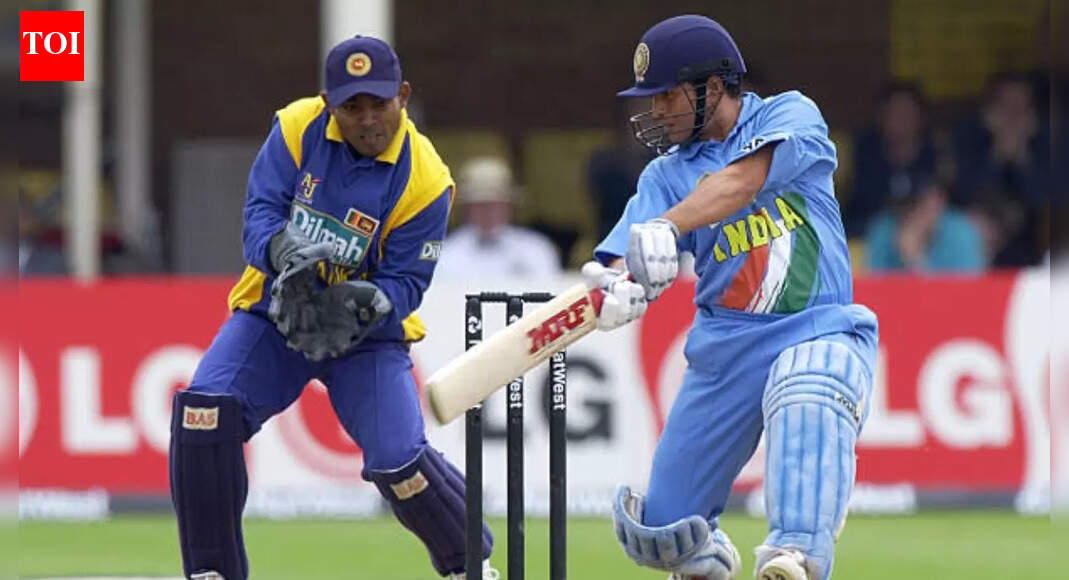
It’s tough to pinpoint the exact reason why a team goes on to win a long tournament like the World Cup. It will almost always be a culmination of many small things working well together for the team to be successful at that level.To win a Cricket World Cup, all your elements — batting, bowling and fielding — need to collectively work well. Consistency in team efforts, along with a few individuals’ standout performances, makes a team the World Champion.But sometimes a decision, technical or tactical, during the buildup to such a mega event turns out to be a trump card for the team, leading them to massive success. One such tactical decision was made by the Sri Lankan side in the lead-up to the 1996 ODI World Cup, co-hosted by India, Pakistan and the island nation.Little did they, or the cricketing world at large, know back then that the decision to promote wicketkeeper-batter Romesh Shantha Kaluwitharana as an opener in the final series before the mega-event would change their fortune in such a quick time.On This Day, thirty years ago — January 9, 1996 — Kaluwitharana batted as an opener against Australia in Melbourne for the first time in his over five-year ODI career. He had a clear mandate — to blast from the get-go — and he did the same in style.Australia had posted 213 for 5 in their 50 overs after electing to bat first at the MCG, with Ricky Ponting top-scoring with 123 off 138 balls. Ponting added a record 159 runs for the fifth wicket with Michael Bevan, who contributed 65 not out off 87 balls.Sri Lanka lost two early wickets and were at 39/2, but Kaluwitharana kept the scoreboard ticking with captain Aravinda de Silva (35) and added 88 runs for the third wicket. Kaluwitharana was the next wicket to fall, scoring a 75-ball 77 laced with 12 fours. Sri Lanka then lost three more wickets quickly, but Roshan Mahanama (51) and Kumar Dharmasena (28) guided the visitors to victory in the day-night encounter by three wickets with 15 balls to spare in the Benson & Hedges World Series, which included West Indies as the third team.Kaluwitharana had a decent run in the series as an opener as he stitched together a string of good scores. Even though he ended the series with a duck in Sydney, his scores read — 77 (75), 20 (27), 50 (54), 74 (68), 13 (9) & 0 (2).That one tactical move on January 9 inadvertently started a pinch-hitting plan for the Lankans. And within ten weeks from that fateful day, despite Kaluwitharana’s below-par contributions individually, the impact of attacking from the word go played a big part in bringing the World Cup home for Sri Lanka.Opening with Sanath Jayasuriya, who won the Man of the Series at the World Cup, Kaluwitharana was a menace for new-ball bowlers in that tournament. He started the World Cup with a duck against Zimbabwe in Colombo, but the co-hosts persisted with the opening pinch-hitter in Kaluwitharana.His 1996 World Cup record reads — 20 (16) vs India in Delhi, 33 (18) vs Kenya in Kandy, 8 (3) vs England in Faisalabad, 0 (1) vs India in Kolkata and 6 (13) vs Australia in Lahore. He scored just 73, but it came at a 140.38 strike rate, well before the concept of T20 cricket came into being, and along with Jayasuriya’s 221 at a 131.54 strike rate, new-ball bowlers were hit hard by the Lankans.In fact, Sri Lankan batters were trendsetters in that tournament, with De Silva (448 at a 107.69 strike rate) and Arjuna Ranatunga (241 at 114.76 SR) making bowlers search for cover.At a time when a 100 strike rate was a rare commodity, four of Sri Lanka’s top batters were cruising well above it thirty years ago, setting a template widely followed these days even in T20 cricket, especially with powerplay field restrictions.The outcome of the tactical decision was an inadvertent one, but it was a happy move for Sri Lanka and world cricket.
About the Author