
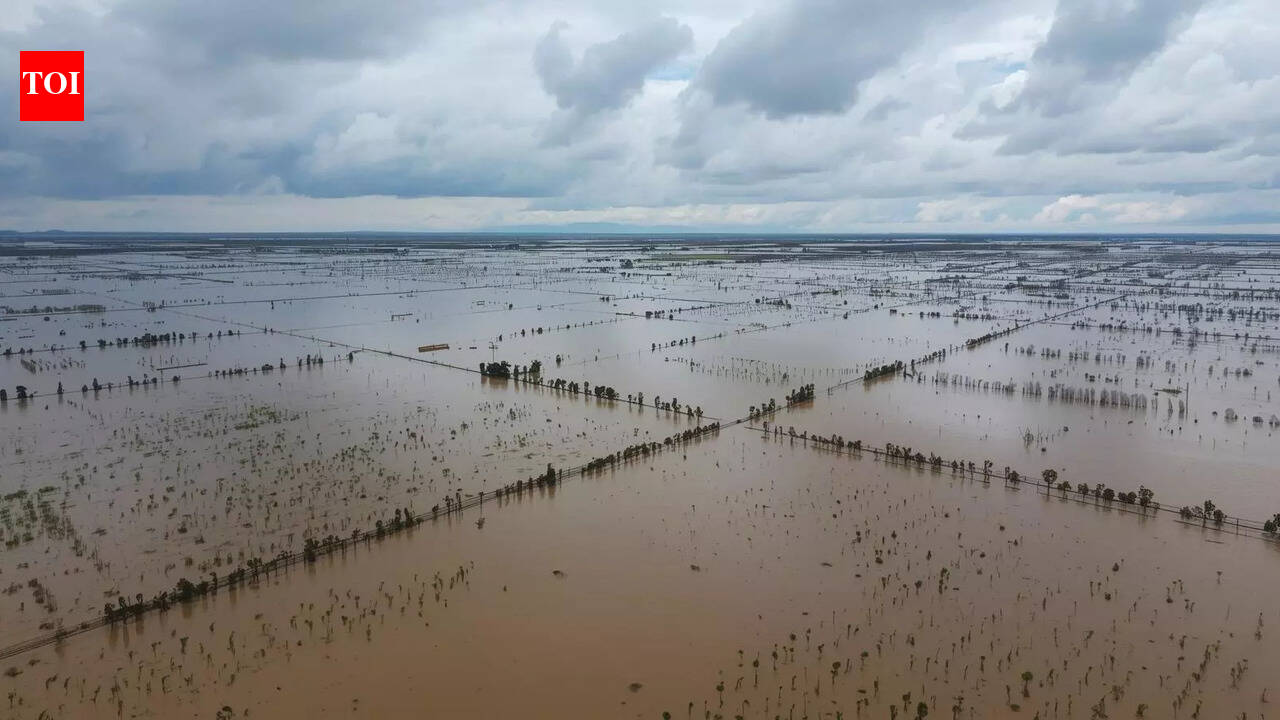
In the spring of 2023, water spread across parts of California’s San Joaquin Valley, where crops and roads had stood for decades. Snowmelt from the Sierra Nevada and repeated heavy storms pushed rivers beyond their channels. Fields disappeared under shallow waves. What appeared to many as sudden flooding was something older and less surprising to those familiar with the land. Tulare Lake, long treated as erased, was filling again. Known to the Yokuts people as Pa’ashi, meaning big water, the lake once dominated the valley floor. Its return covered roughly 94,000 acres, disrupting farming and infrastructure. It also reopened deeper questions about memory, land use, and how California manages water in a changing climate.
Tulare Lake reappears after more than a century of drainage
Before large-scale water engineering, Tulare Lake was the largest freshwater lake west of the Mississippi River. At times it stretched close to 100 miles in length and 30 miles in width. Fed mainly by the Kern, Kings, Tule and Kaweah rivers, the lake expanded and shrank with seasonal flows.For the Yokuts people, Pa’ashi was not a fixed body of water but a living system. Its edges moved. Fish, birds and wetland plants followed the rhythms of wet and dry years. Settlers arriving in the nineteenth century struggled with this variability, often mistaking dry periods for permanence.
The lake was drained and forgotten
By the late 1800s, canals, levees and dams redirected the rivers that fed Tulare Lake. The goal was agricultural expansion. Cotton, alfalfa and later almonds replaced wetlands. By 1898, the lakebed appeared dry, and many settlers declared the lake gone.That confidence proved fragile. Tulare Lake refilled several times in the early twentieth century. Major floods occurred in 1906, 1916, 1921 and again in the late 1930s. Each time, farms planted on the lakebed were inundated. Each time the water eventually receded, and memory faded again.
The lake returned in 2023
The winter of 2022 and 2023 brought record snowfall to the Sierra Nevada. Spring warming released that water quickly. At the same time, a series of atmospheric river storms added rain across the valley. Levees and diversion systems designed for farming could not fully contain the flow. Water moved toward its lowest point, the historic lakebed. Over weeks, Tulare Lake reformed, reaching a size comparable to Lake Tahoe. Roads, dairies and orchards were left surrounded by shallow water.
What returned with the water
The lake brought more than flooding. Birds arrived in large numbers. Wading species spread across the new shoreline. Fish appeared in channels and pools. Local residents reported cooler breezes and higher humidity near the water.These changes echoed historical accounts. Early settlers wrote of winds driven by the open lake surface and of wildlife returning as soon as water settled. The reappearance of these patterns suggests that the valley floor still responds quickly when water is allowed to spread.
Why farming remains tied to the lakebed
Much of the land now underwater has been farmed intensively for generations. The soil is fertile. Infrastructure is already in place. From an economic view, abandoning the area feels impossible. Yet the repeated flooding history shows a pattern. When wet years arrive, the lake returns. When dry years follow, planting resumes. Each cycle brings losses. Climate change adds uncertainty, increasing the chances of extreme swings between drought and flood.
How Indigenous knowledge frames the event
For the Yokuts, Pa’ashi was never erased. The lake’s name and stories preserved its presence even when maps did not. From this view, the 2023 flooding was not a disaster alone but a reminder of an older truth about the land. This perspective challenges the idea that control over water is complete or permanent. It also raises questions about whose knowledge shaped California’s development and whose was ignored.
What Tulare Lake’s return leaves behind
As waters slowly recede, some fields may be replanted. Others may remain too damaged. Legal and political debates continue over responsibility, compensation and future planning. The lake does not offer a conclusion. It leaves behind wet soil, altered air, and a visible outline of something that was meant to be forgotten. Pa’ashi returned without ceremony. It may not stay. History suggests it will not be the last time. This article is based on the feature of OPEN RIVERS.
About the Author