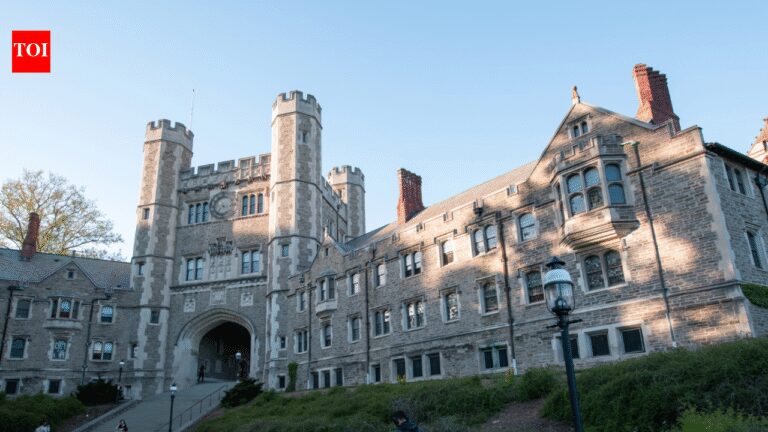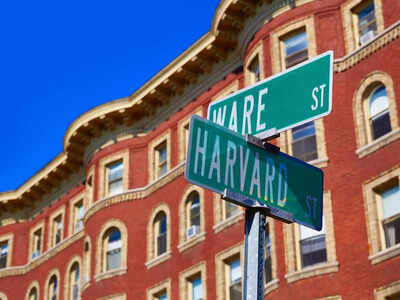
For generations, Harvard University was more than a university, it was a symbol. A citadel of knowledge where breakthroughs were expected, where prestige was assumed, and where scientific leadership was never in doubt. But symbols, as history shows, are never permanent. The latest CWTS Leiden Ranking 2025 has shaken that assumption. Harvard, the perennial leader, has slipped to third place in the Science category. At the top, commanding the spotlight, are China’s Zhejiang University and Shanghai Jiao Tong University. Beyond Harvard, the list reads like a map of a rising empire: eight of the top nine positions now belong to Chinese institutions.The shift is more than statistical. It is a story of ambition, strategy, and the inexorable march of global competition.
From American dominance to a multipolar world
In 2006, when the CWTS Leiden Rankings first appeared, Harvard occupied a throne built over decades. The University of Toronto and the University of Michigan followed, and the top ten was overwhelmingly American. The message was clear: Global science was an American-led enterprise. Funding flowed freely, talent was magnetized, and reputation translated seamlessly into influence.Fast forward nearly two decades, and the picture has changed dramatically. Harvard, once untouchable, has fallen behind. Six US universities that dominated the top 10 in 2006–2009, including Stanford, Johns Hopkins, UCLA, and the University of Pennsylvania, have vanished from the elite circle. The old hierarchy is crumbling, replaced by a system in which output, collaboration, and strategic alignment often outweigh history and prestige.
China’s calculated ascent
How did Chinese universities rise so quickly? The answer is deliberate, long-term planning. Zhejiang and Shanghai Jiao Tong, along with their peers, have benefited from massive state investment, international talent recruitment, and a laser focus on measurable scientific output. Unlike the decentralized American system, where individual faculty chart independent paths, Chinese institutions operate with coordination, scale, and national strategy in mind.The results are visible in the numbers. Research publications have surged. Citations have multiplied. Global influence has grown. And while Harvard still produces world-changing science, the velocity and breadth of output from China’s top universities now surpass it.The main point here is not that Harvard has declined but that it has been relatively positioned. By one measure, Harvard is still the leader in academic freedom, the broader range of ideas, and the generation of the most disruptive, groundbreaking ideas.Chinese universities, on the other hand, have developed a large-scale, well-coordinated, and highly productive model.Besides that, when the system of ranking is based on metrics, the virtues of the first hardly appear in the top positions. The problem gets to be what the role and effect of influence are: Should it only be measured by the quantity of the output or by the lasting impact of the ideas that are changing the world?
A new global order in Science
Change in the CWTS Leiden Ranking 2025 is not merely a matter of shuffling of figures; it is like the changing of the scientific gravity center.For Harvard, it is a warning that mere excellence cannot secure a position at the top. For the world, it is a message that the United States is no longer the only leading country in science.The emergence of a multipolar, competitive, and closely interconnected global scientific scene that is moving eastward is even more evident.Meanwhile, Harvard’s fall in the tale of international science cannot be considered a catastrophe; on the contrary, it is a part of the story of ambition, strategy, and transformation. It is no longer a question of prestige but rather vision, realization, and the bravery to claim.
About the Author