
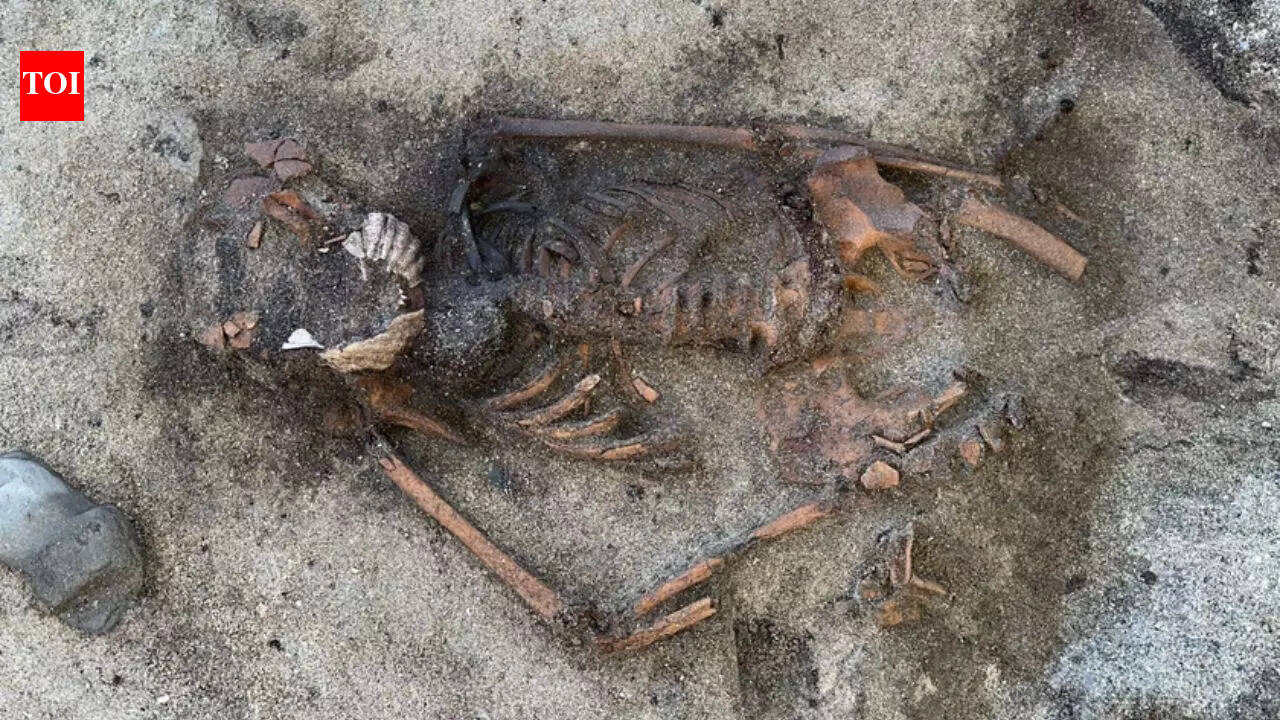
Archaeologists in Sweden have uncovered a striking Stone Age discovery: The well-preserved remains of a dog buried around 5,000 years ago alongside a carefully crafted dagger made from bone. The burial was found in a wetland that was once a lake, a setting that helped protect fragile remains for millennia. What makes the find so fascinating is how deliberate it appears. This was not a random deposit or scattered bones. The placement suggests intention, meaning, and possibly even ceremony. To researchers, the message is clear: This dog may have been valued far beyond an ordinary animal.
The ‘dog burial ’ that stopped archaeologists in their tracks
The dog’s skeleton was found in remarkably good condition, especially for something this old. It was uncovered by archaeologists from Arkeologerna, a unit within Sweden’s National Historical Museums, during an excavation at Logsjomossen near Jarna linked to construction work for the Ostlanken railway project. Because the burial lay in waterlogged sediments from what was once a lake, the wetland environment helped preserve fragile organic remains far better than normal soil would. What struck researchers immediately was how intentional it looked, as if someone had carefully placed the dog there rather than leaving it behind as simple waste.
What the dagger reveals about the burial
Alongside the dog was a polished bone dagger, described as long and finely made. In prehistoric societies, objects like this were not casual possessions. A blade tool could represent skill, status, or even symbolic meaning, depending on the culture and context.The fact that it was placed with the dog suggests the animal had significance. The dagger may have been a grave gift, a sign of honour, or something meant to accompany the dog in death.Dogs in the Stone Age were not only companions. They could be protectors, hunting partners, trackers, and vital members of daily survival. A strong, reliable dog might have been seen as part of the group’s success, especially in harsh environments where every advantage mattered.A careful burial could reflect gratitude, respect, or an emotional bond. It may also indicate that this dog held a special role, possibly linked to hunting, guarding, or ritual significance in the community.The burial was found in sediments that once sat at the bottom of a shallow lake. That detail matters because water and wetlands have long been associated with ritual deposits in ancient Europe. People often placed valued objects into lakes, bogs, and rivers as offerings or ceremonial acts.If this was a ritual burial, it adds a deeper layer to the story. It suggests the dog was not only important in life, but still held meaning after death.
What archaeologists hope to learn next
Discoveries like this rarely give up their secrets immediately. Researchers will likely study the remains through dating and lab analysis to understand details such as the dog’s life, diet, health, and age at death.Over time, the burial could help answer bigger questions about how Stone Age people in Scandinavia lived, what role dogs played in their societies, and how early humans expressed loyalty, care, and respect for animals that shared their world.
About the Author