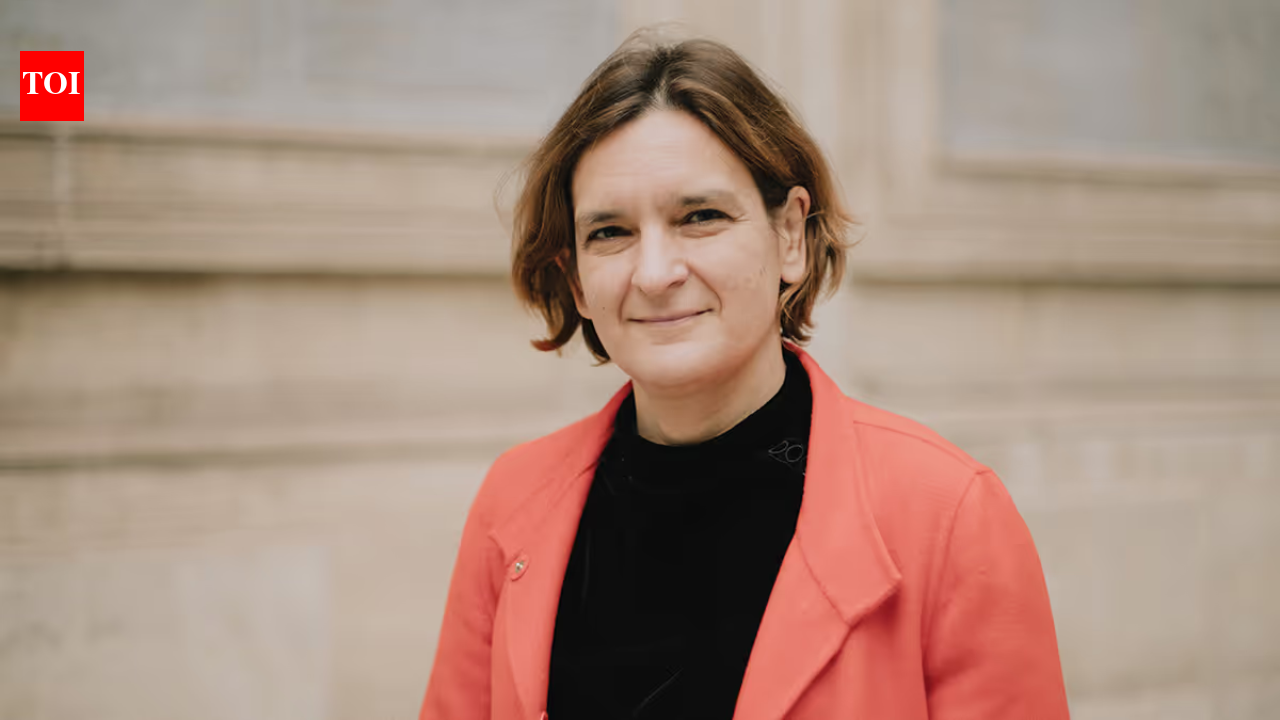
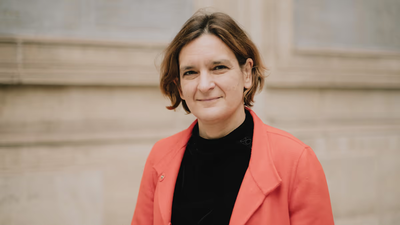
At a time when students are constantly told to be “job-ready”, Nobel Prize–winning economist Esther Duflo offered a very different — and quietly powerful — message. Speaking at the 19th Jaipur Literature Festival, she reminded young people that the skills they are racing to acquire today may not be the ones that shape their careers tomorrow, reports PTI.“The entire landscape is evolving so fast that the specific skill you are teaching someone will become obsolete by the time they finish their education, and certainly by the time they enter the job market,” Duflo said during her session at the festival.Her point was not meant to discourage students, but to free them from a narrow idea of success that equates education with immediate employability.
The problem with skill-chasing
Most learners these days program their schooling to comply with the present requirements of the job market. Programming languages, instruments, certificates, and focused training usually seem like the surest way to a stable life. Duflo cautioned that this feeling of being secure might deceive them.With technology — especially artificial intelligence — changing how work is done, job roles are being reshaped faster than ever. A skill that looks essential today could become outdated in a few years, sometimes even before students graduate. When education focuses too narrowly on such skills, students risk being prepared for jobs that no longer exist.
College is meant for the long run
Duflo urged students to think of college not as a shortcut to employment, but as preparation for a lifetime of decisions, changes, and learning. The real value of higher education, she argued, lies in building abilities that last.“College education needs to involve a strong humanities background: the ability to write, the ability to think, and the ability to make decisions for yourself,” she said while speaking at the Jaipur Literature Festival.These include learning how to think clearly, write well, question ideas, and make reasoned judgments. Such skills do not appear on most job descriptions, but they are what help people grow, adapt, and stay relevant across decades-long careers.
Why the humanities still matter
In a time when the whole world is running after technical and professional degrees, Duflo has brilliantly defended the value of humanities. Duflo emphasized that study of humanities such as philosophy, history, ethics, and social sciences should be at the core of students’ education. These help students develop an understanding of the world, and not merely being able to get by in it.Even students who are techie and data-focused, these subjects are still helpful in developing insight, judgment and a sense of responsibility. She argued that, whereas any task can be done by machines, only humans, through their values, ethical thoughts, and broad vision are still irreplaceable.
Learn the basics, not just the tools
Another key message from Duflo was the importance of fundamentals. Learning how to use a tool is helpful, but understanding the ideas behind it — logic, mathematics, reasoning — is what gives knowledge staying power.“Rather than learning to write lines of code, you need to learn fundamental probability and statistics because this is what is under the hood of these things that are going to help you moving forward,” Duflo explained at the Jaipur Literature Festival.Tools will change. Technologies will evolve. But students who understand the basics will always be able to adapt, no matter what the next shift looks like.
A reality check for Indian students
For Indian students, often under pressure to choose “safe” degrees with clear placement outcomes, Duflo’s words feel especially relevant. An education system focused only on exams and short-term results can leave graduates struggling when careers take unexpected turns.“In some sense, and at some level, the way technology is moving forward means that we need to move backward — or perhaps move higher up — to rethink the fundamentals of what education is,” she said, as quoted by PTI, reflecting on how education systems need to respond to change.What students really need, she implied, is confidence in their ability to learn again and again — not fear of stepping outside a fixed career path.
The takeaway
Esther Duflo is not arguing against skills or careers. She is asking students to look beyond the immediate promise of a job and think about who they want to become over time.In a world where careers will change many times, the most valuable education is one that teaches you how to think, adapt, and keep learning. For students planning their futures today, that may be the most reassuring lesson of all.With inputs from PTI.
About the Author