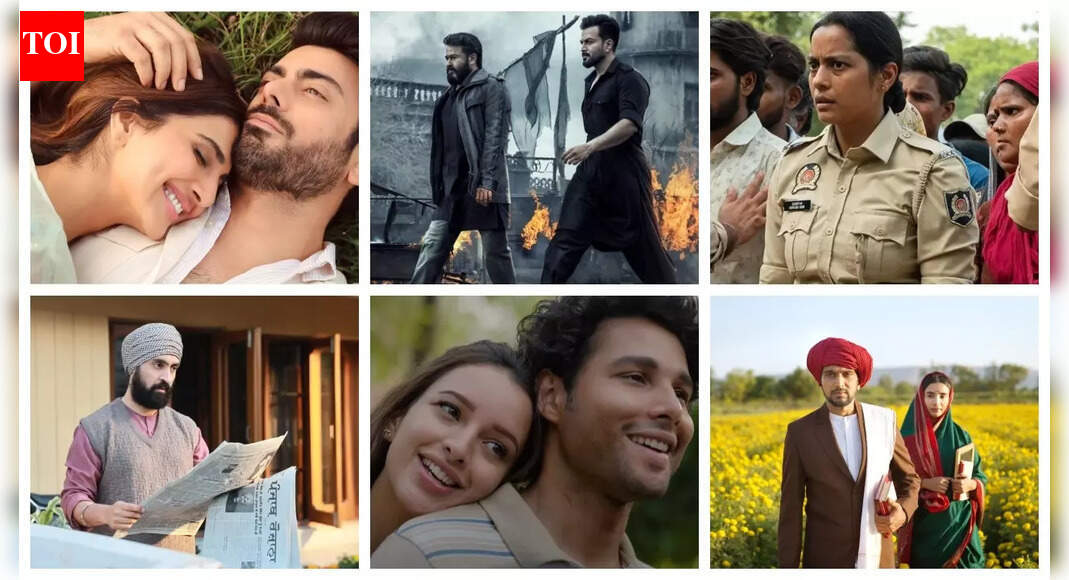

In 2025, Hindi cinema found itself repeatedly colliding with forces far beyond the box office. While the industry delivered record-breaking commercial successes on one hand with films Dhurandhar, Chhaava and Saiyaara , it also endured one of its most restrictive creative climates in recent memory. Films were stalled, heavily cut, delayed indefinitely, denied domestic releases, and in one unprecedented case, altered even after reaching theatres.From caste-based narratives and politically sensitive storytelling to religious imagery and geopolitical fault lines, Bollywood’s relationship with censorship bodies, pressure groups, and national sentiment grew increasingly fraught. What emerged was not a single controversy, but a pattern — one that raised difficult questions about creative freedom, institutional authority, and the boundaries of cinematic expression in a democracy.
Here’s a detailed look at the most significant censorship and release disputes that defined Bollywood in 2025.CBFC vs Social Reality: Dhadak 2, Phule, Santosh and Panjab ’95The Central Board of Film Certification (CBFC) remained at the center of multiple controversies throughout the year, particularly in its handling of films dealing with caste, state power, and historical injustice.Films like Dhadak 2 and Phule, both of which addressed caste-based realities, reportedly underwent multiple rounds of scrutiny before finally securing theatrical clearance. According to industry insiders, the objections were not limited to language or visuals but extended to thematic framing and political interpretation.While neither film was banned outright, the prolonged certification process and the nature of the demanded cuts sparked debate about whether the CBFC was exercising classification authority or content regulation. Critics argued that sanitising stories rooted in social injustice defeats the very purpose of telling them.The controversy deepened with Santosh, a film that had already earned international recognition by being selected as the United Kingdom’s official entry to the Oscars. The film was first denied a censor certificate , it then decided to take the OTT release for which it does not require a censor certificate but it was halted at the last minute.The most severe confrontation, however, involved Panjab ’95, directed by Honey Trehan and starring Diljit Dosanjh as Sikh human rights activist Jaswant Singh Khalra. Initially announced for a February 7 release, the film’s plans were abruptly shelved without clear public explanation.Later in the year, Trehan went public with explosive allegations, claiming that the CBFC had demanded as many as 127 cuts. He accused the board of deliberately stalling the film to suppress an uncomfortable historical narrative involving enforced disappearances and state accountability in Punjab during the 1990s.L2: Empuraan — When Censorship Followed the AudiencePerhaps the most unprecedented censorship incident of 2025 involved L2: Empuraan, the Mohanlal-starrer and sequel to Lucifer. Unlike conventional certification disputes that occur before release, Empuraan faced censorship after it had already reached theatres.The controversy erupted over the film’s religious themes and plot elements reportedly inspired by the 2002 Gujarat riots. Right-wing groups accused the film of indirectly referencing real-life events and figures in a manner they deemed inflammatory.Under sustained pressure, the makers announced 24 “voluntary cuts”, totalling approximately 2.08 minutes. These changes were formalised through a re-censor certificate, effectively altering the film mid-run.Among the most significant edits was the renaming of the antagonist Balraj, also known as Baba Bajrangi — a name critics argued bore resemblance to Bajrang Dal leader Babu Bajrangi, who was sentenced to life imprisonment for his role in the Naroda Patiya massacre during the 2002 pogrom. The character was renamed Baldev in the revised version.Additionally, a display card specifying the timeline of events as “India 2002” was changed to the vaguer “a few years ago.”Religious Sensitivities and Immediate Retraction: JaatAnother flashpoint emerged with the film Jaat, starring Randeep Hooda. A particular sequence depicting the actor standing inside a church, striking a pose resembling Christ’s crucifixion amid scenes of violence, triggered immediate backlash.Christian groups accused the film of hurting religious sentiments and trivialising sacred symbolism. An FIR was filed against the makers, escalating the situation rapidly.In response, the filmmakers chose to remove the sequence altogether, issuing a statement emphasising respect for all faiths.No India Release: Sardaar Ji 3 and Aabeer GulaalBeyond domestic censorship, 2025 also underscored how geopolitics increasingly dictate cinematic fate.Diljit Dosanjh’s Sardaar Ji 3 failed to secure an India release due to the casting of Pakistani actress Hania Aamir. The controversy unfolded against a tense geopolitical backdrop, following Operation Sindoor and the Pahalgam attack.Although the film eventually released overseas in late June, nearly six weeks after the escalation. Diljit faced intense criticism online for collaborating with an actor from Pakistan, with detractors framing the issue in nationalist terms, attempts were even made to get him sacked from Border 2.A similar fate befell Aabeer Gulaal, starring Vaani Kapoor and Fawad Khan. Scheduled for release on May 9, the film was postponed indefinitely as India-Pakistan relations deteriorated. A Year of Restriction, A Future of UncertaintyFrom CBFC interventions and post-release alterations to stalled films and geopolitically driven bans, 2025 emerged as one of Bollywood’s most restrictive years in recent memory.As Indian cinema aspires to global relevance while remaining deeply entangled in domestic politics, the tension between creative freedom, censorship, and national sentiment shows no signs of easing.If anything, 2025 may be remembered not just for what Bollywood released but for what it was forced to silence, stall, or cut.
About the Author