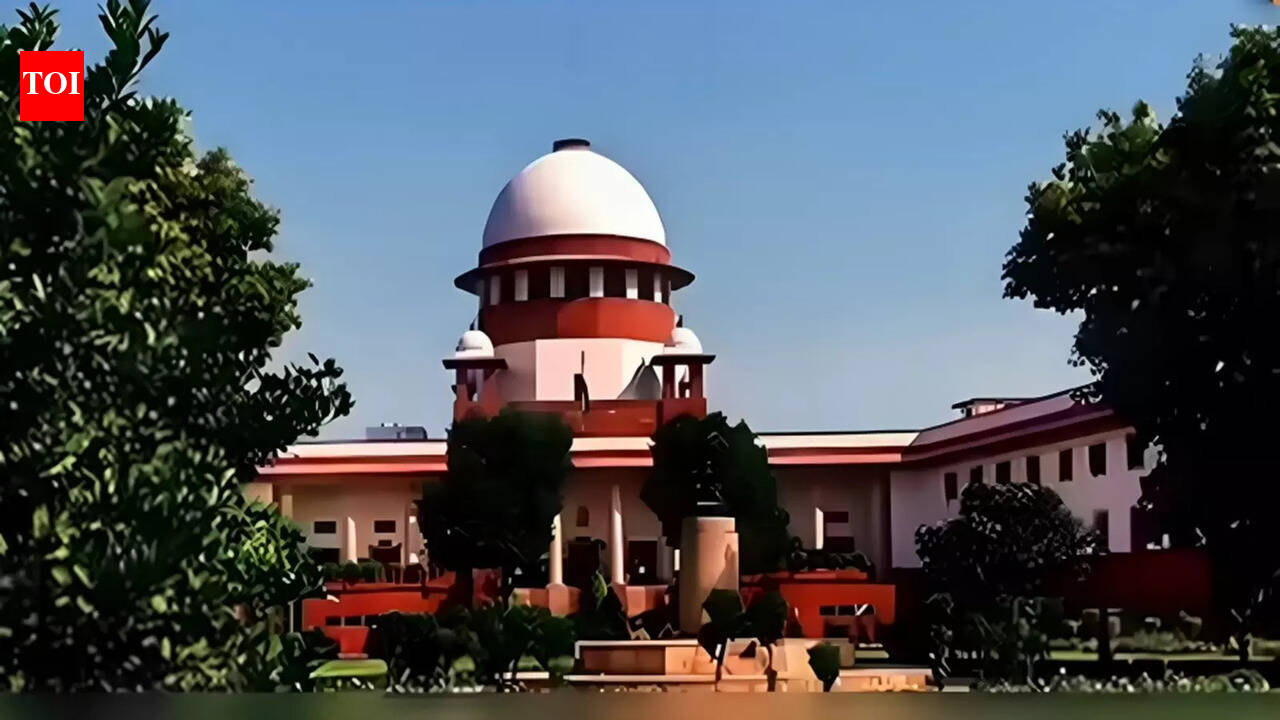
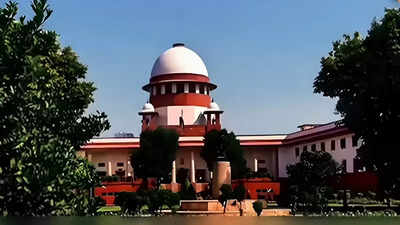
The Supreme Court on Monday questioned the Delhi government over the timing and manner of implementing a new law regulating school fees, flagging concerns that enforcing it midway through an academic year could create administrative confusion and financial strain for private unaided schools in the national capital.A bench of Justices P S Narasimha and Alok Aradhe was hearing petitions filed by associations of private unaided schools challenging the Delhi School Education (Transparency in Fixation and Regulation of Fees) Act, 2025, along with its subsequent rules and a government circular issued to operationalise the law during the ongoing academic year.Court raises concerns over hurried enforcementDuring the proceedings, Justice Narasimha underlined that the court was not opposed to the object of the legislation but was concerned about its execution. “We are completely in favour of the legislation. It is for public welfare,” Justice Narasimha said, adding that “hurry may end up not properly constituting the committees,” reports Live Law.He noted that the academic year had already begun and that the statutory timelines under the Act had passed. “This year has already started. This is completely convoluted. The approval should have been done by July and that has also passed,” Justice Narasimha remarked, reports Live Law.Framework of the 2025 ActThe Act, notified on December 10, introduces a detailed regulatory mechanism governing school fees in Delhi. It specifies permissible fee components, accounting norms, and restrictions on additional charges, while expressly prohibiting capitation fees and collections beyond what is approved under the law.A three-tier committee structure forms the backbone of the legislation, with School Level Fee Regulation Committees (SLFRCs) tasked with examining fee proposals submitted by private schools. A circular dated December 24 directed schools to constitute SLFRCs by January 10 and submit proposed fees by January 25 for the academic year 2025–26.High Court order and extended deadlinesThe Delhi High Court, while dealing with petitions challenging the constitutionality of the Act and the circular, declined to stay the notification on January 8. However, it extended the deadline for setting up SLFRCs until January 20 and the deadline for submission of fee proposals until February 5.The Supreme Court was hearing appeals against this order, with the petitioners seeking a stay on the operation of the Act and the circular.Arguments by school managementsSenior advocate Mukul Rohatgi, appearing for the school associations, argued that the manner of enforcement was inconsistent with the statutory scheme. He submitted that the Act did not permit retrospective fee fixation for an academic year that had already commenced. Under Section 5 of the Act, Rohatgi pointed out that schools were required to submit proposed fees for a three-year block by July 31 of the current academic year, a timeline that had already elapsed, reports PTI.Rohatgi further contended that the circular attempted to retrospectively regulate fees for the academic year beginning April 1, 2025, despite the Act coming into force only in December, a submission discussed during the hearing covered by Live Law.Government’s response and court’s observationsAdditional Solicitor General S V Raju, representing the Directorate of Education, told the bench that timelines had been extended at the request of schools and that the fees currently being charged would be deemed proposed fees for 2025–26. He stated that once approved, the fees would apply from April 2025.The bench expressed concern over this approach. Justice Narasimha remarked that retrospective application could lead to recovery issues and affect institutional viability. “You are forcing people overnight to get up and do it. It is a very ideal Act for a very good purpose, but implement it in a proper way,” he said, as quoted by Live Law.The court said it would interfere as little as possible and indicated that the mere constitution of SLFRCs was not objectionable. However, it asked the Delhi government to reconsider the issue of retrospective fee fixation and return with clarity. The matter has been directed to be listed again next Tuesday.
About the Author