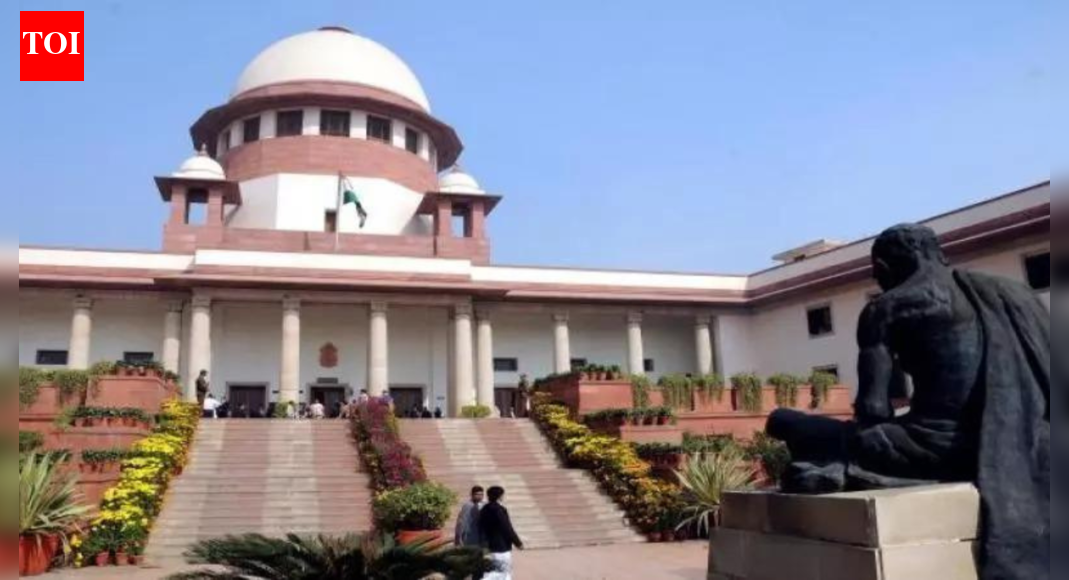
NEW DELHI: Invoking Manusmriti which says no mother, no father, no wife, and no son deserves to be forsaken and a person who abandons them should be fined, Supreme Court Tuesday held that a daughter-in-law who becomes a widow after the death of her father-in-law is entitled to claim maintenance from his estate under the Hindu Adoptions and Maintenance Act, 1956.The confusion arose as it was contended that a daughter-in-law, who became widow during the lifetime of father-in-law, was entitled to maintenance but not in the case where she became widow after his death. The court said the classification made between widowed daughters-in-law based solely on the timing of the husband’s death is unreasonable and arbitrary and in both cases she is entitled to maintenance.A bench of Justices Pankaj Mithal and S V N Bhatti said Section 22 o Act provides for the maintenance of dependants and casts an obligation upon all the heirs of the deceased Hindu to maintain the dependants of the deceased out of the estate inherited by them from the deceased and it includes daughter-in-law who becomes widow. It said that the provision contemplates “maintenance of dependants”, including “widowed daughter in-law” from the estate of her father-in-law.“A son or the legal heirs are bound to maintain all the dependent persons out of estate inherited i.e. all persons whom the deceased was legally and morally bound to maintain. Therefore, on the death of son, it is the pious obligation of father-in-law to maintain widowed daughter-in-law, if she is unable to maintain herself either on her own or through the property left behind by the deceased son. The Act does not envisage to rule out the above obligation of the father-in-law to maintain his widowed daughter-in-law, irrespective of the fact when she became a widow whether prior or after his death,” SC said. “Denying maintenance to a widowed daughter-in-law… on a narrow or technical construction of the statute would expose her to destitution and social marginalisation…”
About the Author