
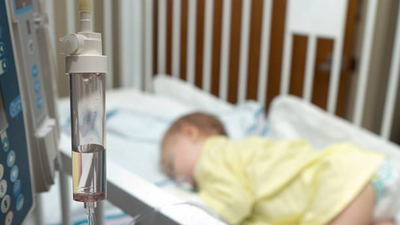
What began as an ordinary winter day turned into a race against death for two families in Faridabad, when their infants accidentally inhaled food particles that silently blocked their lungs, pushing both children to the brink of fatal respiratory failure.Two babies, aged just one year and eight months, were rushed to Amrita Hospital, Faridabad in critical condition. Doctors say that in both cases, even a short delay could have ended in tragedy.
One year old child struggled with breathing issues for a week
The first child, aged one year and three months, had been suffering from persistent cough and breathing difficulty for nearly a week and was undergoing treatment at another hospital. His condition kept worsening. By the time he reached hospital, his oxygen levels had dropped, and he was struggling to breathe. After being stabilised overnight in the paediatric intensive care unit (PICU), doctors performed an emergency bronchoscopy the next morning. What they found was alarming, a peanut had completely blocked the child’s right main airway, cutting off air supply to the entire lung. “Peanuts and similar food items swell when they enter the airway and come in contact with moisture,” said Dr. Sourabh Pahuja, Senior Consultant, Pulmonary Medicine. “In this case, the lung was not receiving air at all. If removal had been delayed further, the child could have developed lung collapse, severe infection, or life-threatening oxygen failure.” The peanut was removed in time. Within hours, the child’s oxygen levels improved, and he was discharged the very next day.Your health isn’t in a capsule: Doctor explains why real wellness has no shortcut
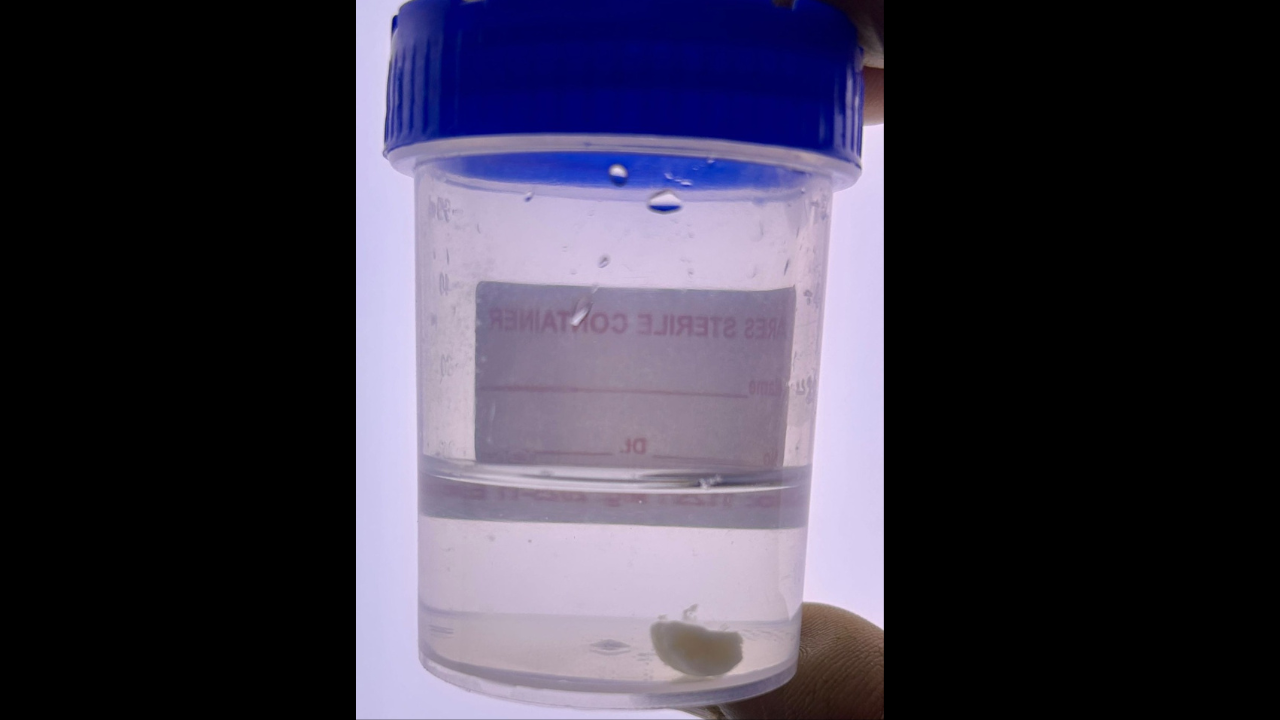
Image source: Amrita Hospital, Faridabad
“We kept thinking it was just a stubborn cough,” said the child’s father. “We had no idea something was stuck inside his lung. The doctors saved our child’s life.”
In another case, the oxygen dropped to 40%
Just hours later, the hospital faced an even more frightening emergency. An eight-month-old baby was rushed in with oxygen saturation of just 40 percent, a level doctors describe as critically life-threatening. Medical records showed the baby had been ill for nearly 10 days and had been treated elsewhere. Scans indicated a foreign object lodged deep inside the left lung. “There was no time to wait,” said Dr. Pahuja. “The baby was not maintaining oxygen levels. Even minutes mattered.”The infant was taken straight to the operating theatre. The procedure was extremely challenging due to the tiny size of the baby’s airway and the dangerously low oxygen reserve. When standard instruments failed, the medical team deployed advanced freezing (cryotherapy) technology to safely attach to and extract the organic foreign body. “The object was removed within minutes,” Dr. Pahuja said. “But because it had remained inside the airway for many days, it had already caused swelling and damage.”The baby required two to three days of intensive monitoring before his breathing stabilised and was later discharged.“We were told our baby might not survive the night,” said the child’s mother. “Hearing him breathe normally again felt like a miracle.”Doctors emphasised that both rescues were possible only because of a highly coordinated, multi-disciplinary response involving specialists trained to manage paediatric airway emergencies.“Managing foreign body aspiration in infants is among the most complex emergencies we face,” said Dr. Maninder Singh Dhaliwal, Principal Consultant, PICU & Pediatric Respiratory Medicine. “These children arrive with minimal oxygen reserve. Every step, from anaesthesia to airway access, must be precise. There is absolutely no margin for error.”
Doctors sound a serious warning
Doctors say such cases are more common than most parents realise, and often turn fatal because warning signs are missed or treatment is delayed. “A sudden coughing fit during feeding is not something to ignore,” Dr. Pahuja warned. “If coughing, wheezing, or breathing difficulty continues beyond a day, parents must seek immediate medical evaluation. Food may have entered the airway instead of the food pipe.”Doctors also stressed that not all hospitals are equipped to handle such emergencies.“Foreign body removal from infant airways requires specialised skills, paediatric anaesthesia support, and advanced equipment,” Dr. Pahuja said. “Losing precious time at under-equipped centres can cost a child’s life.”
A message every parent needs to hear
Doctors strongly advise parents to:
- Never give infants small, hard foods like peanuts or cashews
- Always supervise children during meals
- Keep small objects out of children’s reach
Both infants in these cases were from Faridabad. Doctors say timely intervention saved their lives, but the outcome could easily have been very different.“This is a preventable tragedy,” doctors stressed. “Because when a child cannot breathe, there is no second chance.”
About the Author