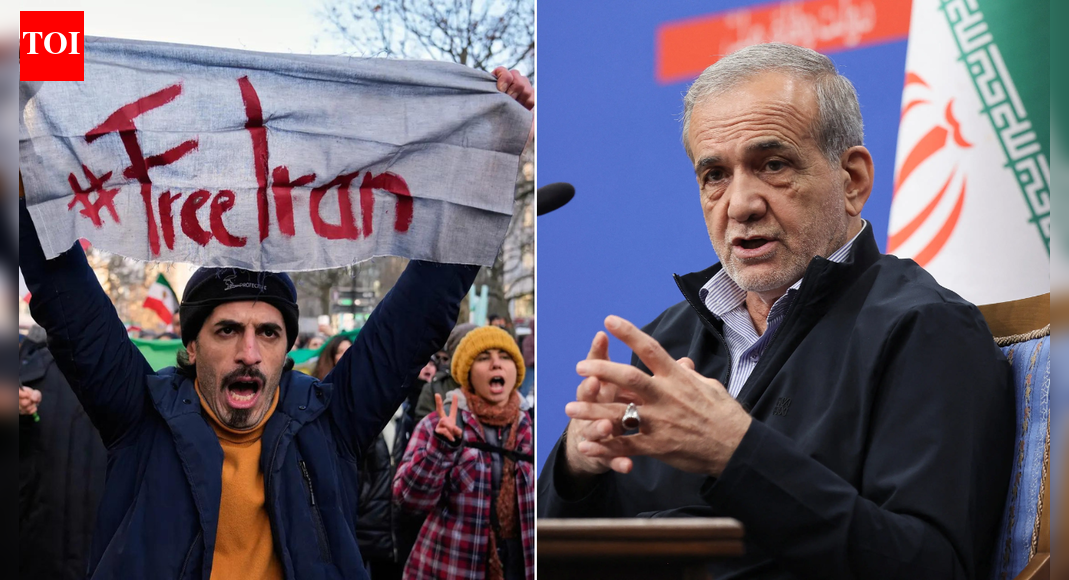
Iranian President Masoud Pezeshkian on Sunday accused the United States and Israel of seeking to destabilise Iran by orchestrating unrest, even as he said the government would listen to public grievances while warning against what he described as violent rioters.“The US and Israel want to sow chaos and disorder in Iran by ordering riots,” Pezeshkian said, calling on Iranians to distance themselves from “rioters and terrorists,” according to remarks carried by Reuters.His comments came as protests driven initially by economic anger entered their third week, evolving into a direct challenge to Iran’s theocratic system and drawing a forceful response from state authorities.
PTI image
‘We should sit with them’
In an interview aired on Iranian state television on Sunday, Pezeshkian struck a dual tone, acknowledging public frustration while drawing a firm line against violence.“People have concerns, we should sit with them and if it is our duty, we should resolve their concerns,” Pezeshkian said. “But the higher duty is not to allow a group of rioters to come and destroy the entire society.”The interview, recorded earlier, had been expected to air on Saturday but was broadcast a day later. The remarks reflected a hardening stance from the reformist president, who has so far struggled to contain public anger over Iran’s worsening economy.
Rising death toll and detentions
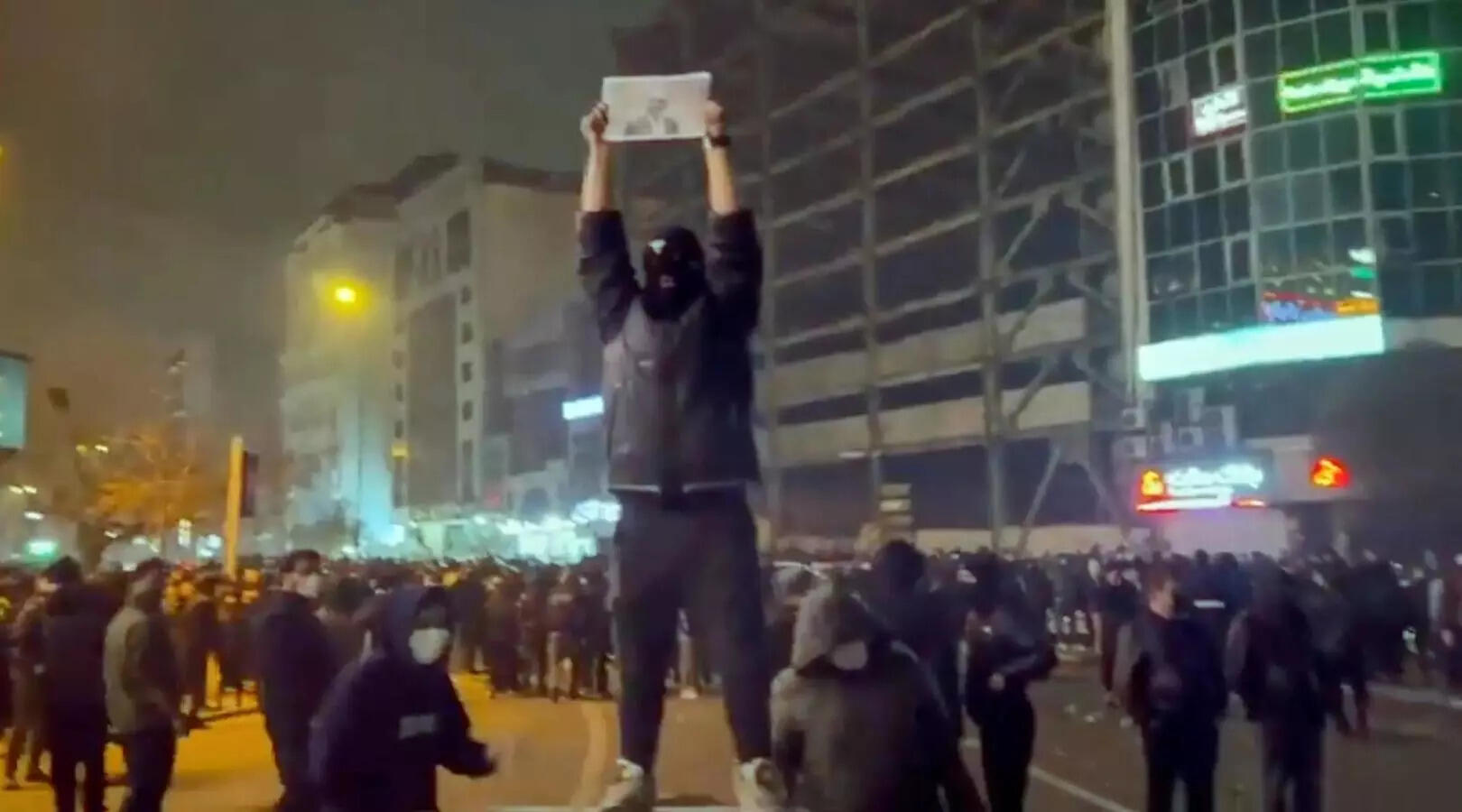
Rights groups say the crackdown on demonstrations has turned increasingly deadly. Iran Human Rights, a Norway-based organisation, said at least 192 protesters have been killed since the unrest began, warning that the true toll could be higher.“Since the start of the protests, Iran Human Rights has confirmed the killing of at least 192 protesters,” the group said, adding that the deaths “may be even more extensive than we currently imagine”.A separate US-based group, the Human Rights Activists News Agency, said it had confirmed 116 deaths, including 37 members of the security forces, and reported that around 2,600 people had been detained.
Internet blackout deepens concerns
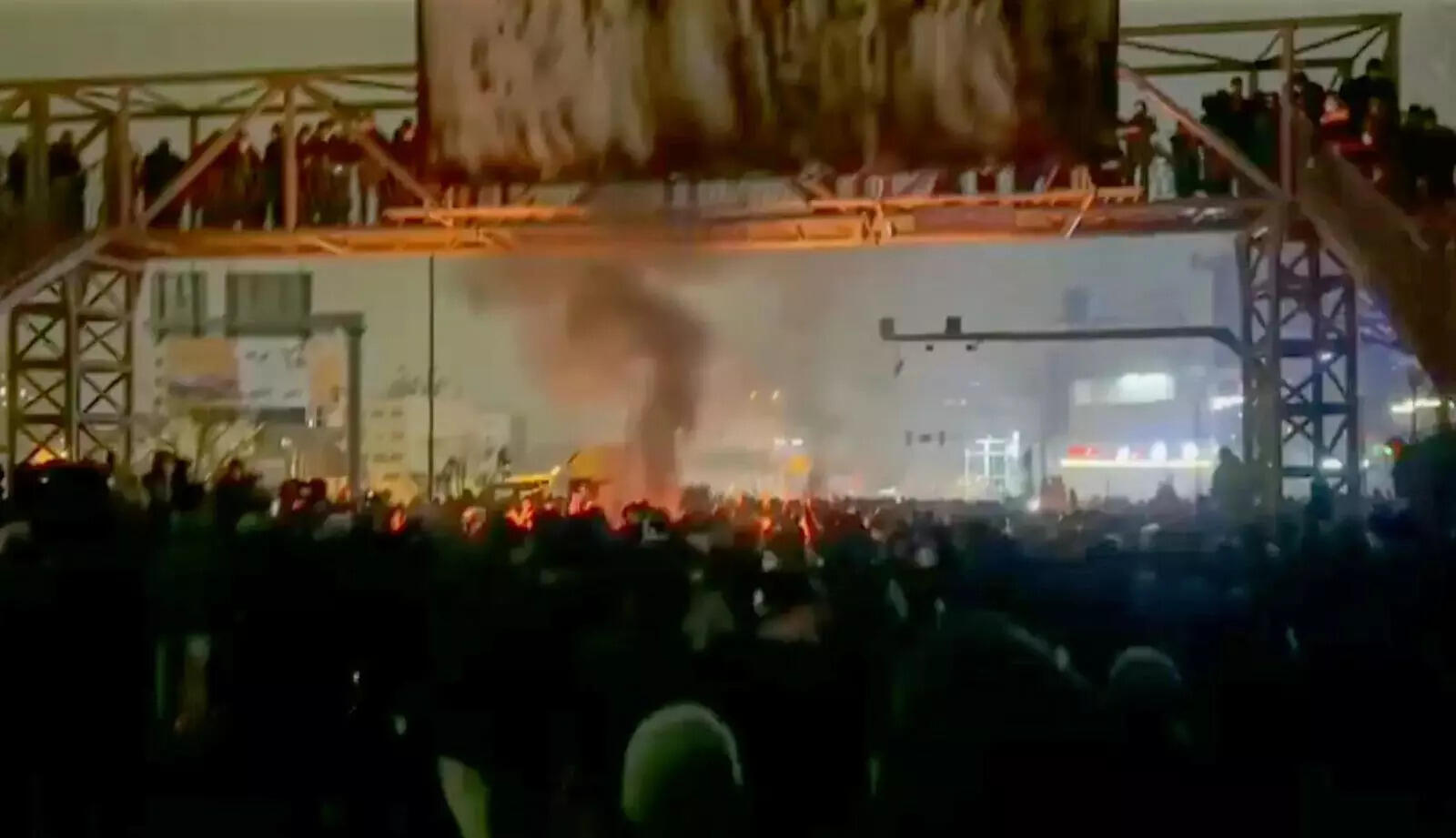
Authorities have imposed an internet shutdown lasting more than 60 hours, according to monitoring group Netblocks, making it difficult to assess the full scale of the protests. Activists say the blackout has limited the flow of information and raised fears of a wider crackdown.Despite the restrictions, videos verified by AFP showed large crowds gathering in Tehran and Mashhad, with footage depicting burning vehicles and confrontations with security forces. Other unverified clips circulating online appeared to show families identifying bodies in Tehran morgues.
Parliament issues stark warnings
As protests continued, Iranian parliament speaker Mohammad Bagher Ghalibaf warned that the US military and Israel would be “legitimate targets” if Washington attacked Iran.“In the event of an attack on Iran, both the occupied territory and all American military centers, bases and ships in the region will be our legitimate targets,” Ghalibaf said in remarks broadcast on state television, as lawmakers chanted slogans including “Death to America!”He praised police and the Revolutionary Guard, including its Basij militia, for having “stood firm” during the unrest and vowed severe punishment for those arrested.
Regional and international reactions
US President Donald Trump voiced support for protesters, writing on social media that “Iran is looking at FREEDOM, perhaps like never before. The USA stands ready to help!!!” He later warned Iranian authorities against killing demonstrators.Israel said it was “watching closely” developments in Iran, while Israeli Prime Minister Benjamin Netanyahu discussed the situation with US Secretary of State Marco Rubio, according to an Israeli official.Iran’s exiled crown prince Reza Pahlavi also urged demonstrators to continue protests, calling on them to reclaim public spaces and carry national symbols predating the 1979 Islamic Revolution.
Protests rooted in economic collapse
The unrest began on December 28 following the collapse of Iran’s currency, with the rial trading at over 1.4 million to the US dollar amid sanctions linked to Iran’s nuclear programme. What started as protests over the cost of living has since broadened into one of the most sustained challenges to Supreme Leader Ayatollah Ali Khamenei’s rule in more than three years.As demonstrations persist despite security deployments and information blackouts, concerns continue to mount over further violence and the possibility of an intensified crackdown.
About the Author