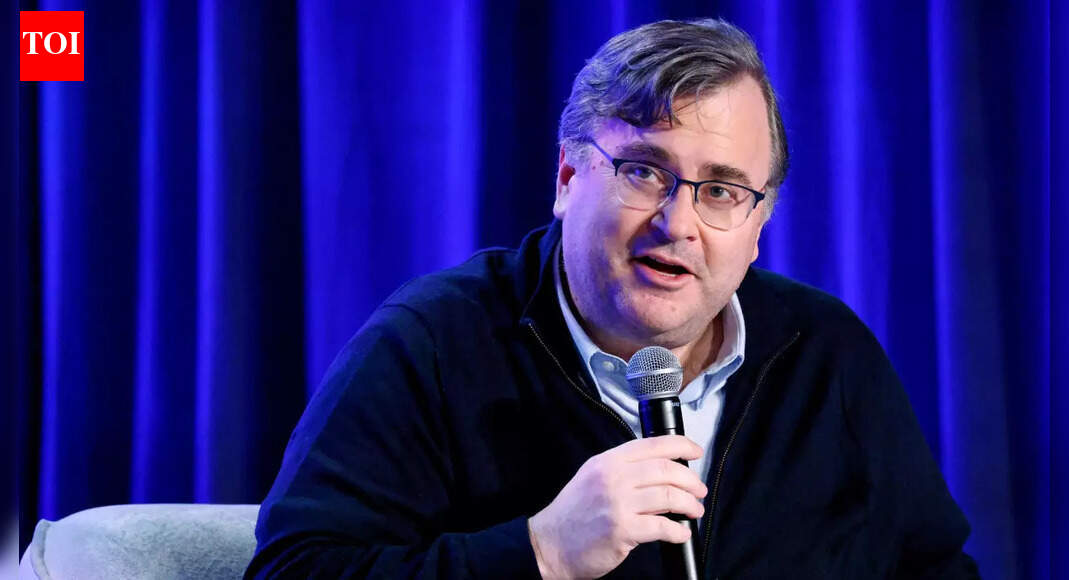
LinkedIn founder Reid Hoffman and one of the one of the Democratic Party’s biggest donors, has now joined the list people opposing the proposed California wealth tax. Hoffman has strongly opposed California’s proposed 5% wealth tax on billionaires. In a post shared on social media platform X (formerly known as Twitter), Hoffman said that the California’s Billionaire tax is ‘badly designed’ and comes with ‘massive flaws’ and there are chances that it will become ‘horrendous’ for innovation. Hoffman further revealed that Rep. Ro Khanna had reached out to discuss the proposal and Hoffman made his opposition clear. “One well‑documented example is the horrendous idea to tax illiquid stock in the proposal,” Hoffman wrote. “Poorly designed taxes incentivize avoidance, capital flight, and distortions that ultimately raise less revenue.”
Reid Hoffman’s dialogue with Ro Khanna
Despite his criticism of the California wealth tax, Hoffman said he appreciated Khanna’s willingness to engage. He noted that the congressman sees Silicon Valley as a massively important creation of the future and wants to “preserve and evolve capitalism” through the tax. Hoffman agreed on the need to balance innovation with broader inclusion, writing:n“It is true that we need to preserve and grow the incredible creation and generativity of Silicon Valley. It is also true that we must figure out how to help people who have not benefited from the wealth, jobs, and company creation engine of Silicon Valley thus far.”Khanna responded in a separate post, thanking Hoffman for the “excellent dialogue” and saying, “You summarized my goal and aspiration correctly!”
Read LinkedIn co-founder Reid Hoffman’s complete post here
Rep. Khanna reached out to me to discuss the proposed California wealth tax; and while I am against the proposed tax, I’m always open to dialogue with our elected leaders.The proposed CA wealth tax is badly designed in so many ways that a simple social post cannot cover all of the massive flaws. One well-documented example is the horrendous idea to tax illiquid stock in the proposal. Poorly designed taxes incentivize avoidance, capital flight, and distortions that ultimately raise less revenue.Some of my takeaways from my conversation with Rep. Khanna are that he believes (1) that Silicon Valley is a massively important creation of the future, and (2) that he wants to preserve and evolve capitalism through creating a contribution loop from the massively wealthy to helping the rest of the people in the state.It is true that we need to preserve and grow the incredible creation and generativity of Silicon Valley. It is also true that we must figure out how to help people who have not benefited from the wealth, jobs, and company creation engine of Silicon Valley thus far. I, along with many others, have expressed to Rep. Khanna that this wealth tax proposal is not the best way to achieve those objectives.
California’s billionaire tax sparks tech exodus
The mass restructuring comes as California debates a controversial ballot measure that would impose a one-time 5% tax on residents worth over $1 billion. If voters approve the measure in November 2026, it would apply retroactively to anyone living in California as of January 1, 2026. For Page—currently ranked the second-richest person globally by Bloomberg’s Billionaires Index—that could mean a tax bill exceeding $12 billion.The New York Times reported in December that Page told associates he was considering relocating to Florida specifically because of this proposal. He’s not alone in his concerns. Fellow tech billionaire Peter Thiel has opened a Miami office for his investment firm, Thiel Capital, while venture capitalist David Sacks launched operations in Austin, Texas.The proposed tax, backed by healthcare union SEIU-United Healthcare Workers West, aims to raise $100 billion over five years from California’s approximately 200 billionaires. Supporters argue the revenue would offset anticipated federal budget cuts to healthcare, education, and food assistance programs.
About the Author