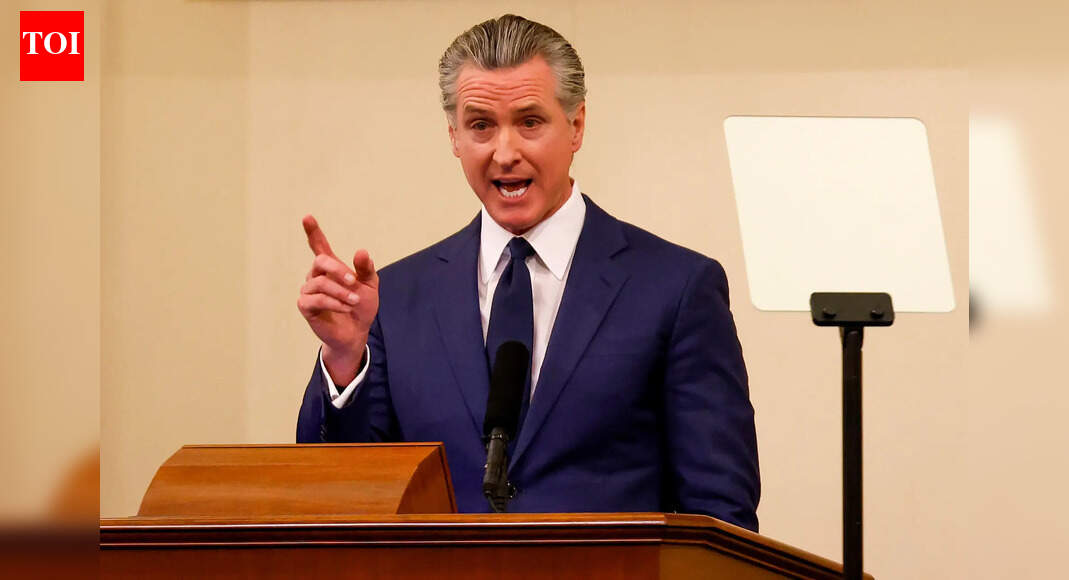
California Governor Gavin Newsom has proposed major changes to the state’s K-12 education system, aiming to simplify its complicated governance and make it easier to support students and schools. Under the plan, the elected State Superintendent of Public Instruction would have fewer powers, while the State Board of Education would gain more authority over the California Department of Education.Newsom said the state can no longer delay reforms that have been suggested repeatedly over the past century. “These critical reforms will bring greater accountability, clarity and coherence to how we serve our students and schools,” he said. Policy experts have long described California’s education system as complex, with overlapping responsibilities between the governor, the superintendent, the state board, the legislature, and local school boards. These overlapping duties, they say, can sometimes slow decision-making and make it harder to address student needs effectively.
State board of education to take a larger role
If the proposal is approved, the 11-member State Board of Education, whose members are appointed by the governor, would oversee the California Department of Education. The State Superintendent would shift from managing day-to-day operations to focusing on coordinating education policies across all levels, from early childhood to post-secondary education. The exact responsibilities of the superintendent under this new plan have not been fully detailed.California is one of only nine states in the U.S. where the top schools official is elected rather than appointed. In most other states, the schools chief is chosen by the governor or the state board. Newsom’s proposal echoes recommendations from a December 2025 report by Policy Analysis for California Education (PACE), which called for a stronger, more coherent governance system to help schools navigate funding challenges, inequities, and learning gaps worsened by the COVID-19 pandemic.
Past efforts to change the superintendent’s role
The idea of reducing the powers of the state superintendent is not new. For decades, reports and ballot measures have suggested reforms. In 2023, a proposed amendment, ACA 9, would have made the position appointed by the governor, but it was withdrawn after opposition from teachers’ unions, school boards, and other groups. Other reports recommending changes to governance date as far back as 1920 and 2002.Current Superintendent Tony Thurmond is completing his second term in 2026. During his tenure, the department expanded programs in literacy, community schools, and student wellness. Thurmond has also faced criticism over side jobs and creating a “toxic workplace.” He is now running for governor.
Support from education groups
Newsom’s proposal has received backing from several education organizations, including the Association of California School Administrators, California Association of School Business Officials, Californians Together, and EdTrust-West, which focuses on equity in education. Christopher Nellum, executive director of EdTrust-West, said the reforms are “essential” to reduce long-standing inequities affecting low-income students, students of color, and multilingual learners.With federal involvement in K-12 education decreasing and funding becoming more uncertain, California now faces greater responsibility for educating children. Newsom’s proposal aims to make the system more accountable, efficient, and focused on student needs, while addressing the challenges of inequity and opportunity gaps that have persisted for decades.
About the Author