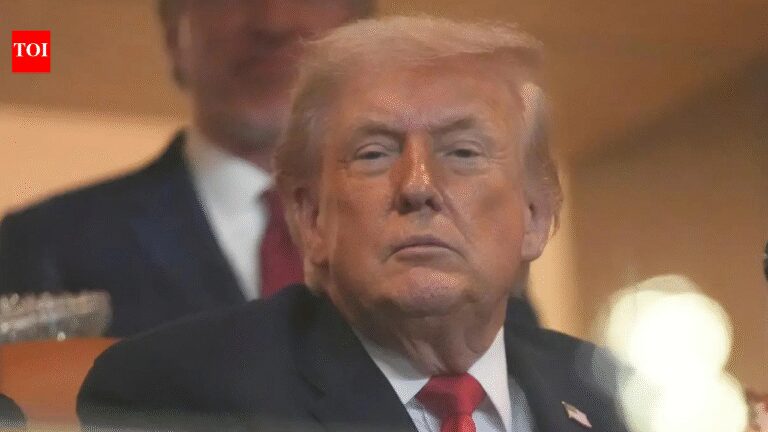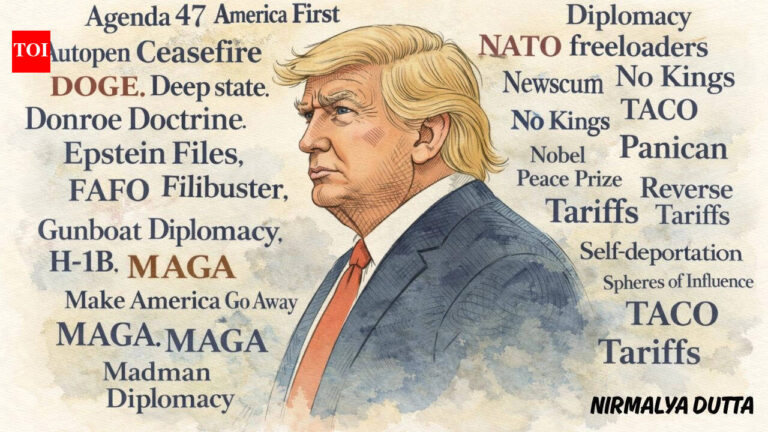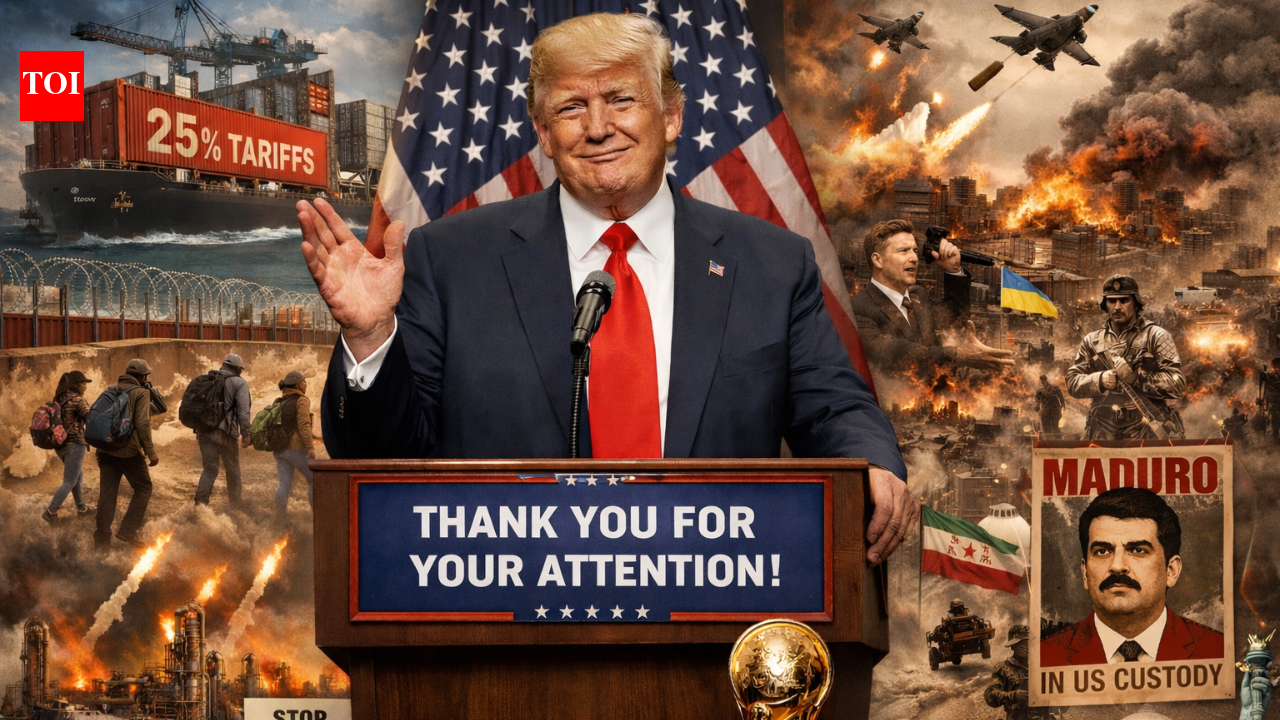
“Thank you for your attention.” Signed off by Donald J Trump, the line appears so frequently in his Truth Social posts that it has become a signature of his second presidency. And this time, the world has given him exactly what he seeks — attention, in abundance.With drama, chaos, hustle and rumble as constant companions, Donald Trump’s return to power, so far this year, has been anything but quiet. A year into his return to the White House, Donald Trump has left little room for dull moments. In just twelve months, he ordered a large-scale military strike on Venezuela and saw Venezuelan President Nicolas Maduro captured by US forces and flown to the United States from his own residence to face federal charges, bombed Iranian nuclear facilities, and imposed sweeping tariffs that touched roughly half the planet. At home, he unleashed one of the most aggressive immigration crackdowns in modern US history, all while continuing to seek a Nobel Peace Prize with earnest insistence. The world has learned to keep one eye on Washington at all times — unsure of what might come next.
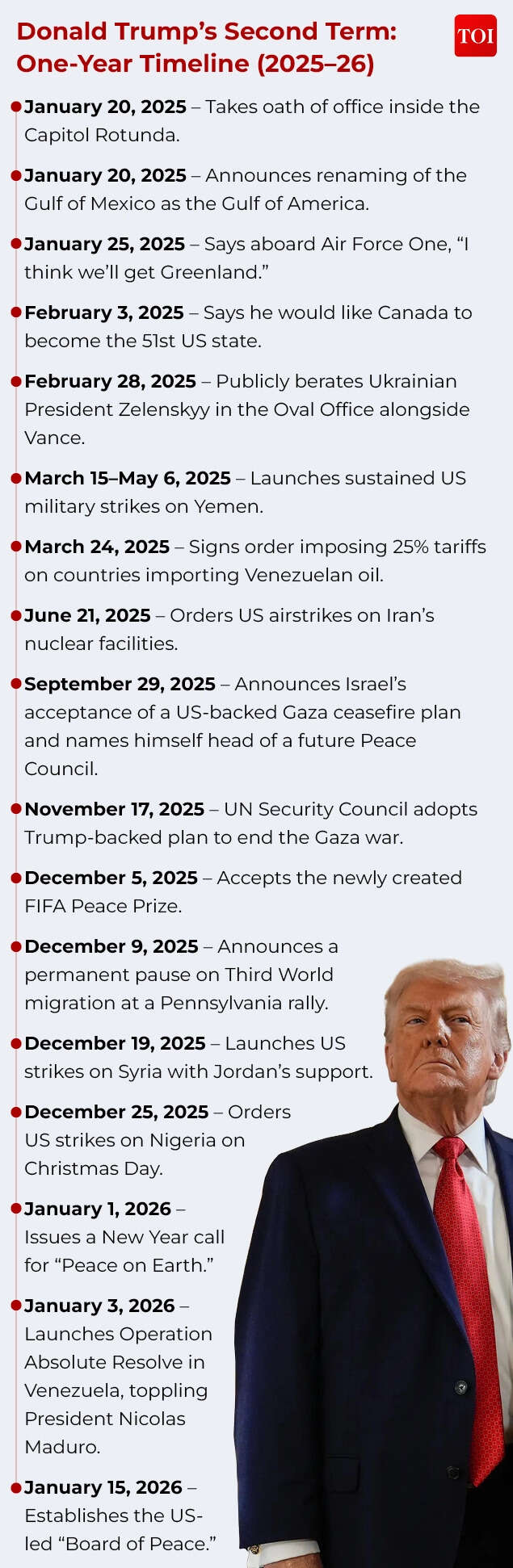
Trump does not merely thank people for their attention; he works relentlessly to command it. In mid-December, The Washington Post took the burden to note down that since his re-election, Trump had signed off his posts with “thank you for your attention” at least 190 times, a phrase that now reads less like courtesy and more like a personal brand.Like a showman wielding a magician’s wand, Trump has moved swiftly across a wide and often bewildering range of issues. From tariff threats and peace overtures to aggressive military strikes, and even audacious musings about acquiring Canada or Greenland to fold into his vision of a “Great America,” Trump has turned governance into a near-constant spectacle.Over the past year in the White House, Trump has exercised extraordinary executive authority through a shock-and-awe policy blitz, expanding presidential power, reshaping America’s relations with the world.
Trump as designer-in-chief?
No actor, sports star, military leader, or head of state has commanded the world’s attention so relentlessly this year.Trump is not only routinely broadcast live on cable television as he signs executive orders and spars with reporters; he has also taken on the role of designer-in-chief, overseeing makeovers of the East Wing, the Lincoln bathroom, and the Kennedy Center.He has also made headline-grabbing appearances at sporting events rarely attended by sitting presidents, from the Super Bowl to the FIFA Club World Cup.FIFA even went so far as to honor “Nobel-less” Trump with a newly invented award, the FIFA Peace Prize, recognising, as it put it, his statements about the efforts he made as a “messenger of peace.”
Self-styled Nobel laureate?
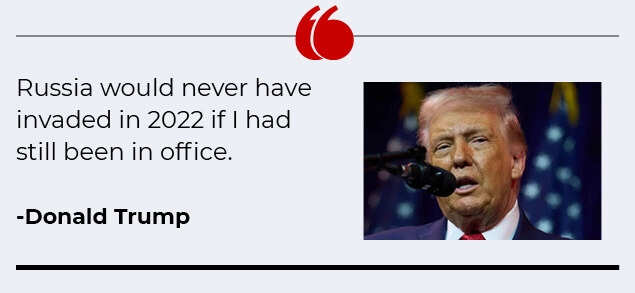
Donald Trump’s rhetoric on “peace” often sounded like a song on repeat. He repeatedly and insistently claimed to have resolved not one, but five, six, seven, and eventually eight wars.He returned to the presidency with a promise to end the Russia–Ukraine war in just one day, repeatedly dismissing the conflict as “Biden’s mess.”“Russia would never have invaded in 2022 if I had still been in office,” he said.
“It was Joe Biden’s war, not my war,” Trump added.Several countries soon lined up to echo Trump’s narrative, nominating him for the Nobel Peace Prize, largely in an apparent bid to stay in his good books. Israel, Pakistan, Cambodia, Azerbaijan, and Rwanda were among those on the list.Trump, meanwhile, continued his public chant, and visible desperation, for a Nobel Peace Prize. On numerous occasions, he insisted that he rightfully deserved the honor. But it never came his way. Instead, the Peace Prize was awarded to Venezuelan politician Maria Corina Machado.Months later, Machado’s country fell under the wrath of the “peace-loving” Donald Trump, as the United States struck the Venezuelan capital, Caracas, toppled oil-rich Venezuela’s sitting president Nicolas Maduro, and took him and his wife into custody.Weeks later, Machado was invited to the White House, where she surrendered her Nobel medal to its most eager aspirant — Trump. The Nobel Committee, seated in Norway, felt compelled for the first time to clarify that the prize cannot be revoked, shared, or transferred.Why would that matter to a “self-styled Nobel laureate”? Shortly after, the White House confirmed that the president had accepted the medal—finally becoming a “self-declared” Nobel laureate, having obtained the prize in a way far removed from its ideals.
Tariff on his own terms
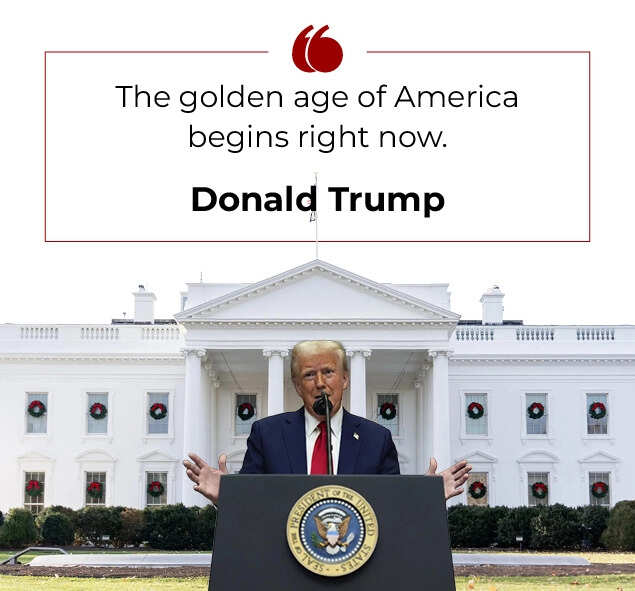
Most recently, Donald Trump turned his sights on long-time allies, threatening Nato partners, particularly European countries with tariffs, after many openly bristled at his audacious push to encroach on Greenland.“The golden age of America begins right now,” Trump claimed as he started his second stint in the White House. This time, there would be no quiet trade negotiations, no patient frameworks worked out behind closed doors. Trade, Trump made clear, would be enforced.
This newly forged Trumpian doctrine has defined the year. Tariffs were announced, hiked, paused, rolled back, and resurrected, sometimes within days, leaving governments, markets, and multinational corporations scrambling to keep up. Policy uncertainty became a feature, not a flaw.The tariff threat cast a wide net: China, India, Brazil, Canada, and others all found themselves in Trump’s crosshairs. For almost any grievance that irritated him, Trump appeared to have one preferred response — tariffs.
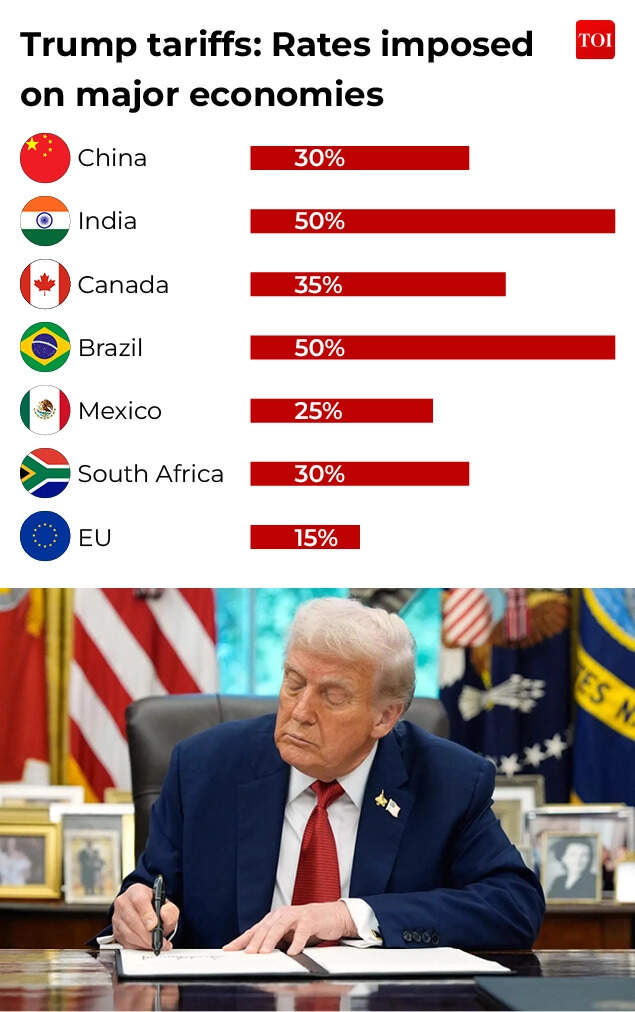
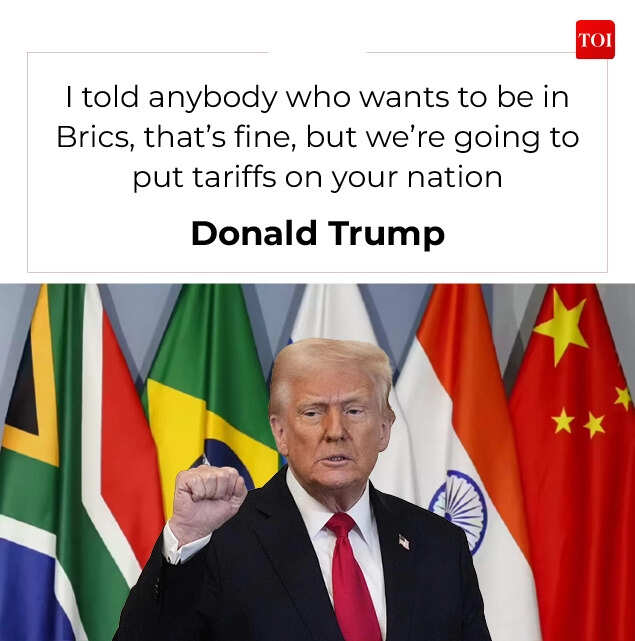
His long-simmering rivalry with China, America’s closest competitor in the global order, quickly resurfaced. Trump opened aggressively with Beijing, imposing a staggering 104% tariff. After China retaliated with 125%, Trump escalated further to 145%, pushing trade relations between the world’s two largest economies toward chaos.The tug of war, however, proved short-lived. Washington later softened its stance, scaling tariffs on China down to 30%, with further talks between Trump and Chinese President Xi Jinping expected.India, too, was not spared — even though Trump often referred to Prime Minister Narendra Modi as a “great friend.” Citing the ongoing Ukraine war, Trump claimed that India’s purchase of Russian oil was indirectly funding Moscow and fueling the tragedy in Ukraine.The US imposed a 25% tariff on Indian goods, later doubling it to 50%, along with an additional “penalty.”Trump’s anxieties were not limited to trade balances. He also took aim at the rise of Brics, warning that the bloc was “set up to hurt us.”“I told anybody who wants to be in Brics, that’s fine, but we’re going to put tariffs on your nation,” Trump said repeatedly, arguing that the bloc aimed to promote de-dollarisation, weaken the Bretton Woods system, and dilute American influence.
Not only distant rivals but close neighbours also came under scrutiny. Canada and Mexico, America’s immediate neighbours, were firmly placed on Trump’s tariff radar.Each country had its own alleged offence: rare earth minerals in China’s case, Russian oil for India, the imprisonment of Trump ally and former Brazilian president Jair Bolsonaro for Brazil, and cross-border crime for Mexico and Canada. The reasons differed, but the remedy was always the same — Tariffs.Yet nothing was set in stone. Following a flurry of hastily issued orders, talks with multiple counterparts began, with several negotiations already concluded and others still under way.
Military aggression
Trade punishments were only part of the story. While some countries faced punishing tariffs, others encountered something far more severe — the direct military wrath of Donald Trump.Iran, for instance, had long been a fixation. Tehran’s nuclear ambitions so unsettled Trump that, in the first half of 2025, he opted for force, launching Operation Midnight Hammer to cripple the Khamenei regime’s nuclear aspirations.As 2026 began, Trump’s anger toward Tehran resurfaced with stronger and renewed intensity. Seizing on internal unrest, he openly backed massive demonstrations against Iran’s Supreme Leader, attempting to shape the country’s future from afar and impose his will on its political trajectory.In Latin America, Venezuela bore the brunt of Trump’s aggression early in the year. Days after delivering a New Year message invoking “Peace on Earth,” Trump abruptly shifted tone and ordered Operation Absolute Resolve. US forces struck Caracas, toppled the sitting president, Nicolas Maduro, and dragged him and his wife from the presidential residence to a prison in the United States, reducing a head of state to a detainee on American soil.
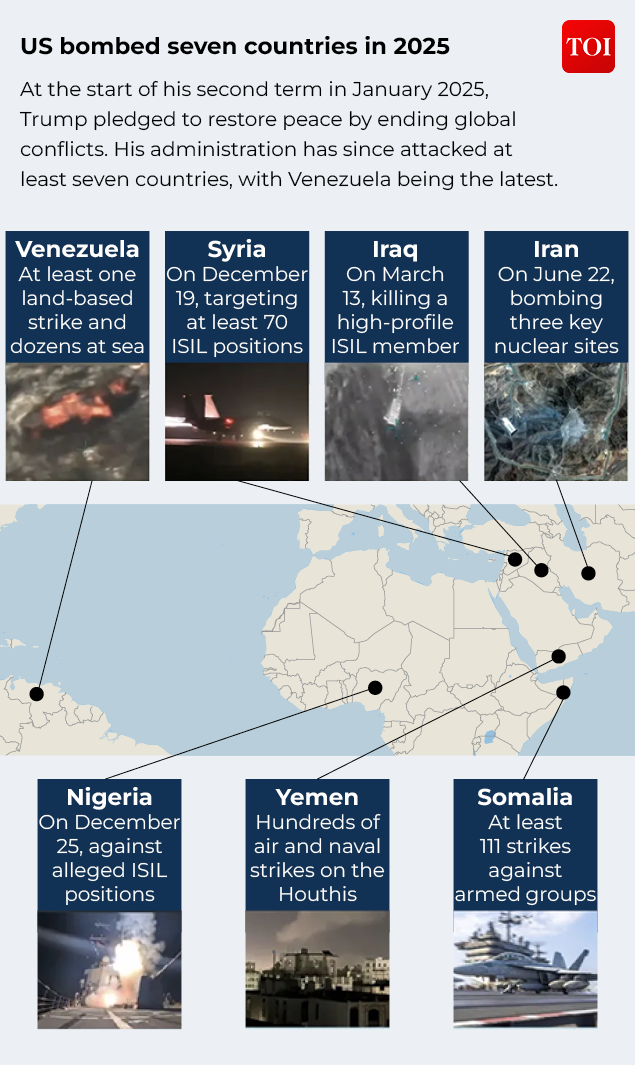
The operation left behind a destabilised country, one with the world’s largest oil reserves,suddenly open to exploitation by American capital.Venezuela was not alone. Trump also rattled multiple regions with bombing campaigns and military strikes in Nigeria, Somalia, Syria, Yemen, and Iraq.Yet Trump was hardly an anomaly in this regard. Over the past five decades, every US president, from Joe Biden and Barack Obama to Bill Clinton, both Bushes, and Ronald Reagan, has ordered military action in the Middle East, even as America’s long tradition of intervention in Latin America has persisted.
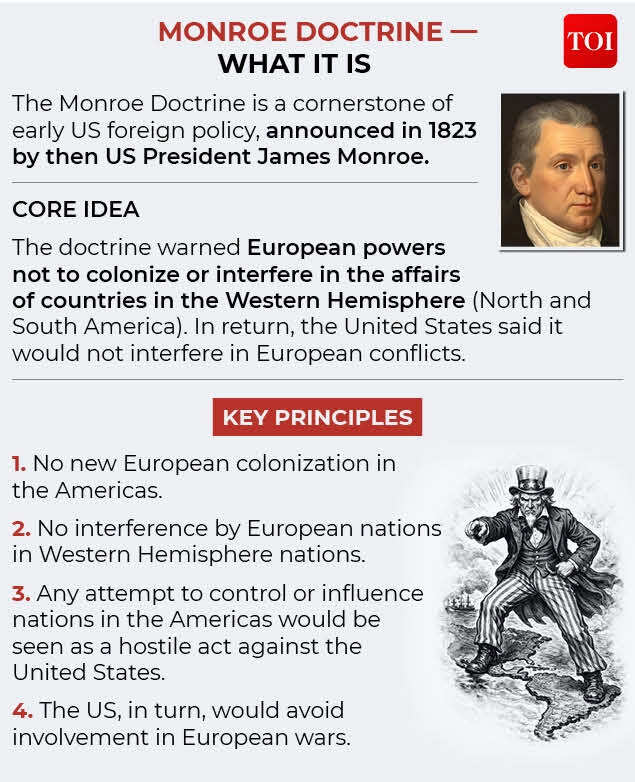
Trump justified his actions under what he grandly termed the “Donroe Doctrine” — a Trumpian rebranding of the 200-year-old Monroe Doctrine first articulated by the fifth US president, James Monroe.But unlike Monroe, whose vision was confined to the Western Hemisphere, Trump cast himself as a global enforcer, taking it upon himself to “sanitise” the world according to his own moral code.
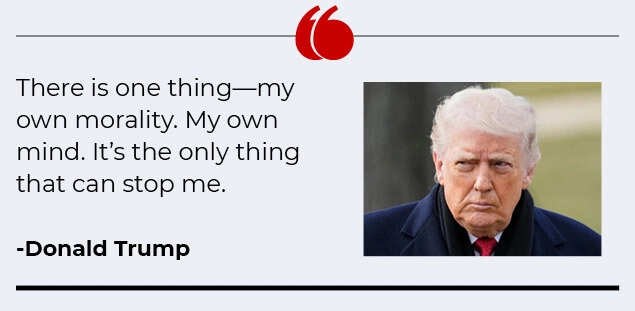
“There is one thing—my own morality. My own mind. It’s the only thing that can stop me,” Trump said. “I don’t need international law.”
Canada and Greenland — Trump’s Dreamland
The MAGA supremo’s imagined map of the United States appears to require dramatic revision. Donald Trump’s fascination with absorbing Canada and Greenland into America is no longer a whispered speculation, it is an openly declared ambition.“Now it is time, and it will be done,” Trump announced recently, doubling down on his assertion that Greenland — the mineral-rich Arctic island, should be brought under American control. As with most Trumpian projects, the ambition comes with a justification.
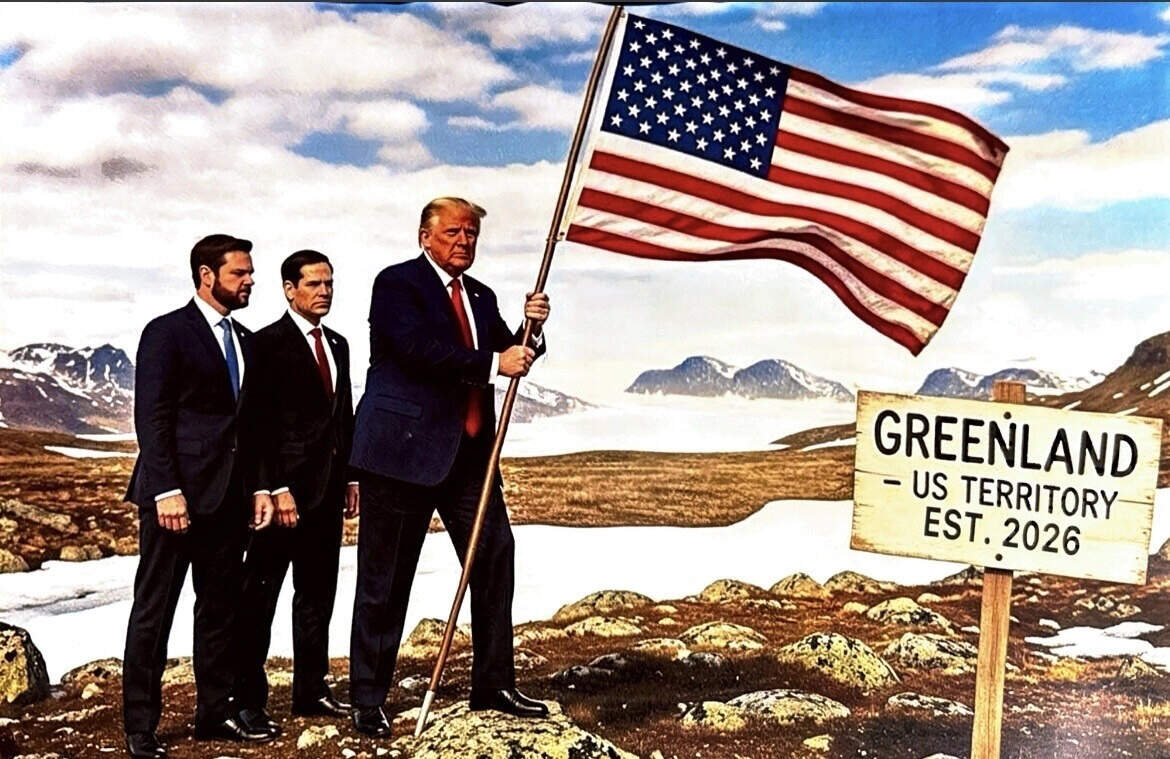
Trump argues that allowing Greenland to remain outside American hands risks China or Russia gaining influence there, turning either power into an unexpected US neighbour in the Arctic.Trump also wants the island for America’s “security reasons”.The White House also shared the image showing Trump alongside JD Vance and Marco Rubio planting a flag in Greenland and portraying it as “US territory.” In the process, Trump has shown a stark brand of realpolitik: alliances matter only until they become inconvenient. His fixation on Greenland has rattled Nato itself, straining ties with Denmark — Greenland’s sovereign power—and unsettling several European allies in a bloc traditionally seen as Washington’s closest strategic partner.“Nato has been telling Denmark for 20 years that ‘you have to get the Russian threat away from Greenland,’” Trump wrote. “Unfortunately, Denmark has been unable to do anything about it.”The Great White North, meanwhile, has not escaped Trump’s geopolitical imagination. Soon after beginning his second term, Trump declared that Canada would one day become America’s “51st state.”Canada — larger country in landmass than the United States, has shown little appetite for the idea. Instead, it has found itself on the receiving end of Trump’s economic pressure. Tariffs have already been imposed on several key Canadian sectors, with warnings of more to come.
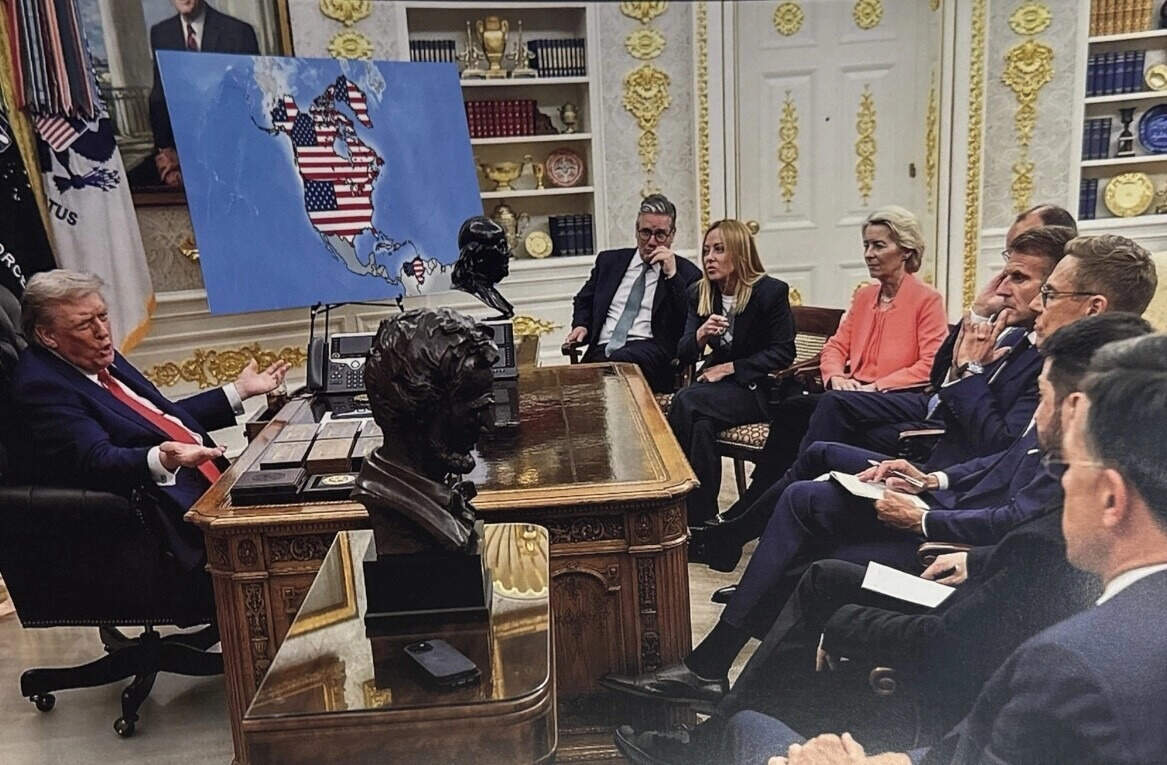
Trump’s antagonism toward Canada is not new. It dates back to his first term but intensified sharply last year, when he threatened to use “economic force” to absorb the country, recasting America’s closest neighbour not as a partner, but as a future possession.In Trump’s dreamland, borders are negotiable, allies expendable, and the map of North America remains unfinished.
The Trump immigration blitz
In the first week of his second inauguration, Trump set the tone for one of the most aggressive immigration crackdowns in US history. Plans were immediately underway for the mass deportation of over 10 million unauthorized migrants, fulfilling a central promise of his “America First” agenda.Border crossings have plummeted, ICE arrests have doubled, and detention numbers have reached record highs. Under “Border Czar” Tom Homan, the department of homeland security launched sweeping raids on sanctuary cities, overturning decades of policy that shielded schools, hospitals, and places of worship.
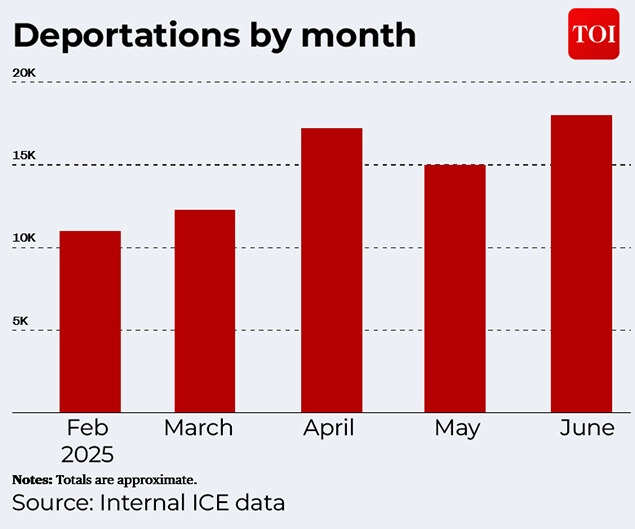
Trump’s approach relied not just on boots on the ground but executive power. In 2025 alone, he signed 225 executive orders, surpassing the total of his entire first term and marking the highest first-year count since Franklin D Roosevelt in 1933.Among the earliest actions was an order ending “catch-and-release.” By late 2025, US Border Patrol recorded zero releases for six consecutive months, with all apprehended individuals either detained or immediately returned. The policy was reinforced with the reinstatement of the “Remain in Mexico” program, forcing asylum seekers to wait outside US territory for their legal proceedings.Border security also remained a marquee priority. Trump’s administration secured $46.5 billion from the “One Big Beautiful Act” to fund a “Smart Wall” with advanced detection technology. According to Customs and Border Protection, 1,954 miles of barriers now span the southern border, including 644 miles from Trump’s first term.Across immigration, energy, government operations, and foreign policy, Trump has moved relentlessly, issuing sweeping directives even as legal challenges mount in federal courts. In the Trump White House, executive power is both a weapon and a signal: decisive, unapologetic, and unapologetically “America First.”
Trump’s ‘Board of Peace’
January began with Trump calling for “peace on Earth.” Within days, US strikes hit Venezuela, Iran was repeatedly threatened, and the gap between rhetoric and action widened. Peace, in Trump’s second term, quickly took on a sharper edge.At the centre of this approach is the “Board of Peace” — Trump’s attempt to build a parallel, deal-driven alternative to the United Nations. Born out of his fixation on resolving the Gaza conflict, the charter has seen invitations sent to nearly 60 countries, according to diplomats cited by Reuters. MAGA boss pitches it as decisive and unburdened by what he views as UN paralysis.
We are the only power that can ensure peace throughout the World.
Donald Trump
But peace comes with price. Member states would get three-year terms, while countries contributing over $1 billion in the first year would secure permanent seats. The proposal has drawn mixed global reactions, with critics calling it peace by cheque and power. Trump, however, is pushing aggressively, framing pressure and force as the fastest path to order.
Eclipse of liberal international order?
Over the past 365 days, the “America First” doctrine has come to define US policy, signalling the eclipse of the liberal international order and the rise of a transactional system in which American power is wielded as a precision instrument for economic leverage and regional dominance.
About the Author