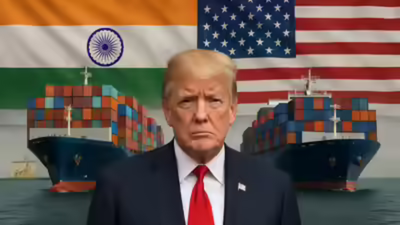
TOI correspondent from Washington: With no end in sight for Washington’s tariff tangle with India, more trouble and torture is looming ahead for New Delhi after MAGA supremo Donald Trump on Wednesday greenlit a sweeping bipartisan legislation that will authorize him to impose primary and secondary sanctions and punitive tariffs up to 500 percent on Moscow and countries that continue to buy energy from Russia.The proposed Sanctioning Russia Act, simply called the Graham-Blumenthal bill after the two Senators sponsoring it, would significantly escalate economic pressure on Russia and countries such as China, India, and Brazil, all part of the BRICS block, which have so far withstood current US sanctions and tariffs. By legislatively empowering the President beyond his current executive authority, lawmakers in conjunction with the White House are also trying to get ahead of a US Supreme Court ruling in the tariff case – expected sometime this month – that is widely expected to go against the administration.“This bill will allow President Trump to punish those countries who buy cheap Russian oil fueling Putin’s war machine…give him tremendous leverage against countries like China, India and Brazil to incentivize them to stop buying the cheap Russian oil that provides the financing for Putin’s bloodbath against Ukraine,” Graham wrote in a post on X after a meeting with the President where he said Trump greenlit passage of the legislation. He said there could be “a strong bipartisan vote, hopefully as early as next week.”The legislation grew out of mounting frustration in the White House and Congress that existing sanctions have failed to change the Kremlin’s behavior. Graham and Blumenthal, long among the Senate’s most outspoken advocates for Ukraine, argue that Russia has adapted to earlier measures by rerouting energy exports to willing buyers at discounted prices. By targeting those buyers directly with even higher tariffs and sanctions, they say, Washington can close the loopholes that have allowed Moscow to keep financing its war.The bill enjoys significant bipartisan backing in Congress. Introduced in September 2025, it advanced through the Senate Foreign Relations Committee in October 2025 by a strong vote, signaling broad consensus. By December, with 85 cosponsors in the Senate alone, it spurred companion legislation in the House even as the Trump tariffs, imposed through executive power, were challenged and rejected in lower courts before it reached the Supreme Court. Trump, who was initially reluctant to back the legislation believing he had enough executive authority appears to have changed course after the judicial setbacks. In comments during a golf outing with Graham in late 2025, he had expressed support for tougher sanctions but urged caution to avoid derailing negotiations with Putin, whom he has attempted to engage for a peace deal. He reportedly insisted on reviewing the final text of the legislation, emphasizing that it should not “tank the global economy” while targeting Russia’s oil revenues. Trump’s endorsement on Wednesday marks a shift from earlier ambivalence, where he prioritized diplomacy over escalation. While concerns remain about potential economic fallout of the legislation on the U.S itself, including solidifying the BRICS bloc and accelerating their de-dollarization efforts, the momentum behind the bill reflects a rare convergence of Republican and Democratic views on Russia.
About the Author