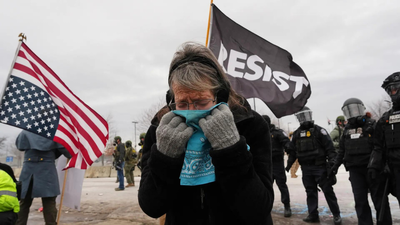
A US federal judge on Friday barred immigration officers in Minnesota from detaining or using force against peaceful protesters. The ruling comes amid rising tensions between federal agents and demonstrators over a large federal immigration enforcement operation in the Minneapolis area, reported AP.
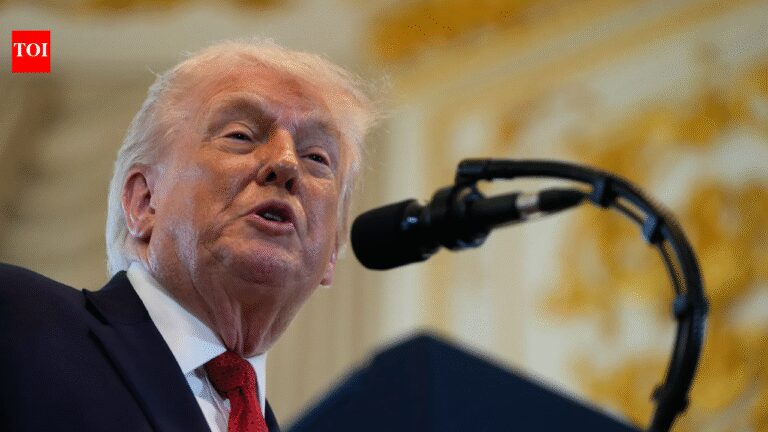
In an 83-page order issued on Friday, US District Judge Katherine Menendez restricted how federal immigration agents may interact with protesters, barring them from arresting or detaining individuals engaged in “peaceful and unobstructive protest activity” or from retaliating against protected speech through the use of tear gas, pepper spray, or other crowd-dispersal tools. Judge Menendez ruled that officers may not arrest individuals without probable cause or reasonable suspicion that a crime has been committed or that officers are being obstructed. She also barred agents from stopping vehicles when there is no reasonable suspicion, noting that “safely following agents at an appropriate distance does not, by itself, create reasonable suspicion,” AP reported.The ruling grants a preliminary injunction in a lawsuit filed in December on behalf of six Minnesota activists represented by the American Civil Liberties Union (ACLU). The case alleges that federal agents violated protesters’ constitutional rights during immigration enforcement actions.The order gives the Department of Homeland Security (DHS) 72 hours to bring its immigration operation in the Minneapolis–St Paul area into compliance.The order follows a series of violent encounters involving federal agents this month. On January 7, an Immigration and Customs Enforcement (ICE) officer fatally shot 37-year-old American woman Renee Nicole Good in Minneapolis during a federal immigration enforcement action, officials said the officer fired after Good’s vehicle approached him, though video evidence and local accounts have raised questions about the circumstances of the encounter. Later this week, on January 14, a federal officer shot a Venezuelan man in the leg during a targeted traffic stop in North Minneapolis. DHS said the man, identified as a Venezuelan national, fled and then engaged in a struggle with officers before the shot was fired, and he was hospitalised and is expected to recover.In a separate incident, DHS confirmed that Heber Sanchez Dominguez, a 34-year-old Mexican national, died while in ICE custody, bringing the number of deaths in ICE detention so far this year to at least four.The Justice Department is investigating Walz and Frey for allegedly impeding federal officers, CBS News reported, a move that could further inflame tensions. The department did not respond to requests for comment. Responding to the ruling, DHS Assistant Secretary Tricia McLaughlin said the agency was taking “appropriate and constitutional measures to uphold the rule of law and protect our officers and the public from dangerous rioters,” AP reported, adding that obstructing or assaulting law enforcement remained a serious crime.Protests intensified after Good’s killing, with crowds clashing with immigration officers and counter-protesters. Minnesota Governor Tim Walz accused federal agents of carrying out “a campaign of organised brutality against the people of Minnesota,” in a video posted on X, AFP said. Walz and Minneapolis Mayor Jacob Frey have called for peaceful protests against immigration sweeps.US President Donald Trump, who earlier threatened to invoke the Insurrection Act to deploy the military, said on Friday that there was no immediate need to do so. “If I needed it, I would use it. I don’t think there is any reason right now to use it,” he told reporters at the White House, according to AFP.BBC notes that the Insurrection Act, a 19th-century law, allows a US president to deploy active-duty military forces to carry out law-enforcement duties within the United States. Presidents may invoke the statute if they determine that “unlawful obstructions, combinations, or assemblages, or rebellion” make it impracticable to enforce federal law through ordinary judicial proceedings. Once invoked, the law permits troops, including the National Guard, which is typically used for domestic emergencies and disaster response — to perform a wide range of functions, from quelling civil unrest and enforcing court orders to arresting and detaining migrants.
About the Author