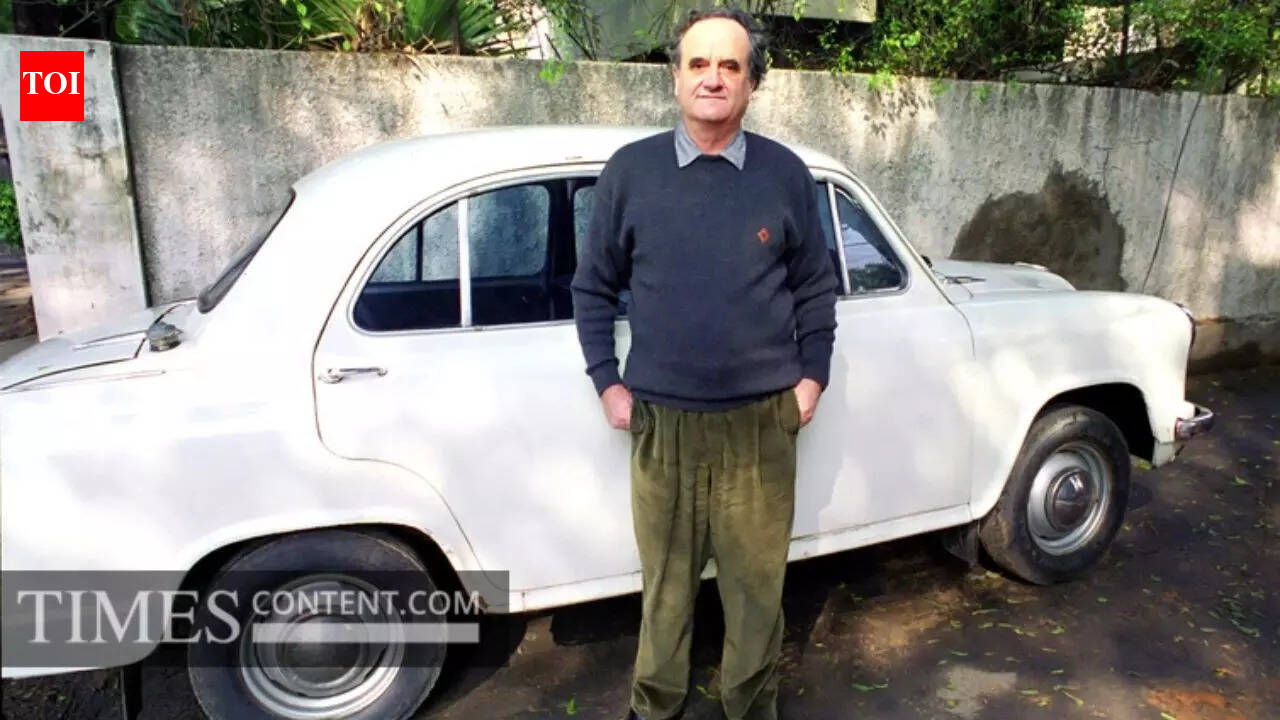
NEW DELHI: Mark Tully, one of the most well-known journalists to report from India, died at a private hospital in Delhi on Sunday. He was 90. He had been unwell for some time and was admitted to Max Hospital in Saket last week.Born in 1935 in Tollygunge, Kolkata, to British parents, Tully spent his early childhood in India. In the late 1930s, he was not allowed to socialise with local people. Ironically, India later became the centre of his life’s work.He studied at a boarding school in Darjeeling before being sent to England for further education. In a 2001 interview with the BBC after being selected for knighthood, Tully described England as “a very miserable place… dark and drab, without the bright skies of India”.The BBC reintroduced Tully to India in 1964 when it appointed him its New Delhi correspondent. This marked the beginning of his long association with the broadcaster, which lasted nearly three decades.In 1969, Tully was sent back to London after the Indian government barred the BBC following the broadcast of Phantom India, a French documentary critical of the country. He returned to Delhi in 1971 and became the BBC’s South Asia bureau chief the next year.During his career, Tully covered several defining moments in the region, including the 1971 Bangladesh war, the Emergency, the execution of former Pakistan president Zulfikar Ali Bhutto, Operation Blue Star, the assassination of Indira Gandhi, the anti-Sikh riots of 1984, the killing of Rajiv Gandhi in 1991, and the demolition of the Babri Masjid in 1992.His first book, Amritsar: Mrs Gandhi’s Last Battle (1985), co-written with Satish Jacob, focused on Operation Blue Star and the Punjab crisis. In No Full Stops in India (1988), he wrote, “The stories I tell in this book will, I hope, serve to illustrate the way in which Western thinking has distorted and still distorts Indian life.”Tully went on to write 10 books, both fiction and non-fiction, including India in Slow Motion (2002), India’s Unending Journey (2008), and India: The Road Ahead.He was awarded the Padma Shri in 1992, knighted in 2002, and received the Padma Bhushan in 2005.Tully resigned from the BBC in 1994 after publicly criticising the organisation’s internal culture. However, he remained based in Delhi and continued writing as a freelance journalist.On his 90th birthday in October, his son Sam Tully wrote on LinkedIn: “I think my father’s achievements are particularly significant for UK-India ties because of his abiding ties and affection for both countries… ‘Dil hai Hindustani, magar thoda Angrezi bhi!’”
About the Author