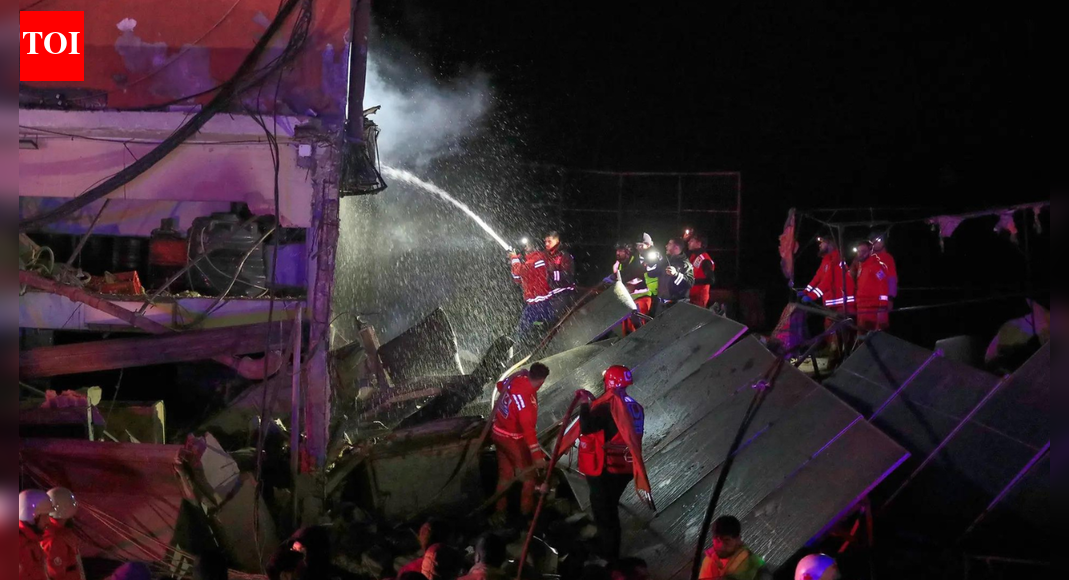
Israeli warplanes carried out a series of strikes in southern Lebanon on Sunday after issuing an evacuation warning, with the Israeli military saying it targeted Hezbollah infrastructure, Lebanese state media reported. Lebanon’s official National News Agency (NNA) said “enemy warplanes launched more than 10 raids on the threatened location” in the town of Kafr Hatta, north of the Litani River, causing “significant damage” to buildings. Shortly after the warning, the Israeli military said it was “striking Hezbollah infrastructure in several areas.”The strikes came days after the Lebanese army said it had completed the first phase of a nationwide plan to disarm Hezbollah south of the Litani River, about 30 km from the Israeli border. Israel, however, has said those efforts fall short of what is required under the ceasefire.Earlier on Sunday, the Israeli army said it had struck Hezbollah infrastructure elsewhere in southern Lebanon “in response to Hezbollah’s continuous violations of the ceasefire understandings.” The NNA reported “a series of violent Israeli strikes” on Jezzine, Mahmudiyeh and Al-Dimasqiyeh, along with “more than 10 strikes” on Al-Bureij. Most of the areas hit lie north of the Litani.Israel has continued regular strikes in Lebanon despite a ceasefire agreed in November 2024 that aimed to end more than a year of hostilities with the Iran-backed group. Under heavy US pressure and amid fears of wider Israeli action, Lebanon has pledged to disarm Hezbollah, which was badly weakened during the conflict.On Thursday, Lebanon’s army said it had “achieved the objectives of the first phase” of the disarmament plan in areas south of the Litani and intended to extend it nationwide. Responding, Israeli Prime Minister Benjamin Netanyahu’s office said the ceasefire “states clearly, Hezbollah must be fully disarmed,” adding that Lebanon’s steps were “an encouraging beginning” but “far from sufficient,” citing Hezbollah’s alleged efforts to rearm and rebuild.Despite the truce, Israel has also maintained troops in five areas of southern Lebanon it considers strategic.
About the Author