


The most loved of all Kardashians, and social-media sensation, Kylie Jenner, who we all know for her exclusive wardrobe pieces and luxury makeup brand, revealed that she has been undergoing stem cell therapy to alleviate her chronic back pain, post-her second pregnancy, for almost three years. She says the treatment has finally given her some pain relief, where other options did not seem to help at all. Let’s decode her condition and how she went on about it.
What Kylie revealed
In her Instagram stories and posts, Kylie explained that her back pain began after the birth of her son Aire, and persisted despite trying every expensive treatment there is. She described this pain as “bad” and ongoing, which affected her day to day chores as well. She also credited her sister Kim Kardashian, for encouraging her to explore the “stem cell” therapy after Kim reported some pain relief from similar procedures for her own shoulder and back issues.Kylie Jenner said she received treatment from a doctor and clinic in Mexico that also treated Kim, Dr. Adeel Khan-and that she feels grateful to have access to this option and to finally experience improvement. She emphasised that every body is different and framed her experience as a personal story rather than a guarantee that stem cell therapy will work for everyone.
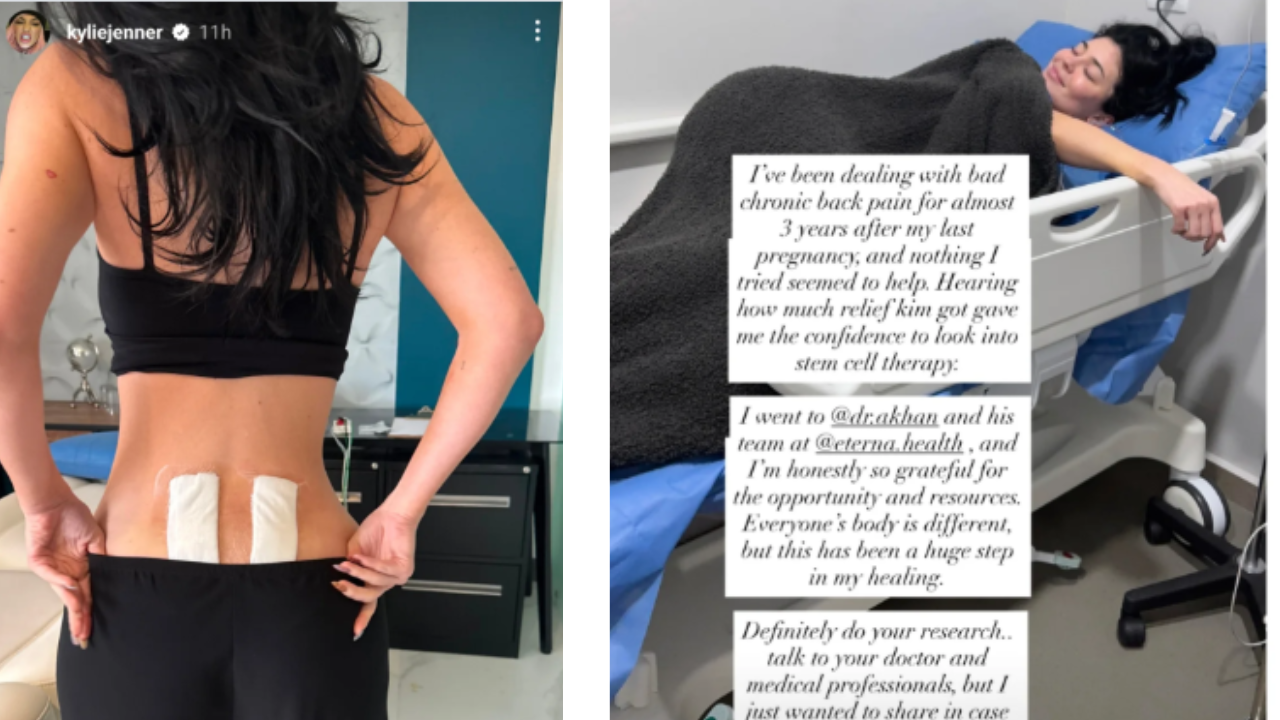
credit: Instagram /@PinkvillaUSA
What is stem cell therapy and how it works
Several media reports suggest that Kylie underwent as an injection-based stem cell treatment, that uses the cells taken from other donors and/or are prepared in specialised labs, then are injected right back into the area that pains to reduce inflammation and promote tissue repair. These medical procedures are often marketed as spine problems, joint pain and sports injuries, although many people are stills skeptical about how this can benefit them from pain and any chronic medical condition.According to the cryptic post from Kim and Kylie, they underwent something called as “Muse stem cell” treatment, given at a specific clinic at Mexico. This has drawn attention because it involves medical tourism, high costs and a therapy that may not have the same level of regulatory oversight or large scale clinical trial data as standard treatments in the United States or Europe.Stem cell therapy, aims to repair or replace damaged cell tissues, so to put it simply, it can help in conditions where the body is not healing or responding well to other standard treatments. In practice, only a few uses are well established, while many “wellness” and pain treatments promoted online are still experimental.Though, this treatment can be quiet expensive to get done, and for this very reason, fans on her social media are criticising her for promoting luxury treatments that cost almost $4,000- $5,000.
What stem cells actually are and how they help

Stem cells are special cells that can turn into different types of mature cells, such as blood, bone and even nerve cells, and they keep dividing to renew themselves. In medical practice, doctors, collect them from the bone marrow, umbilical cord or lab sources, then inject them where the repair is required.From a health perspective, the stem cell therapy offers main theoretical benefits, and they are:It can provide replacement cells. stem cell–based therapies may enhance the body’s own ability to repair itself, according to NIH.It acts as a powerful anti-inflammatory signal that may reduce chronic back pain, and swelling and support the repair from inside.Although for the readers, Kylie Jenner’s story highlights how common chronic back pain can be after pregnancy and how frustrating it is when standard approaches do not bring enough relief. Her positive experience with stem cell therapy is real for her, but it sits within a wider landscape where evidence for many commercial stem cell pain treatments is still emerging In short, stem cell therapy is a powerful tool in specific, well studied situations and a promising area of research for others, but it is not a universal fix for chronic pain or general wellness yet. Decisions about it are safest when guided by a specialist who can explain where the science is strong, where it is still uncertain and how it fits with more established treatment options
About the Author