
The seabed off southern Japan has long held shapes that look out of place. Divers near Amami Oshima Island began noticing large circular patterns etched into sand in the 1990s, precise enough to seem artificial. Each year, they appeared and then faded, leaving little behind except curiosity. For a long time, no clear explanation followed. Ocean currents did not fit. Geological processes fell short. Only later did close observation reveal the source, a small marine fish working patiently near the ocean floor. Research published over the past decade has shown that these structures are not accidents of nature but carefully built nests. The discovery reframed the circles, turning a quiet seabed puzzle into a story of behaviour, effort and reproduction.
The strange seabed circles off Japan were built by a fish
The circles appear on flat sandy seabeds at depths of around 25 metres. They can reach two metres across and are marked by ridges and grooves that radiate from a smooth central area. The pattern looks deliberate, almost decorative.For years, divers referred to them as mystery circles. They appeared fully formed and then slowly disappeared as currents smoothed the sand. No one saw them being made.
The pufferfish constructs the circular nest
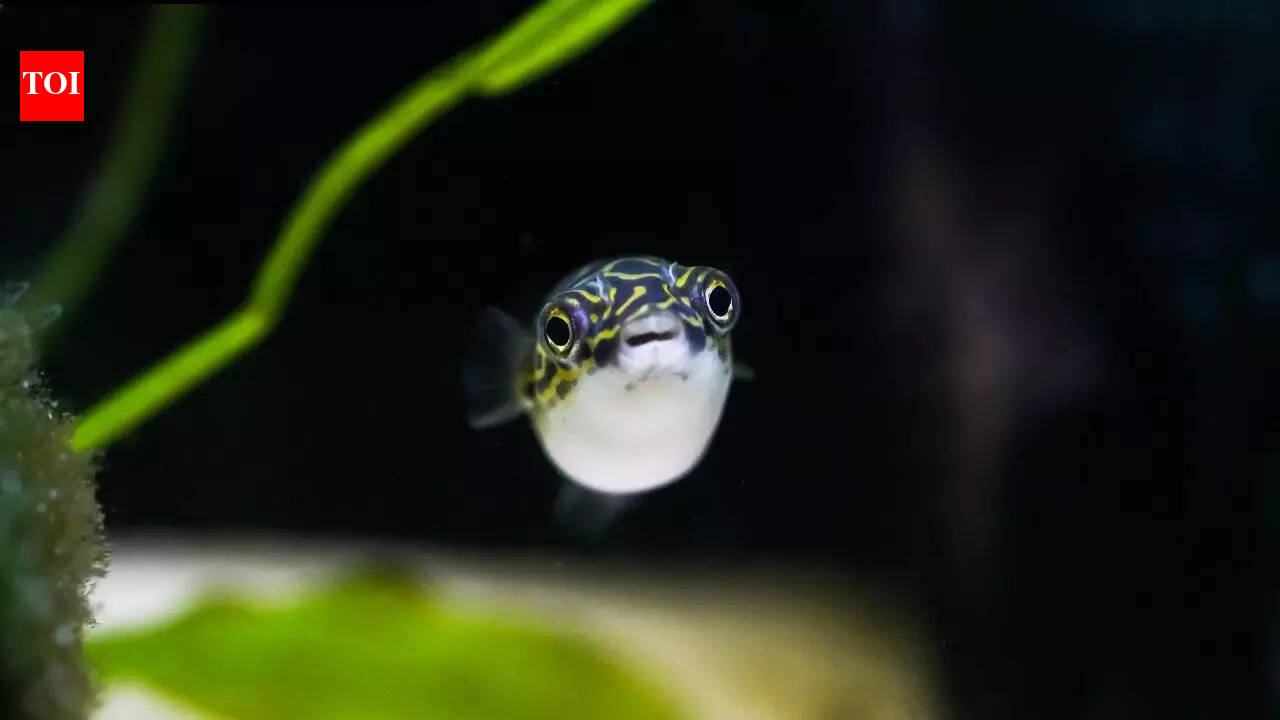
The builder is a small male pufferfish from the genus Torquigener. Measuring roughly ten centimetres long, it looks unremarkable compared with the scale of the structures. Yet the fish uses its fins with precision, shaping sand grain by grain. This behaviour was first directly observed in 2011, solving a puzzle that had lasted more than a decade.Construction takes about a week. The male begins by marking out a rough circle, swimming back and forth to dig shallow valleys. These runs form ridges and grooves arranged like spokes. As the structure develops, the fish focuses on the centre, flattening it and collecting fine sand. In the final stage, it decorates the ridges with shell fragments and coral pieces, taken from nearby.
The structure matters for mating
The nest plays a role in female choice. Females only visit when the structure is complete. When one approaches, the male stirs fine sand into the water, creating a visual display. Eggs are laid in the central zone, where conditions are calmer. Studies suggest the shape of the nest helps gather fine particles and reduces water flow, creating a more stable place for eggs to develop.
The nests are built only once
After spawning, the male guards the eggs for several days. During this time, the structure is not maintained. Currents gradually flatten the ridges and wash away the fine sand. Once the eggs hatch, the male leaves and does not return. Instead of repairing the old nest, it builds a new one elsewhere. Researchers believe the loss of fine sand makes reuse inefficient.
What fluid experiments reveal about water flow
To understand how the nest works, scientists tested scaled models in flowing water. The results showed that water slows in the central area while moving differently through the valleys. This reduction in current speed, measured at over 20%, likely protects eggs. It also explains why fine sand gathers in the middle rather than being swept away.
Why the discovery matters beyond curiosity
The pufferfish circles add to evidence that sexual selection can drive complex construction behaviour in fish. While such traits are well studied in birds and insects, fewer examples exist underwater. Here, the structure serves both as a signal and a functional shelter. It is built at a high cost, abandoned quickly, and repeated cycle after cycle.On the seabed, the circles come and go. Above them, the ocean looks unchanged.
About the Author