

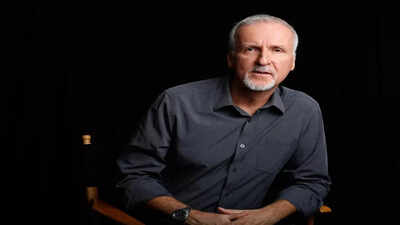
Hollywood director James Cameron is ‘deeply fearful’ of a future where artificial intelligence (AI) will eventually supplant actors. The director of The Terminator and Avatar disclosed that he was deeply alarmed with the technology invading the entertainment industry. In an interview on CBS’s Sunday Morning, Cameron explained that what concerns him is the concept of the technology substituting for a human performer. He said the pressure to use AI instead of actors isn’t exactly new. He remembered that as far back as 2005, in developing the first film Avatar, some Hollywood figures had mistakenly thought he planned to use computer graphics to replace actors altogether. Now, with the rapid advancements of generative AI, Cameron finds the prospect of AI replacing human performers as pretty terrifying.In the CBS interview, Cameron explained: “Now, go to the other end of the spectrum, and you’ve got generative AI, where they can make up a character. They can make up an actor. They can make up a performance from scratch with a text prompt. It’s like, no. That’s horrifying to me. That’s the opposite. That’s exactly what we’re not doing.”“For years, there was this sense that, ‘Oh, they’re doing something strange with computers and they’re replacing actors,’ when in fact, once you really drill down and you see what we’re doing, it’s a celebration of the actor-director moment,” Cameroon recalled, referring to people who thought Avatar will replace actors with computer graphics.
How James Cameron uses technology in his movies
James Cameron incorporates technology into nearly every part of his filmmaking process, and the “Avatar” movies represent the fullest expression of this tendency. Large swaths of Pandora, the world audiences see in the films, are created inside a soundstage in Los Angeles. For the second and third movies, Cameron and his team constructed an enormous water tank capable of generating real waves. Actors such as Sigourney Weaver and Zoe Saldaña filmed their underwater scenes in that tank. Performance-capture cameras recorded their movements and facial expressions, which digital artists used later to create the final CGI characters.Imagination and science fiction have always appealed to Cameron. Growing up in rural Canada, he spent much of his time as a child reading comic books, watching television, and conjuring stories in his head. Moving with his family to Los Angeles, he briefly attended community college before dropping out and taking odd jobs. Watching “Star Wars” made him realize the images swimming around in his brain could be translated into movies as well. Unable to afford film school, Cameron taught himself visual-effects techniques by spending weekends reading USC library books on cinematography and special effects.His big break came with “The Terminator,” inspired by a dream. Due to the unavailability of CGI at that time, the film relied on puppetry and practical effects. He continued exploring new techniques in films like “Aliens,” “The Abyss,” and later “Titanic,” which also let him follow his interest in the deep sea.Cameron wrote the first outline for “Avatar” before “Titanic,” but he waited until 2005, when technology finally became advanced enough to support his vision. The third installment of Cameron’s “Avatar: Fire and Ash” will be hitting the theaters in a few months.
About the Author