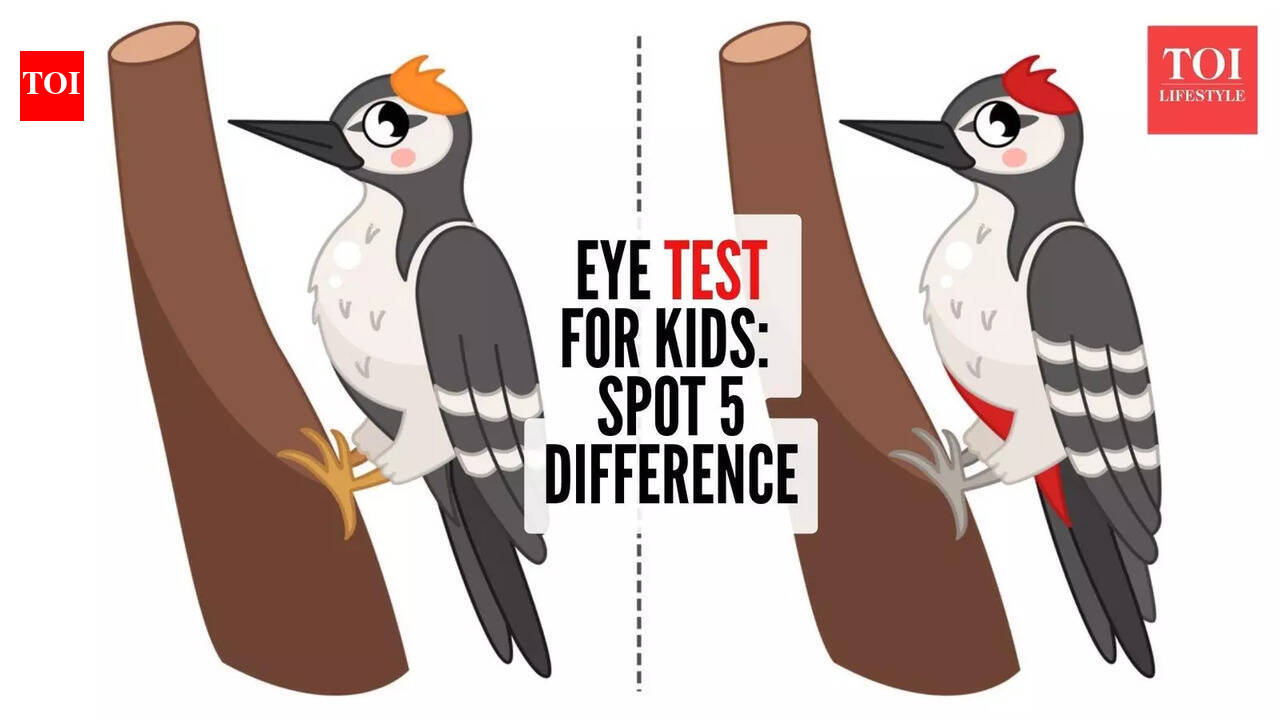
The image shows two cute woodpeckers sitting on tree trunks. At first, they look almost the same. But when you look closely and pay attention to the image, the small changes are very much visible. Spotting these changes is more than a fun game. It can help build a child’s focus, patience, and thinking skills.
What the picture shows
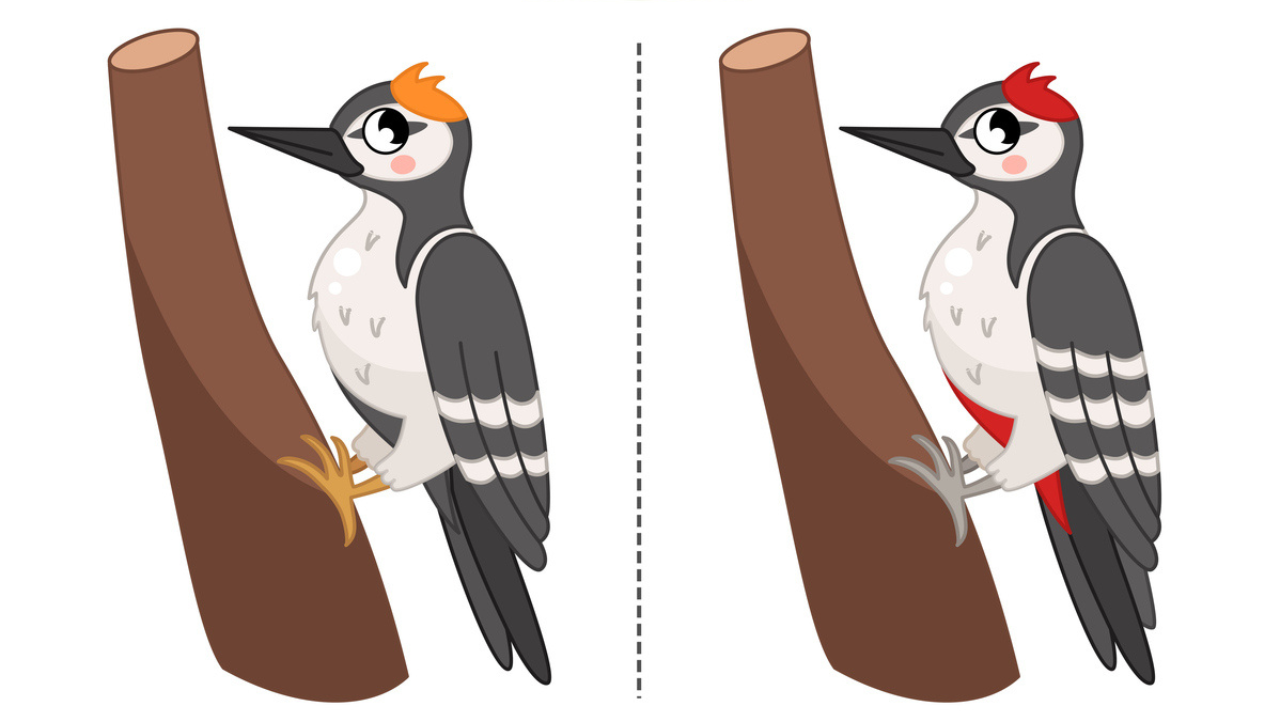
Image credit: iStock
Both birds are facing the same direction and holding onto a brown tree trunk. They have black and white bodies, long beaks, and alert eyes. The scene feels calm and friendly, which makes it perfect for young eyes. The real learning starts when attention shifts to the tiny details.
Difference 1: The colour on the head
The bird on the left has an orange patch on its head. The bird on the right has a red patch instead. This small colour change encourages children to notice shades and remember visual details.
Difference 2: The feet on the tree
The left bird grips the tree with yellow feet. The right bird’s feet are grey. This helps children understand that even similar shapes can change in colour and meaning.
Difference 3: Changes in the wings
The wing pattern is not the same. One bird has fewer white lines, while the other shows extra white stripes. This trains young minds to compare patterns, not just colors.
Difference 4: The tail and body details
The right bird has a longer and darker tail. There is also an extra red marking near its leg. These differences push children to scan the full image, not just the face.
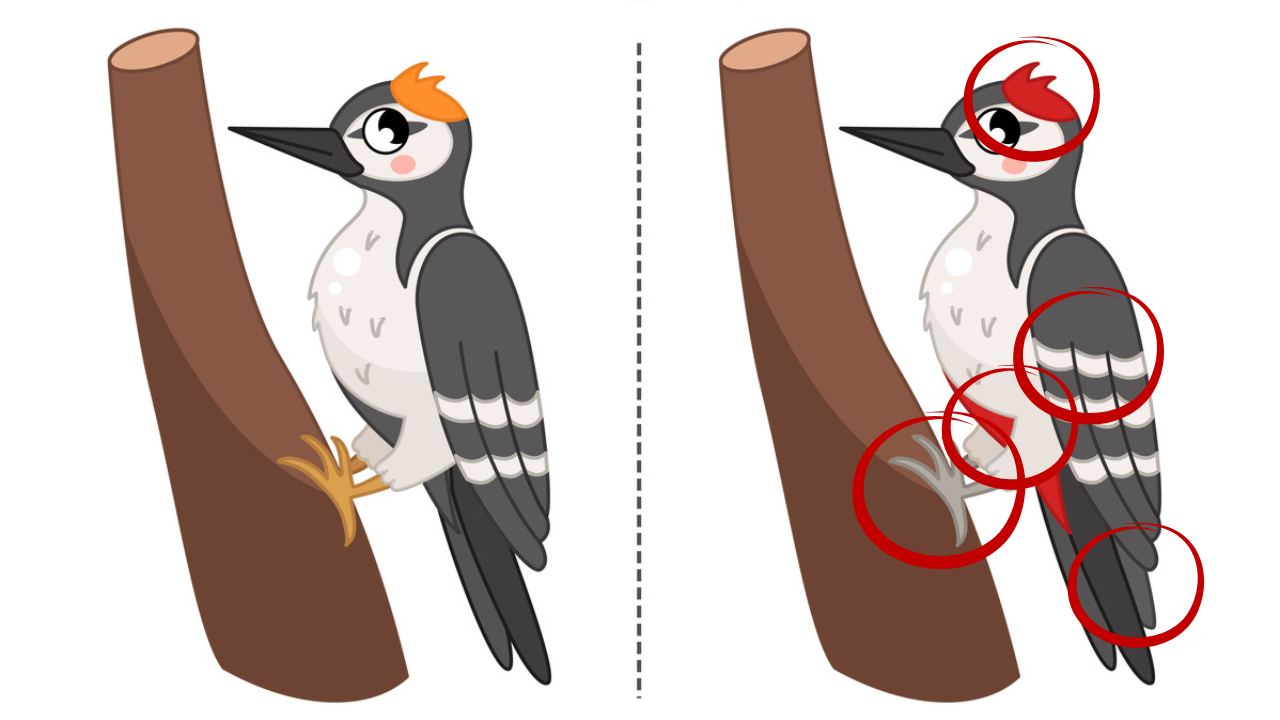
Image credit: iStock
Why spotting differences helps kids
Such activities sharpen observation skills and improve attention span. They also teach children to slow down and look carefully before answering. Over time, this habit supports reading, problem-solving, and classroom learning in a natural way.
About the Author