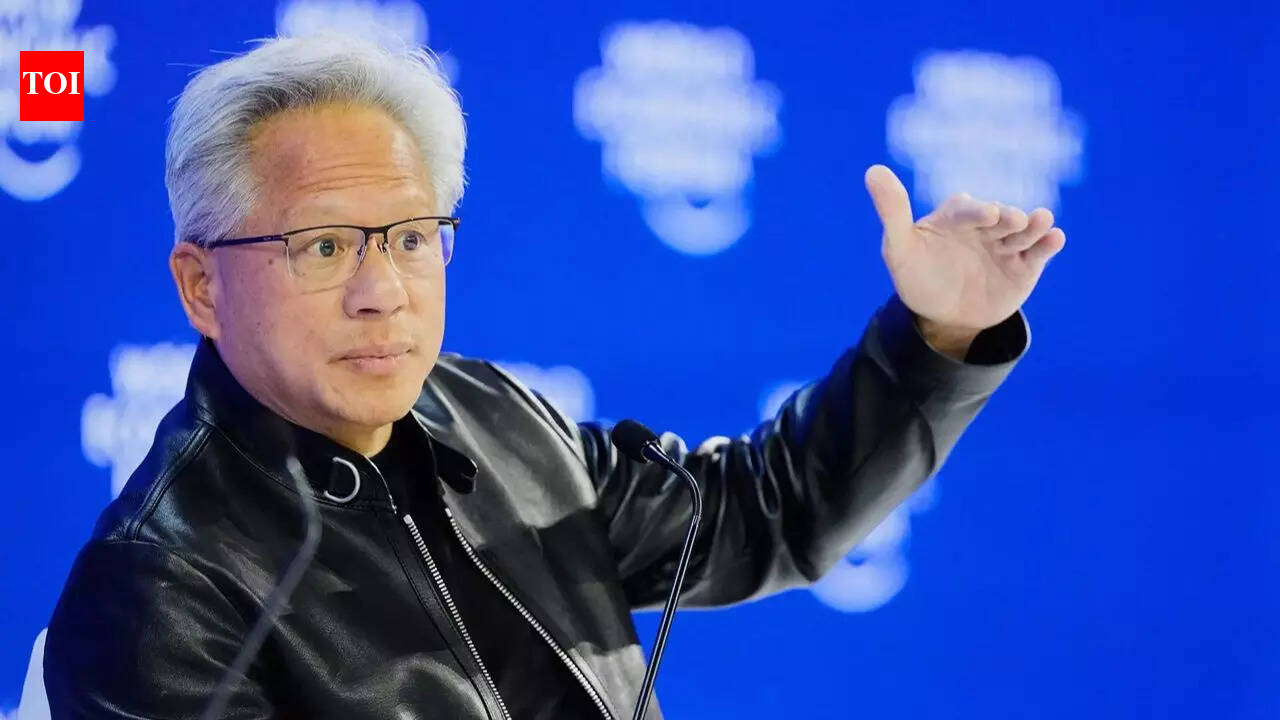
Nvidia CEO Jensen Huang has said that AI robotics is a “once-in-a-generation” opportunity for Europe. The chief executive of the chipmaking giant said this, noting that the region has an “incredibly strong” industrial manufacturing base. Speaking at the World Economic Forum in Davos, Huang said Europe can now combine its industrial and manufacturing capabilities with artificial intelligence. “You can now fuse your industrial capability, your manufacturing capability, with artificial intelligence, and that brings you into the world of physical AI, or robotics,” he said. This presents an opportunity for Europe to “leap past” the software era that we have dominated, Huang added.
How tech and other industries are shifting towards robotics
Interest in autonomous robotics has grown across industrial and tech sectors as recent AI advances promise more capabilities. Multiple European industrial and manufacturing companies, including Siemens, Mercedes-Benz Group, Volvo, and Schaeffler, have announced robotics projects and partnerships with robotics technology companies over the past year.Big Tech companies have also increased their focus in this area. Tesla CEO Elon Musk said 80% of the company’s value would come from its Optimus humanoid robots in September 2025. Google’s AI division, DeepMind, released robotics AI models in 2025, and Nvidia announced partnerships with Alphabet to work on physical AI in March.Tech investors have noticed this trend, as companies building robotics raised a record $26.5 billion in 2025, according to deal-tracking platform Dealroom.“I think that it’s fairly certain that you have to get serious about increasing your energy supply so that you could invest in the infrastructure layer so that you could have a rich ecosystem of artificial intelligence here in Europe,” Huang added.Europe has been dealing with limited access to energy as large technology companies look to roll out AI infrastructure across the region. This rapid expansion is showing no signs of slowing down, Huang continued. AI has started the “largest infrastructure buildout in human history,” he told the audience at WEF.“We’re now a few hundred billion dollars into it. There are trillions of dollars of infrastructure that needs to be built out,” Huang predicted.
About the Author