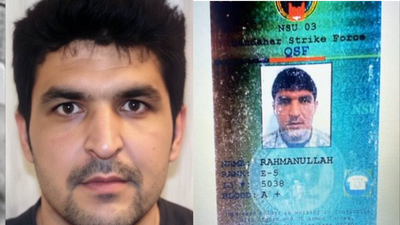
TOI correspondent from Washington: An emerging portrait of Rahmatullah Lakanwal reveals a man whose complicated American journey in the aftermath of a messy US war in Afghanistan appears to have transitioned into anger at perceived injustices, leading to a sudden violent terror attack.Born in Kabul in 1996, Lakanwal is reported to have worked as a logistics coordinator for a US contractor during the final years of the Afghan war, collaborating with American Special Forces units on supply runs in Helmand Province. He is also worked with the CIA in Kandahar, according to CIA Director John Ratcliffe. A linked-in profile highlighted his humanitarian work, including as a Field Coordinator for the International Rescue Committee (IRC) in the Eastern Region, based in Khost Province.
Colleagues described him as reliable and English-fluent, earning him a spot in the Special Immigrant Visa (SIV) program—a pathway for Afghans who aided US missions. However, bureaucratic delays under the outgoing Trump administration in 2021 left his application in limbo. In the chaotic aftermath of the U.S. withdrawal, Lakanwal was airlifted to the U.S. in September 2021 via Operation Allies Welcome, a Biden-era humanitarian parole initiative that resettled over 76,000 Afghans in a frantic 17-day window.Upon arrival, Lakanwal was sponsored by a faith-based organization linked to the Einstein Institute for Refugee Integration in Seattle, Washington, where he initially resettled. He worked odd jobs as a warehouse clerk and delivery driver while navigating the immigration backlog. His parole status expired in mid-2024, rendering him undocumented and ineligible for work authorization. In December 2024, as his options dwindled, Lakanwal filed for asylum, citing fears of Taliban reprisals for his U.S. ties. After a rigorous vetting process—including biometric checks, interviews, and interagency reviews—US Citizenship and Immigration Services (USCIS) approved his claim in April 2025, granting him protected status and a work permit under the second Trump administration.No prior criminal record mars Lakanwal’s U.S. history, though neighbors in his modest Alexandria, Virginia, apartment complex reported him growing increasingly withdrawn over the summer. Social media posts from his now-deleted X account revealed anti-Western sentiments, including shares of Taliban propaganda and critiques of U.S. drone strikes. Investigators are examining whether he had contacts with overseas extremists, but as of Thursday, no such links have been established. The shooting’s reverberations have been swift and seismic. Hours after the incident, USCIS announced an indefinite suspension of all Afghan asylum and refugee processing, citing “national security imperatives.” The freeze affects thousands of pending applications, stranding families in limbo and drawing condemnation from human rights advocates.The pause also echoes Trump’s first-term travel bans and fulfills campaign pledges for stricter vetting, but it risks straining alliances with the Afghan diaspora, much of which is anti-Taliban, who view it as betrayal. Many U.S veterans who fought against the Taliban alongside Afghans are caught in the fracas. At the heart of the recrimination lies the intricate web of U.S. immigration facilitation for Afghans—a bipartisan legacy tainted by the 2021 withdrawal’s haste. Operation Allies Welcome, while lifesaving, processed evacuees with abbreviated checks due to the Taliban’s rapid advance.Complicating the narrative is the pivotal role of U.S. veterans, whose advocacy bridged the gap for thousands like Lakanwal. Groups such as No One Left Behind and the Veterans for Afghan Allies lobbied fiercely for SIV expansions under both Trump and Biden, vouching for interpreters and contractors who risked Taliban death squads to support American troops. Lakanwal’s file reportedly included endorsements from four US Marines he aided in 2019, praising his “courage under fire.” Veterans’ organizations mobilized post-withdrawal, raising funds for resettlement and pressuring Congress for faster processing. “We fought side-by-side; we can’t abandon them now,” Marine Corps veteran Matt Zeller, co-founder of No One Left Behind, said in one emotional CNN interview, piloting an Afghan interpreter who saved his life by taking on the Taliban. The Washington DC shooting threatens to fracture that compact. The conflicting sentiments poured out in a post by another veteran after it was revealed that Lakanwal had also worked for the CIA. The post read: “He was not some random refugee. He was a vetted, badged, E-5 member of the CIA backed Kandahar Strike Force (KSF), operating out of Firebase GECKO alongside US special forces. That’s right, the guy we armed, trained, and eventually evacuated under Operation Allies Welcome is now accused of opening fire 50 yards from the White House on the day before Thanksgiving. This isn’t just a vetting failure, it’s a catastrophic collapse of the very allies we created…. And when Kabul fell, we airlifted thousands of them out on the assumption that their service made them automatic good guys. Today proves the fallacy of that assumption in the most visceral way possible.”
About the Author