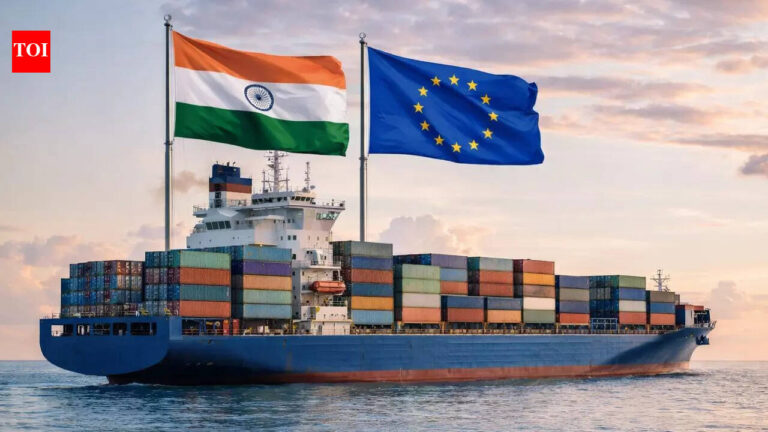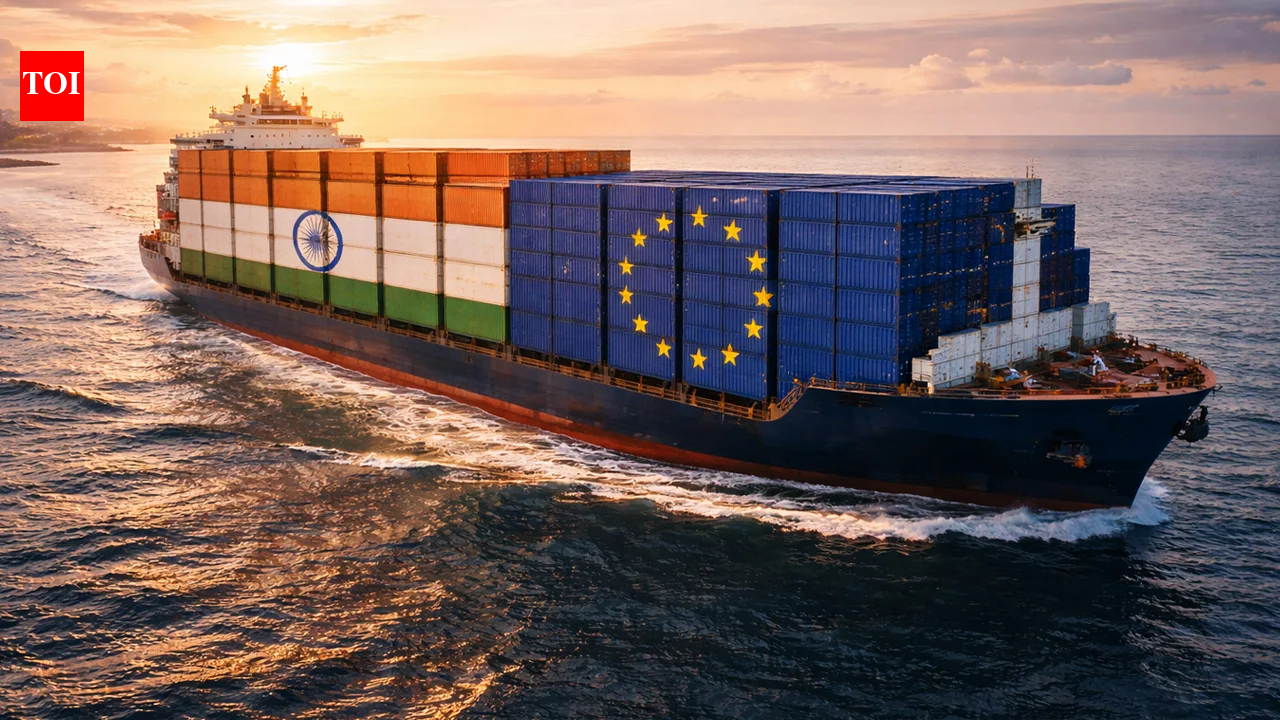
NEW DELHI: India and the European Union on Tuesday announced the finalisation of “mother of all FTAs”, that will result in gradual tariff reduction for 96% of exports from both sides, while keeping contentious items such as cereals and dairy products outside the ambit.While Indian textiles, marine products, leather and footwear, gems and jewelry, toys and sports goods will get zero-duty access, government has decided to opt for a phase opening up of the market for European cars that cost above Rs 25 lakh and wine that costs upwards of $3-3.25 a bottle. In both cases, the reduction will be for specific quantities with higher quotas for the more expensive products. In the case of automobiles will be exempted from tariff reduction for five years. “Small cars have been protected, which is the bulk of the Indian market,” an official said.
The package on steel is separate, and the European Union has not made any concessions on the carbon border adjustment mechanism, a major demand from India.Under the treaty, there are visa concessions for students, including post-study work visas.“People around the world are calling this the mother of all deals. This agreement will bring major opportunities for the 1.4 billion people of India and the millions of people in Europe,” PM Narendra Modi said. He said that this is the biggest deal for India, adding: “This is not just a trade agreement, but a new blueprint for shared prosperity.”Nearly 2 billion people stand to benefit from the deal between two partners that together account for around a quarter of the global economy, a top official said.Commerce and industry minister Piyush Goyal described the deal as “a formidable partnership for the world”.The agreement — which is likely to be implemented next year — comes in the backdrop of US President Donald Trump’s tariff tantrums which has seen a flurry of trade deals. While India finalised pacts with the UK, New Zealand and Oman, EU has announced treaties with Mercosur, the South American bloc, Indonesia, Mexico and Switzerland.The EU pact that runs into 21 chapters also includes services, where the trading bloc has agreed to open 144 of the 155 sub-sectors, with Indian opening 104 in return.Besides, there are chapters on intellectual property rights, labour sustainable development, rules of origin, small and medium enterprises, among others.According to the agreement, 99.5% of the European market by traded value will be opened over the next seven years with 90% goods moving to zero-duty from day one. In return India will open 30% of the market once the deal is effective, which will be followed by further liberalization after three, five, seven, and 10 years, when 96% of the goods by traded value will see tariff elimination.At the same time, government has built in a provision that some of the liberalization will be linked to social security agreements that individual members will sign.“This deal will provide a significant boost to apparel exports which is expected to double in next three years… The zero-duty access of Indian garments and clothing to the EU market will decisively turn the tables in India’s favour enhancing our competitiveness in the European market,” said AEPC chairman A Sakthivel.
About the Author