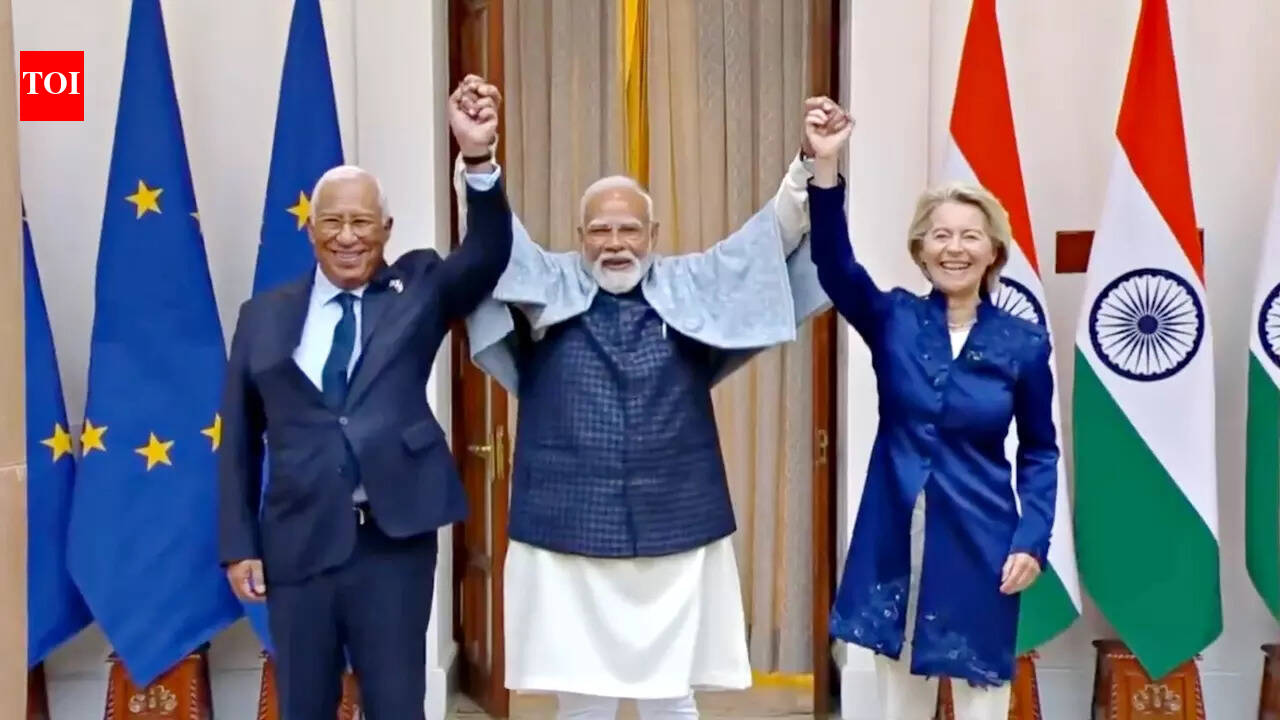
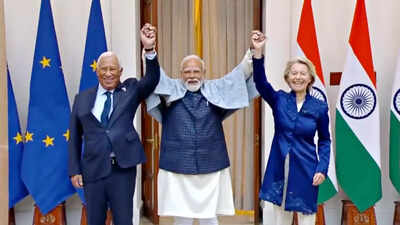
India-EU FTA concluded: In a landmark development, India and the European Union on Tuesday finalised what is being called the ‘mother of all’ trade deals. President of the European Commission, Ursula Von Der Leyen took to X (formerly Twitter) to share that: Europe and India are making history today.In the presence of PM Narendra Modi, the President of the European Commission, Ursula Von Der Leyen and the President of the European Council, António Luís Santos da Costa, the signing and exchange of the political declaration of the conclusion of negotiations of the India-EU Free Trade Agreement happened.“Europe and India are making history today. We have concluded the mother of all deals. We have created a free trade zone of two billion people, with both sides set to benefit. This is only the beginning. We will grow our strategic relationship to be even stronger,” Ursula Von Der Leyen shared on social media ahead of the signing.
Prime Minister Narendra Modi said on Tuesday that India and the European Union have finalised a free trade agreement, noting that the two sides together account for about 25% of global GDP and nearly one-third of world trade. Speaking virtually at Indian Energy Week, he described the pact as being widely referred to as the “mother of all deals” and said it opens up significant opportunities for 140 crore Indians as well as millions of Europeans.Congratulating all stakeholders, Modi highlighted the scale of the development, saying, “I am informing you about a big development…kal hee Bharat aur European Union ke beech ek bahut bada agreement hua hai (yesterday a very big agreement has been reached between India and the European Union).”He added that the pact stands out as a strong example of coordination between two major global economies. “This is an excellent example of coordination between two economies of the world. This agreement represents 25 per cent of the global GDP and one third of the global trade,” he said.
India-EU FTA: What We Know So Far
- The India-EU Free Trade Agreement or FTA is being called the ‘mother of all deals’ on both sides since it aims to provide extensive economic benefits.
- For Indians European cars, beer, and several food items are set to get cheaper. The European Union has said that tariffs on 96.6% of EU goods exports to India will be removed or reduced. This will deliver savings of up to 4 billion euros a year in duties on European products.
- At the India-EU Summit, the two sides launched an EU–India Security and Defence Partnership and announced major outcomes under their trade deal.
- The agreement removes tariffs on EU exports such as fruit juices and processed foods, cuts or eliminates duties on olive oil, margarine and other vegetable oils, and lowers tariffs on spirits to 40%.
- In addition, the EU has envisaged support of 500 million euros over the next two years to assist India’s efforts to reduce greenhouse gas emissions, underscoring the deal’s economic and climate dimensions.
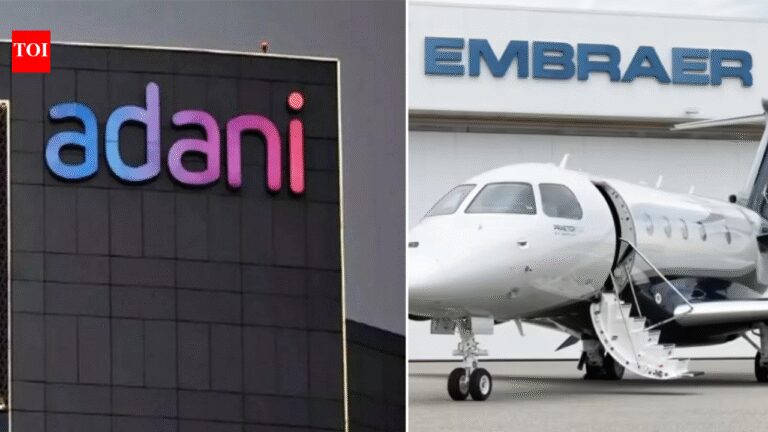
- Tariffs on 90% of European optical, medical and surgical equipment will be removed, while duties on almost all EU aircraft and spacecraft exports to India will also be removed, the European Union said.
- The deal will largely scrap tariffs of up to 44% on machinery, 22% on chemicals and 11% on pharmaceuticals, a move the EU expects to significantly deepen market access and help double EU exports to India by 2032.
Bilateral trade in goods between India and the EU is estimated at roughly $136 billion. As part of the agreement, India is likely to receive duty-free access for several important export categories including textiles, leather and marine products, in exchange for offering tariff concessions in areas such as automobiles, wines and spirits.The push to conclude the deal intensified amid the backdrop of reciprocal tariffs imposed by US President Donald Trump, which encouraged both India and the EU to move more decisively while accommodating each other’s sensitivities, particularly in areas such as agriculture and dairy.Yesterday it was announced that India and the European Union have wrapped up talks on the comprehensive free trade agreement which will include merchandise, services and wider areas of cooperation.
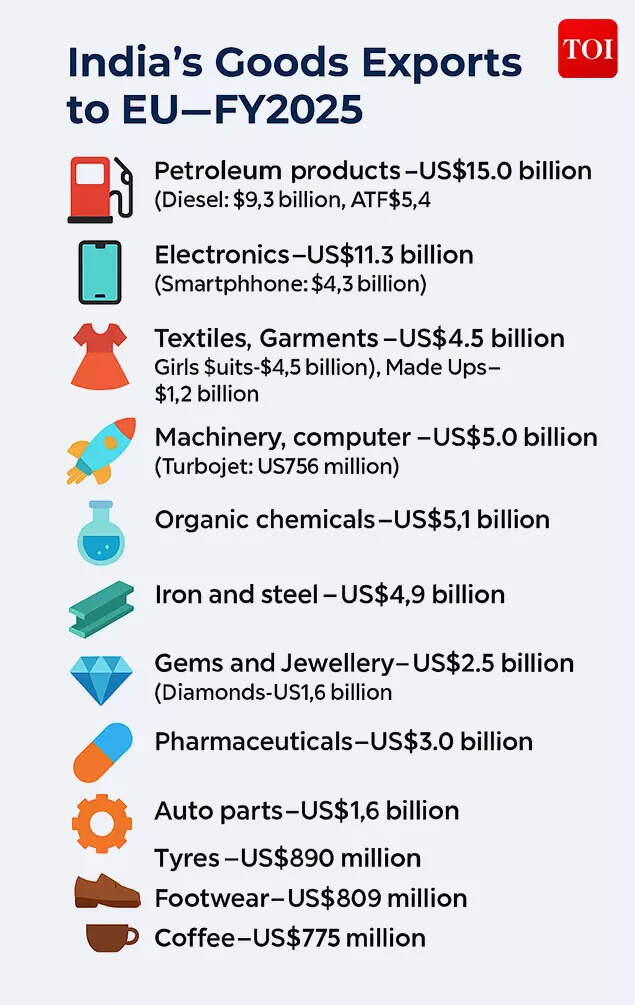
India’s Goods Exports to EU
Commerce secretary Rajesh Agrawal said on Monday that the pact would be “a balanced, forward-looking deal for better economic integration with the EU”. He added that the trade deal is expected to significantly boost trade and investment flows between India and the EU. The agreement had been under discussion for more than 18 years before negotiations regained momentum in 2024.While negotiations are complete, the agreement is expected to take several months to secure ratification and is likely to come into force in early 2027. Over the next fortnight, both sides will work on producing a streamlined and finalised version of the text, which will then undergo legal scrutiny over the following five to six months before it is formally signed.The deal will now move to the European Parliament for ratification, though officials clarified that it will not require approval from individual governments across the 27 member states because it does not fall under “mixed competence”.
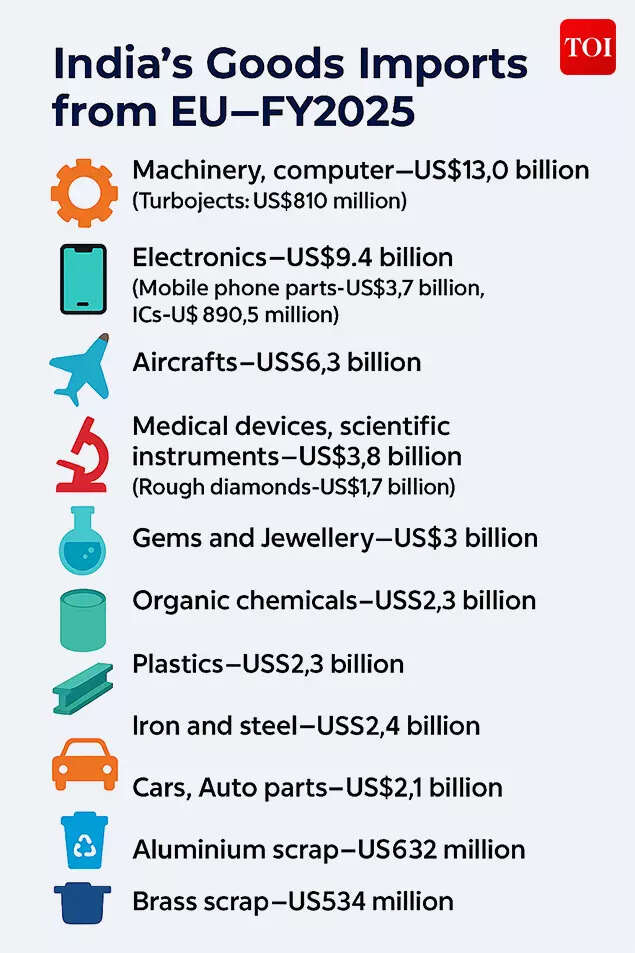
India’s Goods Imports From EU
In a television interview, European commissioner for trade and economic security Maroš Šefcovic said the objective was to secure full or partial tariff elimination on 97 to 99 percent of traded goods, while taking into account sensitivities in sectors like agriculture and dairy. He explained that the EU was seeking a “combination” of reduced duties on a limited number of vehicles alongside a gradual lowering of tariffs over time.Šefcovic noted that although India is a smaller market than the EU, it is expanding quickly, and the automotive sector holds significant importance for both sides. He described the industry as complementary, with India specialising in smaller vehicles while European manufacturers focus on larger and more technologically advanced models. “We are looking at the way which would help us find solutions, create new supply chains and make an even better business case for European car makers, while opening new possibilities for cooperation,” Šefcovic said.He also highlighted the broader strategic purpose of the free trade agreement, pointing to its potential to strengthen supply chains, cut exposure to risky dependencies and generate employment in both India and the EU.(With inputs from agencies)
About the Author