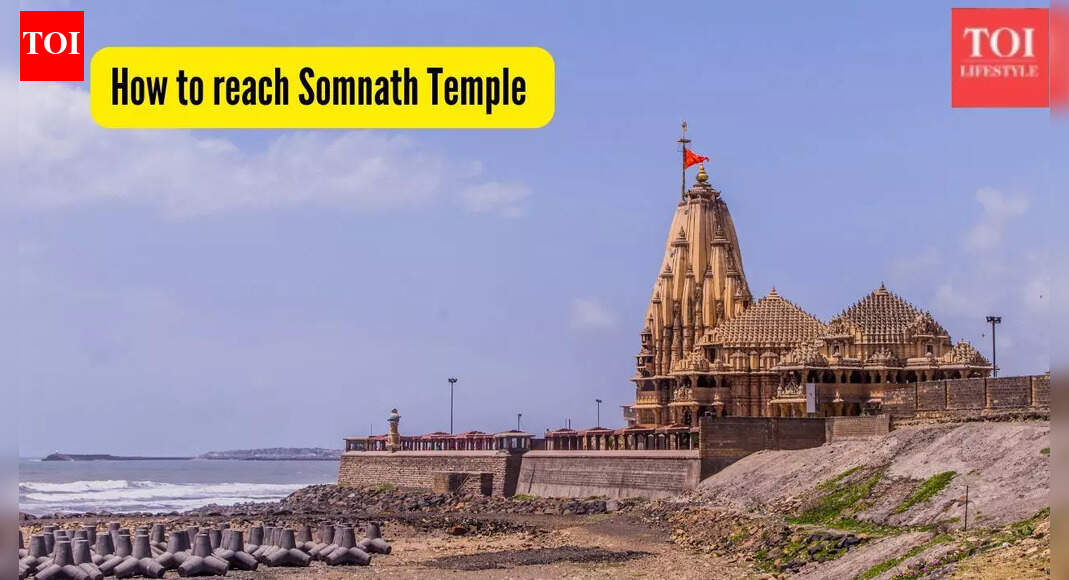
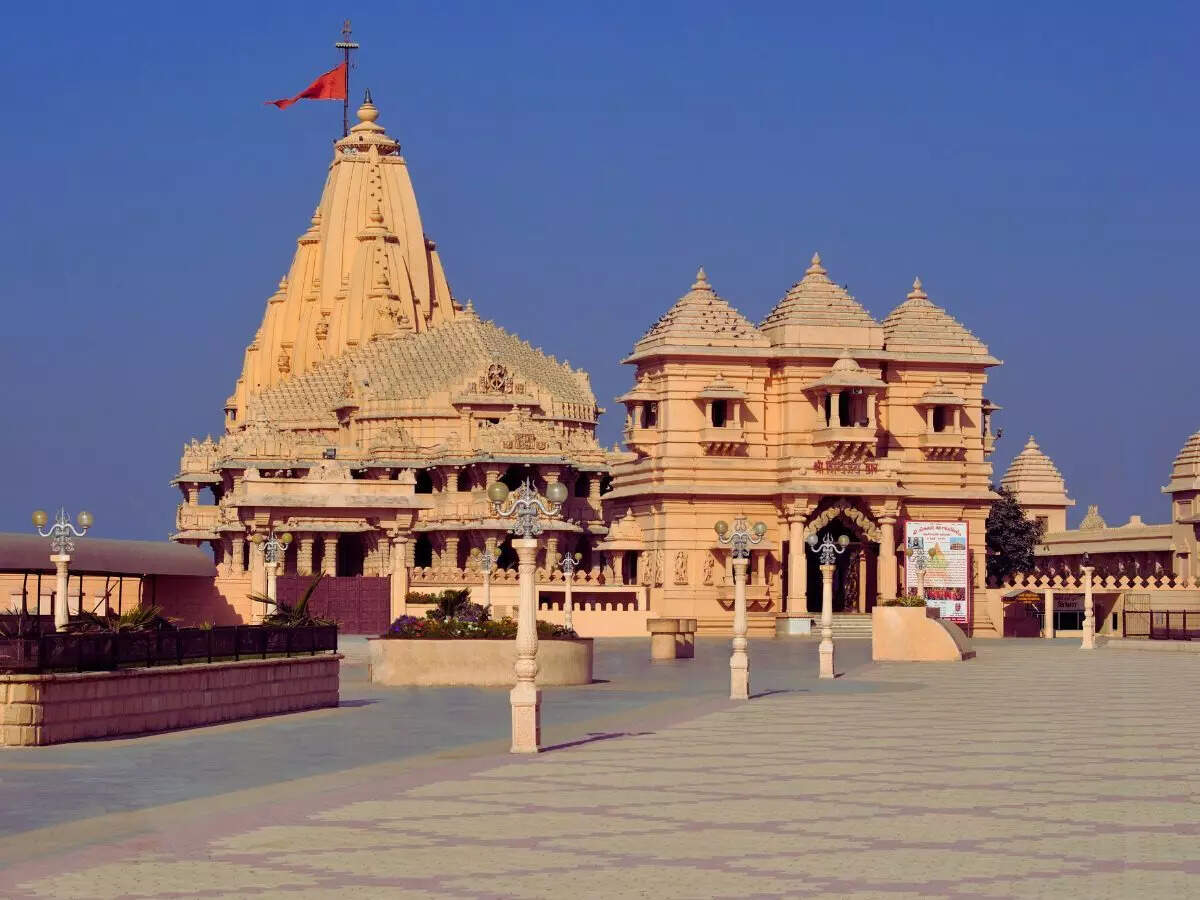
How to reach Somnath Temple is one of the first questions that comes to the mind of Shiva devotees wanting to visit the sacred site. The temple (Somnath Jyotirlinga) is set on the serene Arabian Sea coast in Prabhas Patan, near Veraval in Gujarat’s Gir Somnath district. For those who don’t know, Somnath also happens to be the first Jyotirlinga in the 12 sacred Jyotirlinga temples dedicated to Lord Shiva. The temple draws millions of pilgrims and travellers annually for its spirituality and heritage. Today, Somnath has completed 1000 years of existence. Prime Minister Narendra Modi offered prayers and took part in the sacred rituals held as part of the Somnath Swabhiman Parv celebrations. During his visit, the Prime Minister joined priests and devotees in the chanting of the mantras. The Somnath Swabhiman Parv is observed to mark 1,000 years since the 1026 invasion of the Somnath Temple by Mahmud of Ghazni, remembering the shrine’s long history of cultural endurance.Let’s have a closer look at this historic revered shrine:Rise, fall and revival of SomnathThe Somnath Temple is not an ordinary shrine. It has seen history like no other. Dramatic and profound. The temple dates back centuries, though the exact date of the first temple’s construction is still a matter of debate. Regardless, what is undisputed is its cultural significance, history and spiritual status.Somnath, meaning Lord of the Moon, gets its name from the Moon god (Soma). As per legend, the Moon lost its beauty and shine because of a curse. He then prayed to Lord Shiva and regained its glory at the same site where three rivers meet. These rivers are Kapila, Hiran and Sarasvati. The history of repeated destruction and reconstruction
Canva
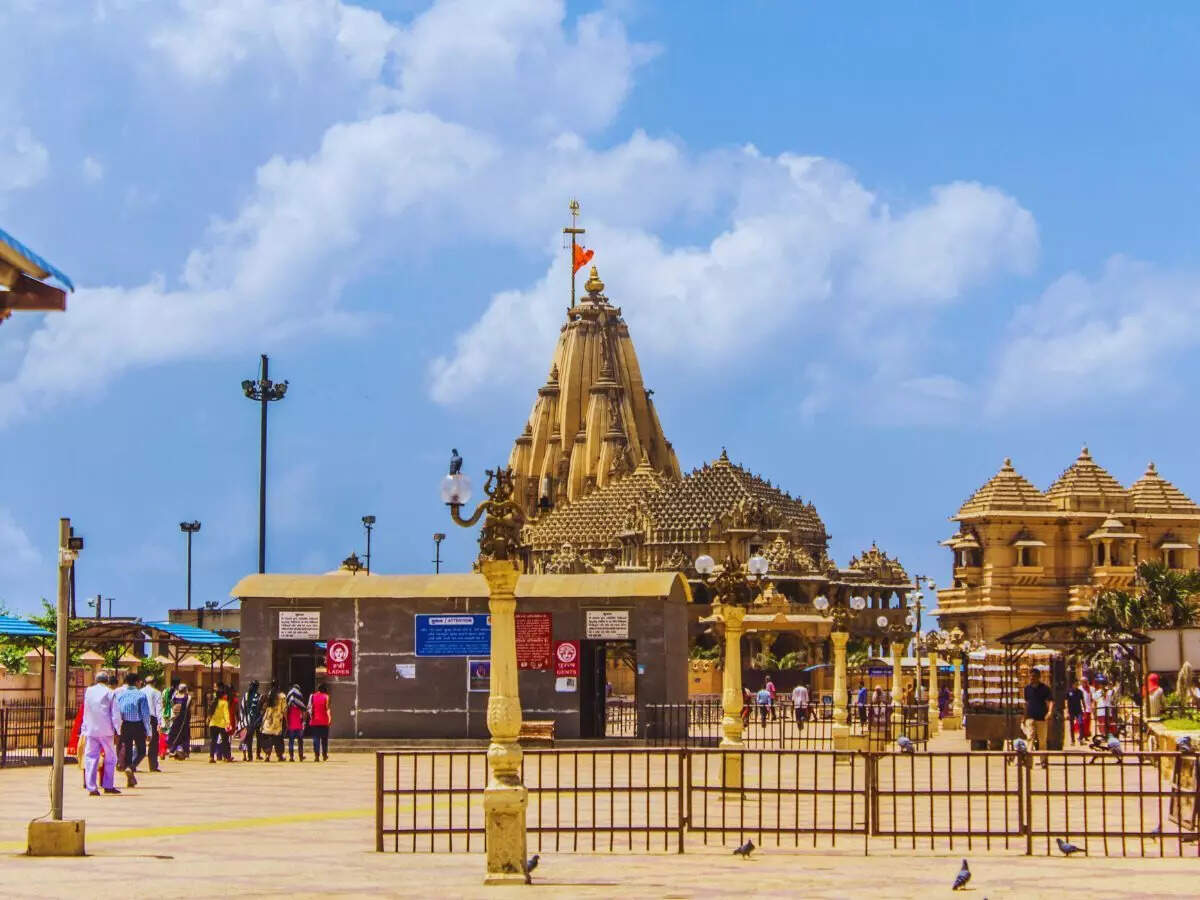
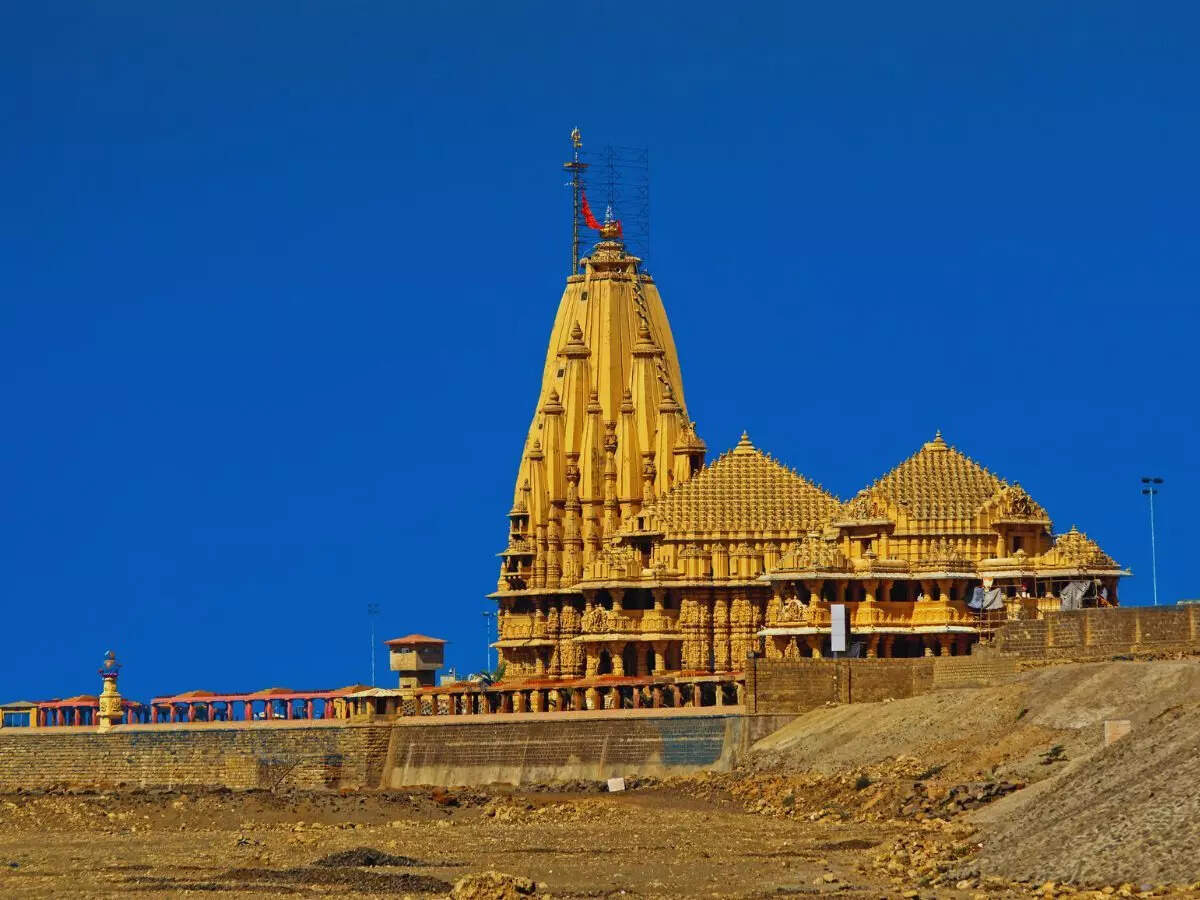
The temple has suffered a number of setbacks and destruction by invading forces. One of the most famous incidents was the attack by Mahmud of Ghazni in 1026 CE. It is one unforgettable chapter in India’s and temple’s history. The temple has been plundered more than 17 times and popular stories describe the temple being plundered and demolished, becoming a symbol of resilience.But after India’s independence, the temple was reconstructed. In May 1951, the temple was rebuild in the Chaulukya architectural style. Today, the temple is managed by the Shree Somnath Trust and continues to attract devotees from across the globe.How to reach Somnath Temple
Canva
Somnath Temple is well connected by air, rail and road. By Air: Somnath does not have its own airport. So to reach here, the nearest airports are:Diu Airport (DIU) is about 70–85 km from the temple. Regular flights are available from cities like Mumbai and Ahmedabad.Keshod Airport is about 55–60 km away, which is another option.Rajkot Airport (RAJ) is about 200 km away and is well connected via main Indian cities. Taxis, private vehicles and buses are easily available for Somnath.By Train: Train travel is one of the most convenient options:Somnath Railway Station (SMNH) is only 1.5 km from the temple. Veraval Junction (VRL) is about 6–7 km away and well-connected to many major cities in India.Some prominent trains include the Sabarmati–Veraval Vande Bharat Express. It has reduced the time significantly between Ahmedabad and Somnath (around 7 hours).
Canva
By Road: Somnath is well connected with other cities and towns. Regular buses are operated by GSRTC and by private operators.The town is connected well via National Highway 51 (NH51) and state highways.From Ahmedabad, it takes around 400 km (about 8–9 hours by bus).From Rajkot, Somnath is around 190–200 km.Darshan Timings: Darshan is usually available from early morning until late evening (from 6 AM to 9 PM)It is important to know that the Somnath Temple is not just a religious site. It is a piece of history that has experienced and seen things no other. It has seen centuries of faith, endurance and devotion. A trip to Somnath promises spiritual insight and a timeless connection with India’s cultural heritage.
About the Author