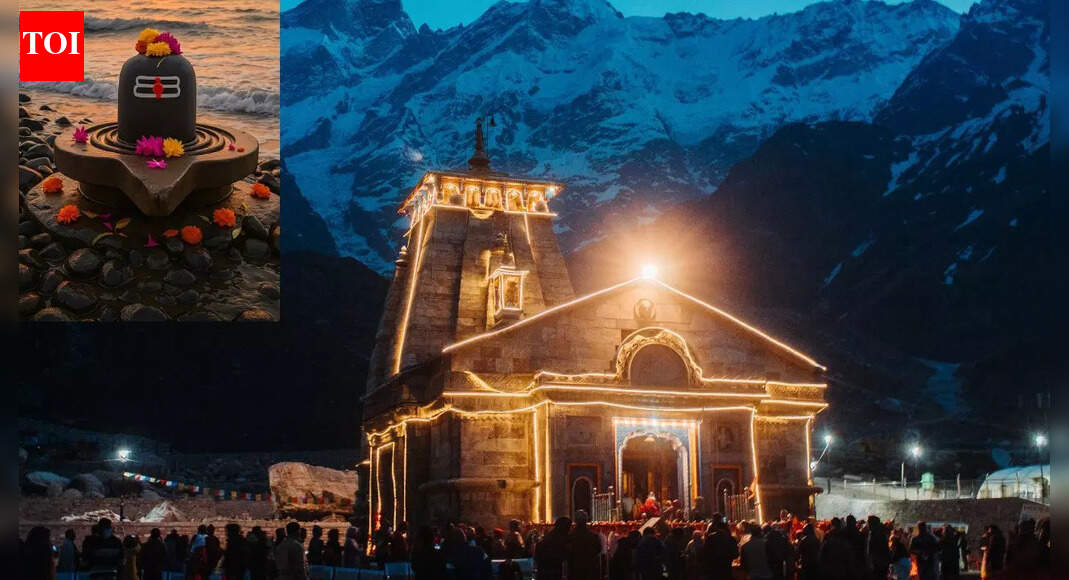
The Kedarnath temple, along with the Panch Kedar shrines, represents centuries of devotion, mythology, and architectural excellence in Uttarakhand. According to legend, Lord Shiva, seeking to evade the Pandavas after the Kurukshetra war, took refuge at Kedarnath in the form of a bull, leaving parts of his body to manifest at other sacred sites. These five temples, collectively known as the Panch Kedar, include Tungnath, Rudranath, Madhmaheshwar, and Kalpeshwar, each symbolising a different aspect of the deity. The Kedarnath temple itself, built with massive grey stone slabs, features exquisite carvings and a sanctum dedicated to Lord Shiva in his Sadashiva form. Pilgrims visit these sites not only for spiritual fulfilment but also to experience the serene Himalayan landscape and the enduring legacy of faith and tradition.
Spiritual significance of Kedarnath, Lord Shiva and Panch Kedar in Uttarakhand
As per the Shri Badarinath Kedarnath Temple Committee, Chamoli district in Uttarakhand is home to more than 200 shrines dedicated to Lord Shiva, with Kedarnath being the most revered among them. According to legend, after the Pandavas emerged victorious in the Kurukshetra war, they were overwhelmed with guilt for having slain their own kin. Seeking redemption, they embarked on a spiritual journey to obtain the blessings of Lord Shiva. The deity, however, eluded them repeatedly, taking refuge at Kedarnath in the form of a bull, thus setting the stage for one of Hinduism’s most iconic pilgrimages.As the Pandavas pursued Lord Shiva, he disappeared into the ground, leaving only his hump visible at Kedarnath. The remaining parts of Lord Shiva manifested at four other sacred sites, each representing a different aspect of the deity. The arms appeared at Tungnath, the face at Rudranath, the belly at Madhmaheshwar, and the locks of hair with the head at Kalpeshwar. Collectively, these five temples are known as the Panch Kedar, with “Panch” meaning five in Sanskrit. Pilgrims visiting these shrines follow a traditional sequence, honouring the various forms of Lord Shiva and connecting with the region’s rich mythological heritage.
Architectural splendour of the Kedarnath temple in the Chamoli district
Kedarnath temple stands majestically on a wide plateau, surrounded by towering, snow-covered peaks. The temple’s origins trace back to the 8th century A.D., when Jagad Guru Adi Shankaracharya rebuilt it on the site of an even older temple believed to have been established by the Pandavas themselves. The inner walls of the assembly hall are adorned with intricate carvings depicting deities and scenes from Hindu mythology. Outside the temple, a large statue of Nandi, the sacred bull, stands as a vigilant guardian of the sanctum.Dedicated entirely to Lord Shiva, the Kedarnath temple is renowned for its remarkable architecture. Constructed from massive, evenly cut grey stone slabs, it inspires awe over the engineering and craftsmanship of ancient builders. The temple features a Garbha Griha for worship and a Mandap suitable for accommodating pilgrims and visitors. Within the temple, a conical rock formation is venerated as Lord Shiva in his Sadashiva form, providing devotees a tangible connection to the divine. The careful alignment and balance of the stone slabs showcase both structural ingenuity and religious symbolism.
Spiritual significance and pilgrimage of Kedarnath temple since ages
Kedarnath remains one of the most important pilgrimage destinations in India, drawing thousands of devotees each year. The temple’s spiritual significance extends beyond its architectural grandeur; it represents penance, devotion, and the enduring legend of the Pandavas seeking atonement. Visiting Kedarnath and the other Panch Kedar shrines allows pilgrims to engage deeply with the mythology of Lord Shiva and experience the serene yet awe-inspiring Himalayan landscape.
About the Author