Greenland feels distant even before you look at a map. It is spoken of as ice, as emptiness, as somewhere untouched, yet people have lived there for thousands of years. Hunters crossed frozen water, families settled along fjords, and languages formed around snow and sea. Today the island still feels slightly out of step with the modern world. It belongs to the Kingdom of Denmark but governs much of its own life. Politically European and geologically North American, it sits between categories. The midnight sun glows without urgency, icebergs drift past small towns, and silence carries weight. Greenland is not dramatic all the time. Much of its power lies in how little it insists on being noticed. For visitors, patience often matters more than expectation.
Greenland: A island which has ice mountains and midnight sun
On paper, Greenland is part of Europe. It sits within the Kingdom of Denmark, sharing a monarch and some state responsibilities. Yet on the ground, it feels separate. The island gained expanded self-rule in 2009, giving its parliament control over most domestic matters. Foreign policy and defence remain tied to Denmark, as does the currency. Geographically, the story shifts again. Greenland is part of the North American continent, resting on the same ancient rock shield as Canada. A shallow submarine ridge connects it physically to the mainland. This odd mix of political and physical identity has shaped how Greenland sees itself. It is neither fully inside nor fully outside anything. That sense lingers in daily life.
Why is Greenland so dominated by ice
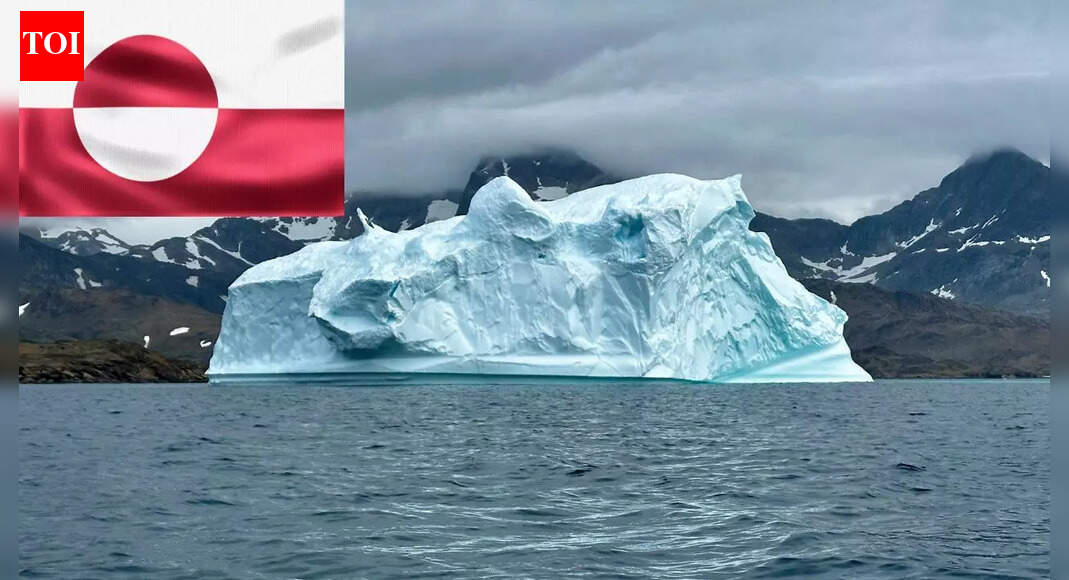
Ice defines almost everything here, though not always in obvious ways. Roughly 80% of the island is buried beneath an ice sheet that rivals Antarctica in scale. In places, it stretches several kilometres thick, pressing the land below close to sea level. Snow falls, compacts, and slowly flows outward toward the coast. Some glaciers creep quietly. Others move fast. Jakobshavn Glacier can advance tens of metres in a single day. Along the edges, ice meets the sea and breaks away. Icebergs drift into fjords, sometimes lingering for months. Beyond the ice, the land opens into bare rock, low vegetation, and long empty valleys. Very little soil can be farmed. Life adjusts instead of reshaping the ground.
Climate shapes daily life
Greenland sits firmly within the polar zone, but that does not mean every place feels the same. Winters can plunge to minus fifty degrees in the interior, while coastal areas remain milder due to the sea. Summers are short and cool. Temperatures rarely climb beyond 15 degrees. In Nuuk, the capital, the average temperature barely rises above freezing across the year. Rain and snow vary widely. Some western towns are relatively dry. Eastern regions see heavier precipitation. Wind often matters more than cold. It cuts through clothing and silence alike. People plan around weather without fighting it. When conditions close in, waiting becomes part of the rhythm rather than an inconvenience.The midnight sun in Greenland does not arrive all at once. It slips in gradually, first stretching evenings, then removing night altogether. Not every part of the island experiences it in the same way. The far north, places like Qaanaaq, can see twenty four hour daylight from late April through late August. Further south, in towns such as Ilulissat, the effect is shorter, usually from May into July. It happens because of the Earth’s tilt, nothing sudden or dramatic, just geometry and slow movement. Light lingers on mountains and water, turning ordinary scenes soft and golden. For many travellers, summer feels open ended, with days that never properly close.
Who lives here and what language is spoken
Greenland has been inhabited for around five thousand years by Arctic peoples and later by Europeans. Today, most residents are Inuit Greenlanders. The official language is Greenlandic, spoken in daily life, schools, and media. Danish is also used, especially in administration, and many people move comfortably between both. Towns hug the coastline, linked more by sea and air than by roads. Forests are almost nonexistent. Wildlife, water, and ice feel closer than infrastructure. Communities are small. News travels quickly. Traditions sit alongside modern habits without much ceremony. Greenland does not rush to explain itself. It simply continues, shaped by ice, light, and long stretches of quiet that feel intentional rather than empty.
About the Author