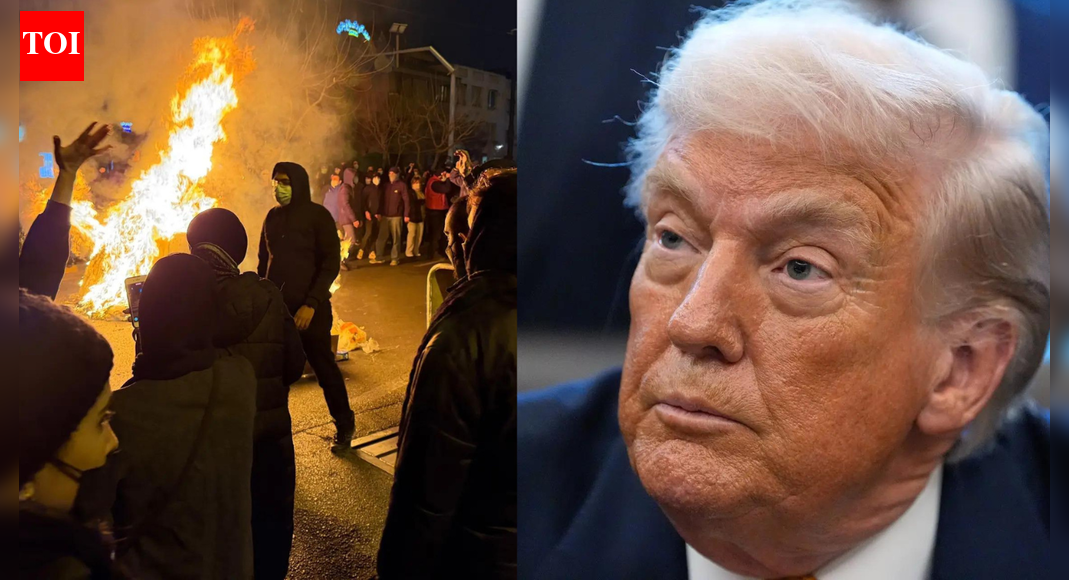
The United States claimed Iran halted 800 planned executions following pressure from President Donald Trump over Tehran’s crackdown on nationwide protests, even as Washington warned that military action remains an option. “The president understands today that 800 executions that were scheduled and supposed to take place yesterday were halted,” White House Press Secretary Karoline Leavitt told reporters on Thursday. “All options remain on the table for the president,” she said, adding that Trump had warned Iran of “grave consequences” if the killing of demonstrators continued.The White House also said that “President Donald Trump is closely monitoring the situation on the ground in Iran,” as quoted by Reuters.Earlier, Trump had said said that intermediaries from Iran had conveyed guarantees that executions would be halted. According to Trump, the assurances came from “very important sources on the other side,” even as regional allies grew increasingly concerned that rising tensions could trigger direct confrontation. With rhetoric from Washington and Tehran temporarily softening, a senior Saudi official told AFP on Thursday that Saudi Arabia, Qatar and Oman spearheaded an urgent diplomatic push to restrain Trump, citing fears of “grave blowbacks in the region”. The official said the three Gulf states mounted what he described as “a long, frantic, diplomatic last-minute effort to convince President Trump to give Iran a chance to show good intention”, requesting anonymity due to the sensitivity of the discussions. A second Gulf official corroborated the account, saying the diplomatic outreach also included a warning to Tehran that any strike on US facilities in the region would “have consequences”.The developments come as Iranian authorities continue a nationwide internet shutdown that activists fear is intended to conceal the scale of the crackdown. The blackout has now entered its seventh day. “Exactly one week ago… Iran fell into digital darkness as authorities imposed a national internet blackout,” internet monitoring group Netblocks said in a social media post, as quoted by AFP. Meanwhile, the US announced a new round of sanctions targeting Iranian officials accused of repressing protests challenging Iran’s theocratic leadership. Among those sanctioned is the secretary of Iran’s Supreme Council for National Security, whom the US Treasury Department accuses of being among the first officials to call for violence against protesters. The Treasury Department’s Office of Foreign Assets Control also designated 18 individuals and companies alleged to be involved in laundering money from Iranian oil sales through a shadow banking network linked to sanctioned institutions Bank Melli and Shahr Bank. Shadow banking refers to financial activities that resemble traditional banking but operate outside standard regulatory frameworks. Treasury Secretary Scott Bessent said the United States “stands firmly behind the Iranian people in their call for freedom and justice” and that Treasury “will use every tool to target those behind the regime’s tyrannical oppression of human rights.” The protests erupted on December 28 following the collapse of Iran’s rial currency, as the country’s economy has come under pressure from international sanctions imposed in part over its nuclear programme. Iranian Foreign Minister Abbas Araghchi offered a different account during an interview on Fox News Channel’s “Special Report with Bret Baier” on Wednesday, saying the protests began peacefully “and the government engaged with the protesters and with their leaders.” He said that after the tenth day, however, “terrorist elements led from outside” the country appeared and the demonstrations turned violent. In February, Trump reimposed a “maximum pressure” campaign on Iran aimed at blocking its development of nuclear weapons, including US-led strikes on three major Iranian enrichment facilities. While the threat of US retaliation over the deaths of protesters continues to loom, Trump has signalled the possibility of de-escalation, saying the killing appeared to be ending. The sanctions bar the targeted individuals and entities from accessing property or financial assets held in the US and prohibit US citizens and companies from doing business with them, though US officials acknowledge the measures are largely symbolic, as many of those sanctioned do not hold assets in US institutions.
About the Author