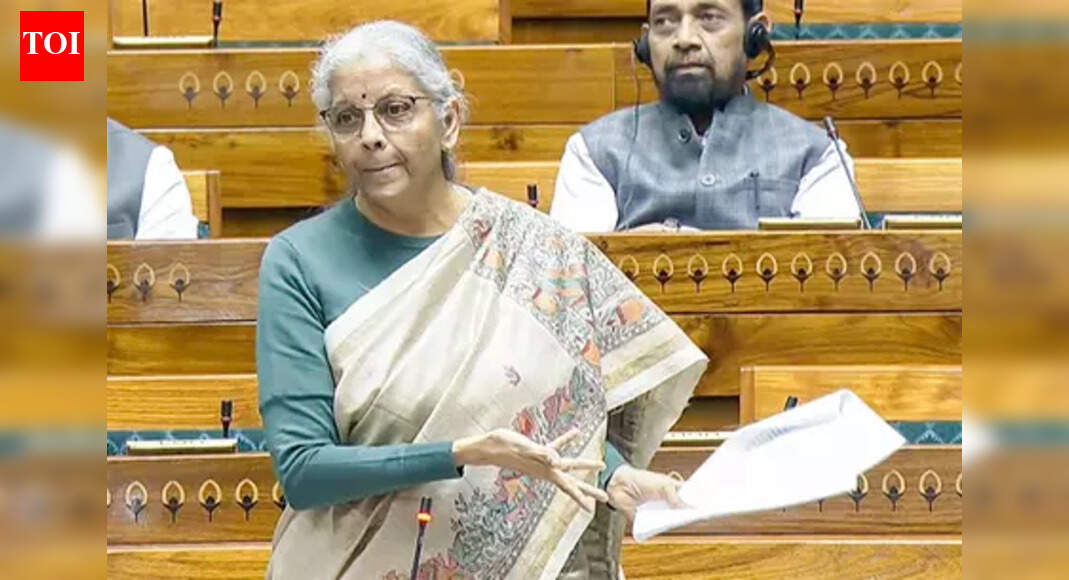
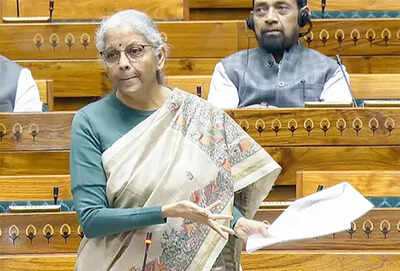
Finance minister Nirmala Sitharaman
NEW DELHI: Finance minister Nirmala Sitharaman Wednesday said that govt is moving to update the base year for calculating GDP to 2022-23 instead of 2010-11 and dismissed concerns over an IMF report’s reference to India’s data quality.The new base, which will also come with a revised basket to goods and services, will reflect the changes in the economy as consumption patterns have changed over the last 15 years. Data based on the new series will be released on Feb 27 with the first advance estimate based on the current base to be released on Jan 7. There will also be changes in the base year for inflation and industrial production next year.India’s economic data has come under scrutiny, and a revamp is seen to be necessary to capture the changes in the digital economy.Recently, IMF in its annual report on India gave negative remarks on quality of data & called for measures to make it more up to date.Responding to the IMF report, which was raised in Lok Sabha, Sitharaman said that the multilateral agency focused largely on India’s overall healthy economic performance.“The ratings given by IMF are part of its report on the Indian economy, which expects India’s GDP to grow at 6.5% in 2025-26. It recognises growth in the private sector, macroeconomic stability and the resilience of the Indian financial sector. These are identified as key drivers of growth. IMF also notes that inflation is well below RBI’s tolerance band and is projected to be 4.3% for the full year. The point of contention was the quality of data on which the ‘C’ grade was given. The ‘C’ grade is assigned to the National Accounts data because it is based on an outdated base year — 2011-12,” she said.She said that govt is in the process of updating the base year. “So, the data currently being used is based on the 2011-12 base year, and it is solely for this reason that we have been given a ‘C’ grade. The IMF report does not question the growth figures,” she said, rejecting opposition’s criticism.Latest data released by NSO, estimated India’s GDP to have grown by scorching 8.2% in the July-Sept quarter, after a robust 7.8% in the first three months of the financial year.
About the Author