
For decades, Stanford University has occupied a near-mythical place in the technology economy. From LinkedIn’s Reid Hoffman and Google’s Sergey Brin, its alumni list helped reinforce a simple idea: elite education functioned as a reliable gateway to elite opportunity. A four-year degree, particularly from institutions embedded in Silicon Valley’s orbit, was treated as both signal and filter.That assumption is now being tested. As AI changes entry-level work and companies rethink how they identify talent, the degree is slowly losing its role as a default gatekeeper. The shift is not being driven by universities, but by employers who no longer see formal credentials as the most efficient proxy for skill.
Brin on education choices in an AI age
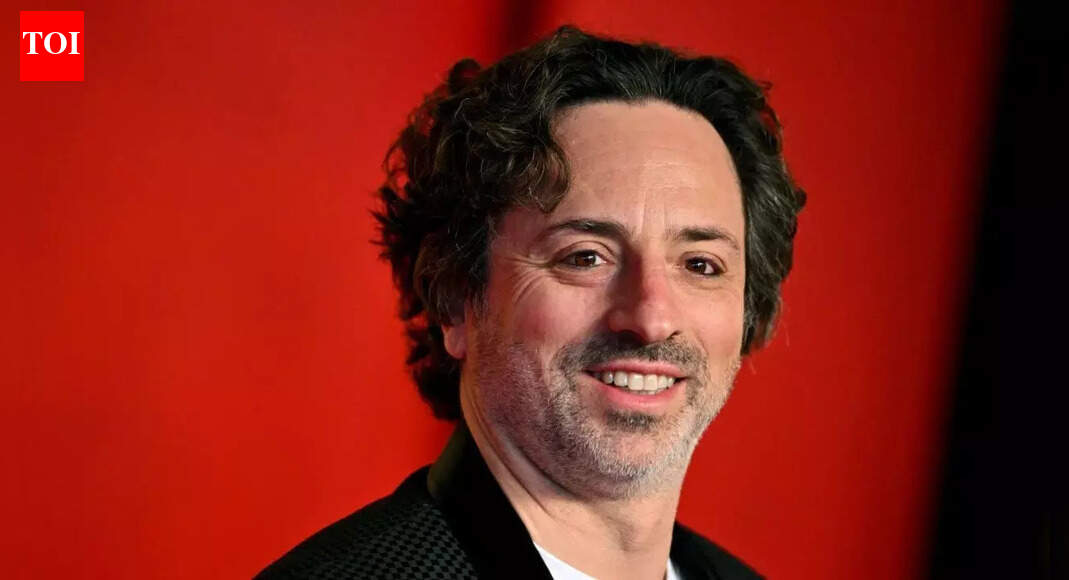
Speaking to Stanford engineering students last month, Brin reflected on his own academic choices without dismissing them. He said he studied computer science because of interest rather than strategy. “I chose computer science because I had a passion for it,” Brin said, Fortune reports. “It was kind of a no-brainer for me. I guess you could say I was also lucky because I was also in such a transformative field.”At the same time, Brin cautioned students against making educational decisions based purely on fears about automation. AI he suggested, does not neatly spare some disciplines while dismantling others. “I wouldn’t go off and switch to comparative literature because you think AI is good at coding,” he said. “AI is probably even better at comparative literature, just to be perfectly honest anyway,” he added, Fortune reports.
How Google’s hiring practices have shifted
Where Brin’s words become more significant is in how Google now hires. The company, once known for privileging academic pedigree, has steadily reduced its reliance on college degrees as a requirement for many roles.“In as much as we’ve hired a lot of academic stars, we’ve hired tons of people who don’t have bachelor’s degrees,” Brin said, according to Fortune. “They just figure things out on their own in some weird corner.”That observation is backed by hiring data. Data from the Burning Glass Institute shows that between 2017 and 2022, the share of Google job postings requiring a college degree fell from 93% to 77%. Companies such as Microsoft, Apple and Cisco have also reduced degree requirements, signalling a move towards skills-based hiring rather than credential-based screening.This recalibration is forcing a larger question into view. If degrees no longer function as reliable signals of ability, what exactly are they meant to represent in the labour market.
Business leaders question the value of elite credentials
Leaders outside the tech sector have voiced similar doubts. JPMorgan Chase CEO Jamie Dimon said in 2024 that elite education does not necessarily translate into workplace effectiveness. “I don’t think necessarily because you go to an Ivy League school or have great grades it means you’re going to be a great worker or great person,” Dimon said, according to Fortune. He added that skills often remain invisible on resumes. “If you look at skills of people, it is amazing how skilled people are in something, but it didn’t show up in their resume.”Palantir CEO Alex Karp, despite holding three degrees including a law degree from Stanford, has been even more direct. Speaking during an earnings call last year, Karp dismissed the long-term relevance of educational pedigree once someone enters the workplace. “If you did not go to school, or you went to a school that’s not that great, or you went to Harvard or Princeton or Yale, once you come to Palantir, you’re a Palantirian,” he said, according to Fortune. “No one cares about the other stuff.”According to Great Place to Work CEO Michael Bush, this thinking is spreading beyond a narrow set of firms. “Almost everyone is realizing that they’re missing out on great talent by having a degree requirement,” Bush told Fortune. “That snowball is just growing.”
What this means for universities
For Brin, the implications extend beyond hiring practices. As credentials lose their power as screening tools, universities themselves may need to reassess their role. “I just would rethink what it means to have a university,” he said, according to Fortune.Degree requirements have become optional, alternative hiring routes have expanded, and skills learned outside formal institutions now gain legitimacy. Universities will continue to matter, but maybe less as gatekeepers and more as one pathway among many.Students may not feel the impact immediately. Over time, however, the distance between education as credential and education as capability is likely to widen. And as companies like Google continue to hire beyond the degree, the long-standing contract between universities and the labour market is being rewritten.
About the Author