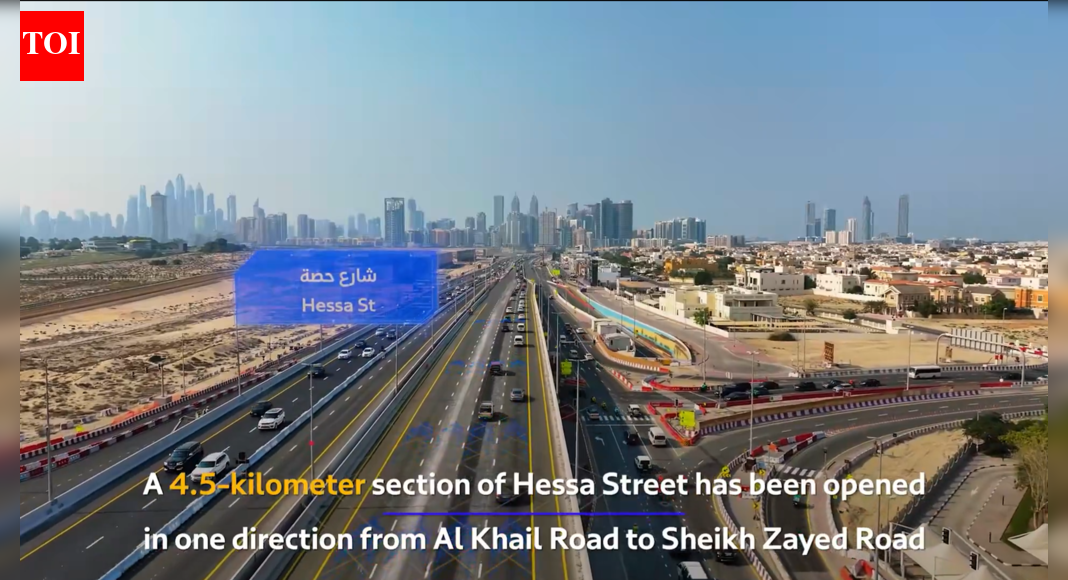
Dubai’s Roads and Transport Authority (RTA) has officially opened Phase I of the Hessa Street Development Project, marking a major milestone in the Emirate’s ongoing efforts to ease congestion and future-proof its transport infrastructure as urban growth accelerates. The newly completed stretch covers 4.5 kilometres between Al Khail Road and Sheikh Zayed Road and represents nearly 90% completion of the whole project, which is expected to be fully finished later in 2026.
Dubai’s massive roads expansion to tackle traffic woes
Phase I focuses on widening Hessa Street from two lanes to four in each direction, significantly improving the flow of traffic for vehicles travelling to and from key arterial routes such as Al Khail Road and Sheikh Zayed Road. The upgrade also includes the construction and expansion of major bridges and intersections at Al Asayel Street, First Al Khail Street and Sheikh Zayed Road. These steps are expected to dramatically reduce congestion and enhance journey times across one of Dubai’s busiest corridors.Mattar Al Tayer, Director General and Chairman of the Board of Executive Directors of RTA, said that the AED 690 million (approx. $188 million) project reflects the emirate’s vision of advancing road networks to match population growth and urban expansion. More than 640,000 residents living in and around areas like Al Sufouh 2, Al Barsha and Jumeirah Village Circle are expected to benefit from these improvements by 2030.
Dubai roads beyond cars : Cycling , e-scooters and connectivity
The Hessa Street project goes well beyond just widening roads. A 13.5 km dedicated cycling and e-scooter track, with a width of 4.5 metres, is being built alongside the road, offering safe first- and last-mile connections between key destinations such as Dubai Hills and Al Sufouh. This sustainable mobility component includes a striking 5-metre-wide bridge designed to carry cyclists, e-scooters and pedestrians across Sheikh Zayed Road and Al Khail Road. It is a welcome boost for active commuters and community connectivity.
Dubai intersection upgrades and traffic flow improvements
In addition to lane expansions and cycling paths, intersection upgrades form a core part of the newly opened phase. These improvements include:
- A two-lane directional ramp bridge over Dubai Metro’s Red Line at Sheikh Zayed Road, facilitating smoother eastbound access during peak hours.
- Widening of the First Al Khail Street bridge from three to four lanes in each direction to improve signalised traffic flow.
- Expansion of the existing Al Asayel Street bridge to four lanes each way.
- The previously inaugurated intersection with Al Khail Road, featuring a direct two-lane ramp for northbound traffic.
Once fully finished, the Hessa Street Development Project is expected to double the current traffic capacity, from about 8,000 vehicles per hour to 16,000 in both directions. This shift could substantially cut travel times and ease peak congestion on a road that has long been one of the city’s bottlenecks.Road users should also see more predictable journeys thanks to redesigned intersections and improved signalling, while residents in surrounding communities will benefit from enhanced safety for both drivers and non-motorised commuters alike. This project is part of a larger RTA ambition to expand and upgrade Dubai’s transport network.Alongside Hessa Street, the authority is advancing multiple strategic corridors and road enhancements to support the city’s ambitious growth plans through 2030 and beyond, including new bridges, tunnels and major roadway expansions. With Phase I of the Hessa Street upgrade now open, Dubai is taking a bold step forward in transforming its traffic landscape, doubling capacity, boosting connectivity and giving drivers, cyclists and pedestrians alike a smarter, safer and smoother network to navigate.As the final phases move toward completion later this year, residents can expect tangible improvements in daily travel and quality of life across one of the UAE’s most dynamic cities.
About the Author