
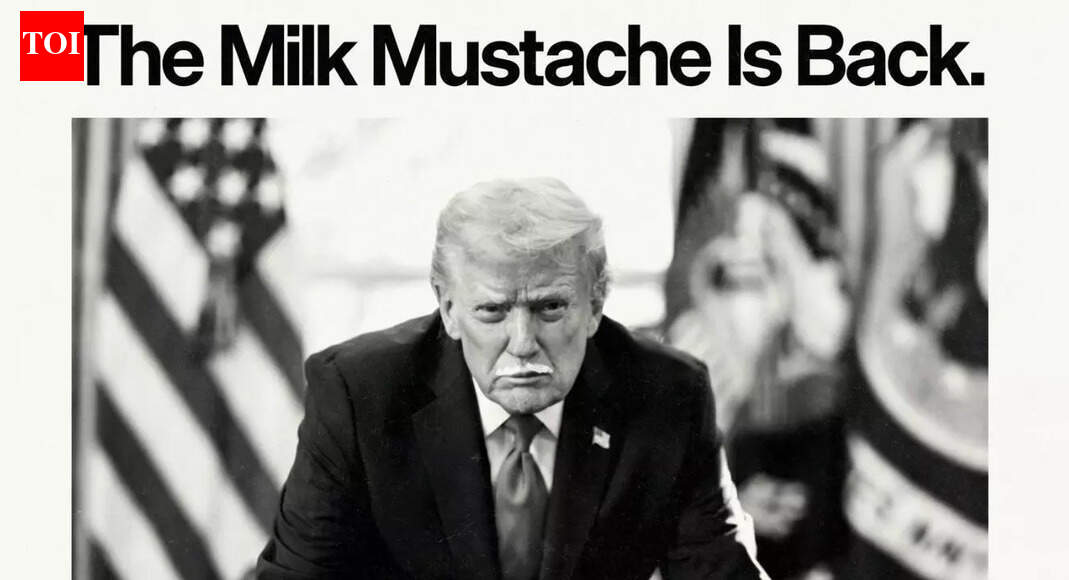
A black-and-white image of Donald Trump wearing a milk moustache recently circulated online, deliberately echoing the iconic 1990s “Got Milk?” campaign. The image, shared through official channels and amplified by Trump allies, was more than a nostalgic visual. It signalled a clear shift in US food policy thinking, with whole milk once again being promoted as a legitimate and even preferable option in American diets.The timing mattered. The post followed a major change in federal rules governing school nutrition, bringing whole milk back into classrooms and reigniting long-running debates about fat, health and government control over food choices.
The law behind the milk moustache moment
The renewed push for whole milk is tied to the Whole Milk for Healthy Kids Act, signed into law in late 2025. The legislation rolls back earlier federal restrictions that had limited schools to serving only low-fat or skim milk under the National School Lunch Program.Those earlier rules were introduced to curb saturated fat intake, but school administrators and lawmakers argued they produced unintended consequences. Participation in school milk programmes declined, cartons went untouched, and children consumed fewer nutrients such as calcium, vitamin D and protein. Supporters of the new law say the policy prioritises real-world behaviour over theoretical guidelines: children are more likely to drink milk they enjoy.
Trump, symbolism and food politics
Trump’s embrace of whole milk fits a familiar pattern in his political style, but it is also rooted in a specific nutritional argument. Food, like energy or agriculture, becomes a cultural signal. Whole milk is framed as “real”, traditional and minimally altered, in contrast to low-fat or skim milk, which supporters argue removes naturally occurring fats only to compensate later with additives or flavourings.By invoking the “Got Milk?” era, Trump taps into a period when dietary guidance was simpler and less polarised. The milk moustache imagery mirrors a broader messaging strategy seen throughout his campaigns: reclaiming everyday products and reframing them as symbols of resistance to elite-driven consensus. In this framing, whole milk is not indulgent but complete, delivering fat, protein and fat-soluble vitamins in their original form.
The nutritional case for whole milk
Advocates of whole milk point to several practical advantages. Whole milk is more satiating than low-fat alternatives, meaning it can help children feel fuller for longer and potentially reduce snacking between meals. A growing body of observational research has found no consistent link between whole-milk consumption and higher rates of childhood obesity, challenging assumptions that shaped earlier low-fat mandates.Whole milk can also be particularly beneficial for younger children, adolescents with high energy demands and physically active students, providing a dense source of calories and nutrients without relying on processed substitutes. Supporters stress that the argument is not that whole milk is superior for everyone, but that it should remain an available option rather than a prohibited one.
Critics and ongoing concerns
Public health experts remain divided. Critics warn that promoting whole milk without broader dietary context could increase saturated fat intake if consumed excessively. They argue that nutrition policy should focus on overall diet quality rather than singling out specific foods.The renewed attention has also reignited debate around raw milk, with some online supporters calling for wider access to unpasteurised dairy products. Health agencies continue to strongly oppose raw milk consumption due to the risk of bacterial infections, drawing a clear line between whole milk and raw milk advocacy.
More than just milk
The milk moustache image may appear light-hearted, but it reflects a deeper shift in how nutrition policy is being framed. Under Trump’s influence, food guidance is increasingly tied to ideas of personal choice, cultural identity and scepticism toward shifting expert advice.Whether whole milk’s return to school lunches leads to measurable improvements in children’s health remains an open question. What is already clear is that something as ordinary as milk has once again become political.In Trump’s America, even a lunchroom staple can serve as a statement about regulation, expertise and who gets to decide what is healthy.
About the Author