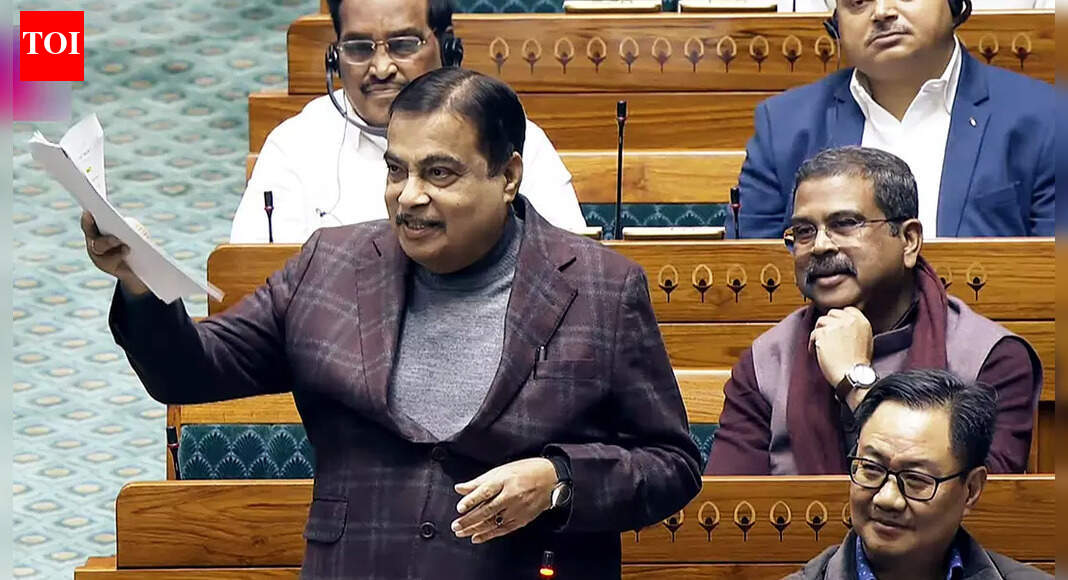

Union minister Nitin Gadkari speaks in Lok Sabha (ANI)
NEW DELHI: On an average, 485 people died in road crashes every day in 2024, with total fatalities reaching 1.77 lakh, according to road transport ministry told Lok Sabha on Thursday. National Highways (NHs), which account for barely 2% of India’s road network, recorded 54,443 fatalities (31%), the lowest share in past four years.The total number of deaths last year was 2.3% higher than in 2023, when 1.73 lakh people were killed in road crashes. TOI had reported on Nov 5 on the trend for the year, which suggested that fatalities in 2024 would exceed those in the previous year.In a written reply to a question from DMK’s A Raja, Union road transport minister Nitin Gadkari said, “As per information received from states/UTs, total number of road accident fatalities reported in the country on all category of roads during 2024 were 1,77,177, which includes data in respect of Bengal taken from electronic detailed accident report (eDAR) portal.”
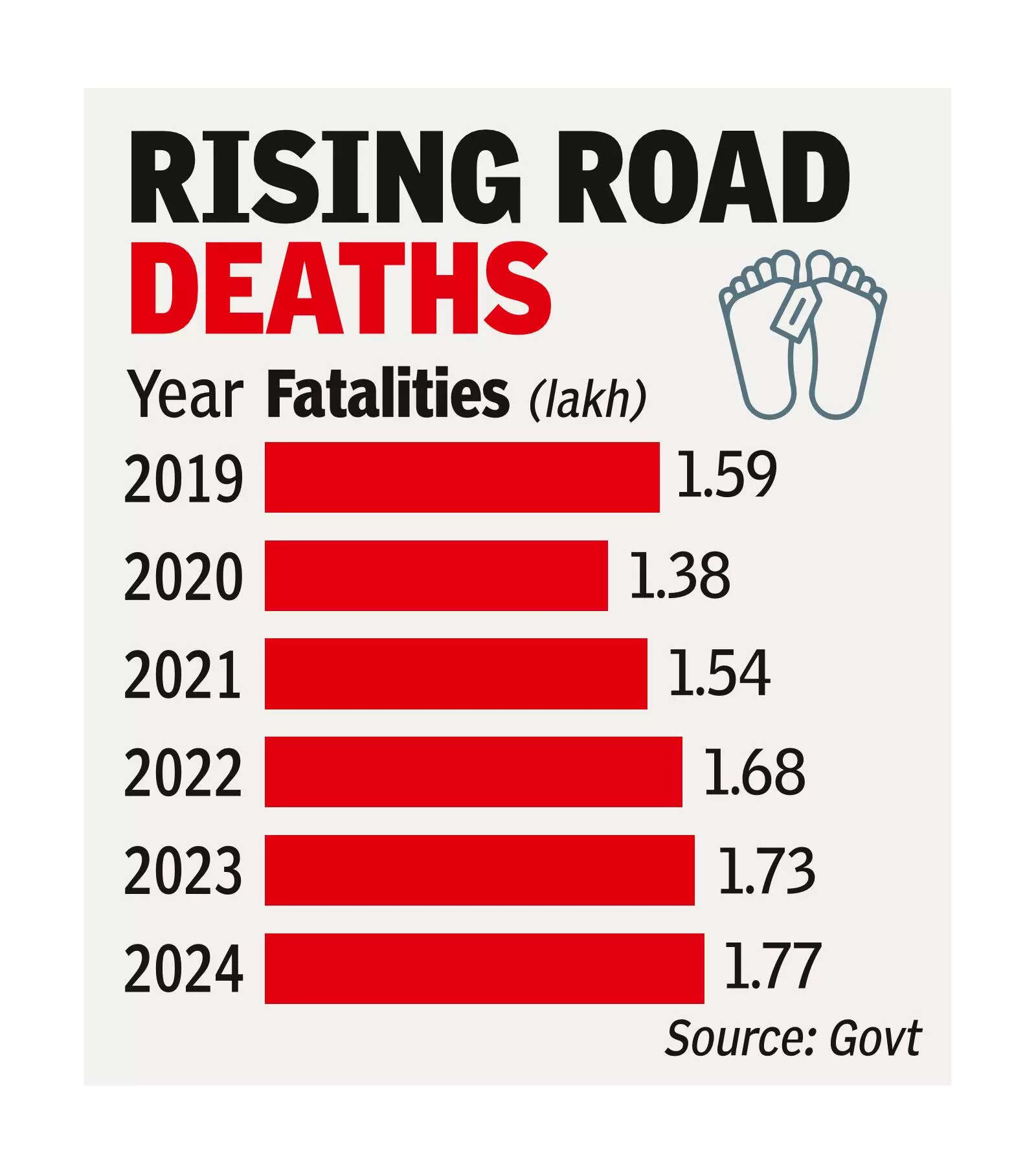
Govt has rolled out eDAR system for real-time collection of data. Sources said experience shows eDAR data are largely correct, though there is scope for minor corrections, and hence there may be a slight increase in the number of deaths when the annual report of accidents is published.Data on crashes and fatalities on NHs, also submitted to Lok Sabha, show that accidents on these stretches have decreased — from 1.52 lakh in 2022 to 1.29 lakh — and fatalities have dropped from 56,007 in 2021 to just over 54,000.UP has reported significant decline in deaths on NHs, from 8,446 in 2023 to 5,524 last year. Officials said while this is a positive indicator, greater effort is needed to reduce fatalities on NHs and state highways, which have less network length comparatively but account for around 55% of deaths.“We are improving roads, technologies and vehicles, but there is a lack of education among all categories of road users. This must be addressed through awareness, motivation and enforcement,” said Manoj Bhatt, former DGP of Rajasthan.Experts said govt must involve civil society and a larger pool of non-government entities for large-scale awareness campaigns, rather than relying on only a few organisations, given the magnitude of the crisis.Meanwhile, govt is roping in IIT-Kanpur to use AI for mapping and scientifically analysing high-risk spots on NHs, officials said. They added that this will help identify causes of frequent crashes at specific locations, enabling targeted interventions.The road transport ministry also plans to amend Motor Vehicles Act by introducing stricter norms for issuing driving licences and a negative-points system for dangerous driving that could result in suspension or cancellation of licences.
About the Author