

MUMBAI: From angrezi make up and beauty creams to chocolates, Indians looking to shop for more foreign brands may soon be spoilt for choice. Following the FTA with UK, more British brands are expected to launch in India while companies already present in the market are likely to expand their business. This is essentially because with reduced tariffs, brands will be able to price their products more affordably, stepping up competition against a slew of global and local brands already selling in India and widen their set of consumers. They will also be willing to bring more of their UK portfolio to India which means more choice for local shoppers. “For UK-based brands, the FTA will bring down the cost of entering India and this will allow them to pass on the benefits to consumers. For us as a platform, it means easier registration and onboarding of British brands,” Radhika Ghai, founder & CEO at Kindlife, a Gurgaon based online marketplace which launches and distributes global beauty brands told TOI, adding that it is in talks with more than half a dozen UK cosmetic brands looking for India foray. Under the FTA, India’s average tariff on UK products will eventually drop from 15% to 3%. With a growing share of nouveau riche and young shoppers who are seeking beyond ordinary labels, India is a market too lucrative for brands to miss and the trade agreement will open up space for a range of value, premium and luxury British brands to tap into India.
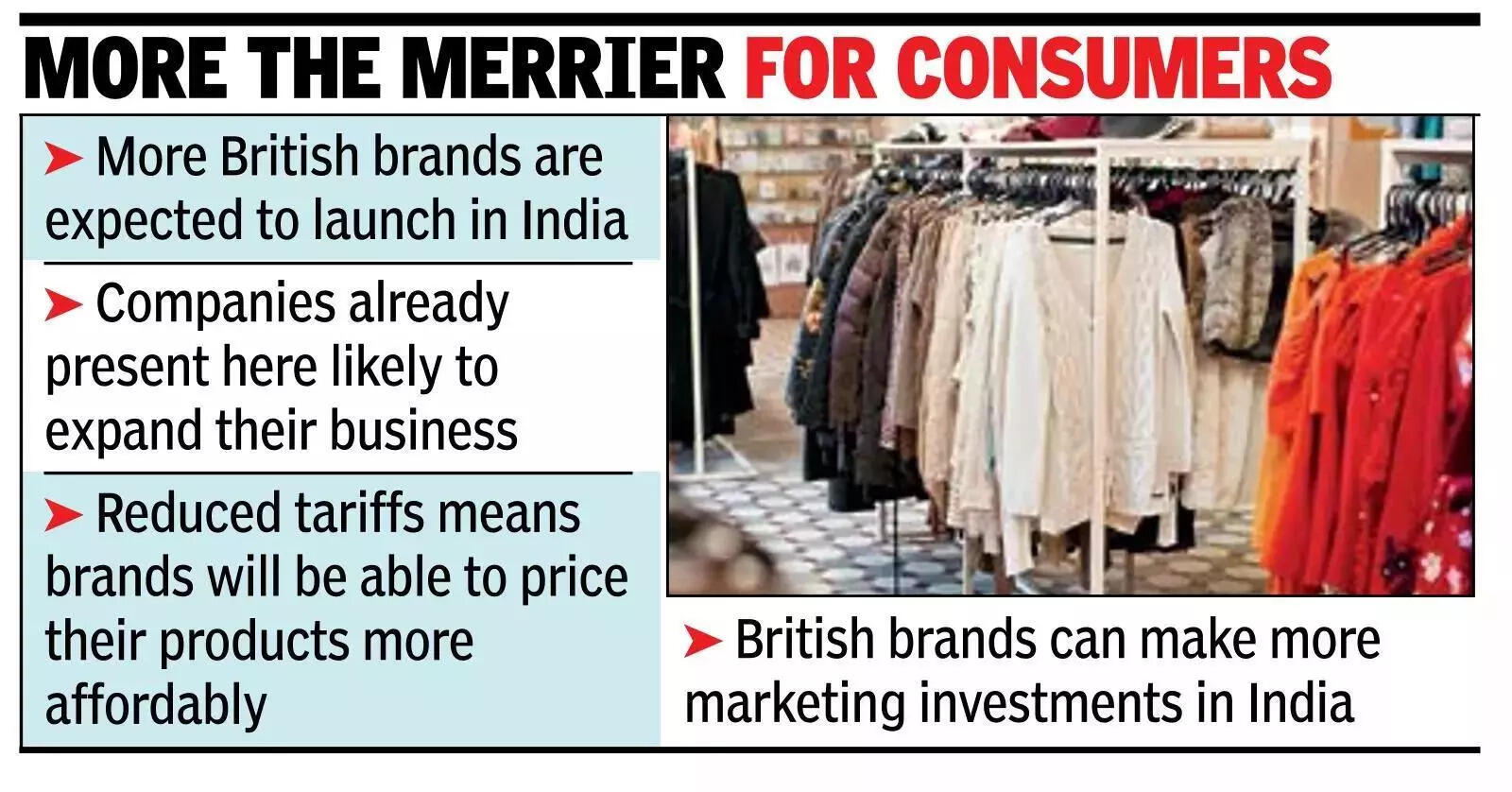
A clutch of premium and luxury consumer/retail British brands including The Body Shop, Pret A Manger, Burberry, Asos, Next are already selling in India. “Currently, 90% of our portfolio is imported from the UK, and the FTA has the potential to further lower import duties on UK-made beauty products, which will directly benefit customers,” said Shriti Malhotra, executive chairperson of Quest Retail, The Body Shop. Quest Retail has sales, distribution and marketing rights for The Body Shop in India. In the $20 billion Indian beauty market, imports from UK make up a small fraction of the market currently-about Rs 250-300 crore and the scope for brands to grow is higher, said Rahul Guha, senior director at Crisil. “The existing British retail brands will be the biggest beneficiaries of the deal as they already know the India market. For brands generally, it will become easier to get listed online and ink franchise agreements to enter small towns,” said Anand Ramanathan, partner and consumer industry leader, Deloitte South Asia.Besides with lower tariffs, British brands can make more marketing investments in India. Establishing joint venture partnerships with Indian companies may be an option now going forward, said Suresh Nair, indirect tax partner, consumer products and retail at EY India.
About the Author