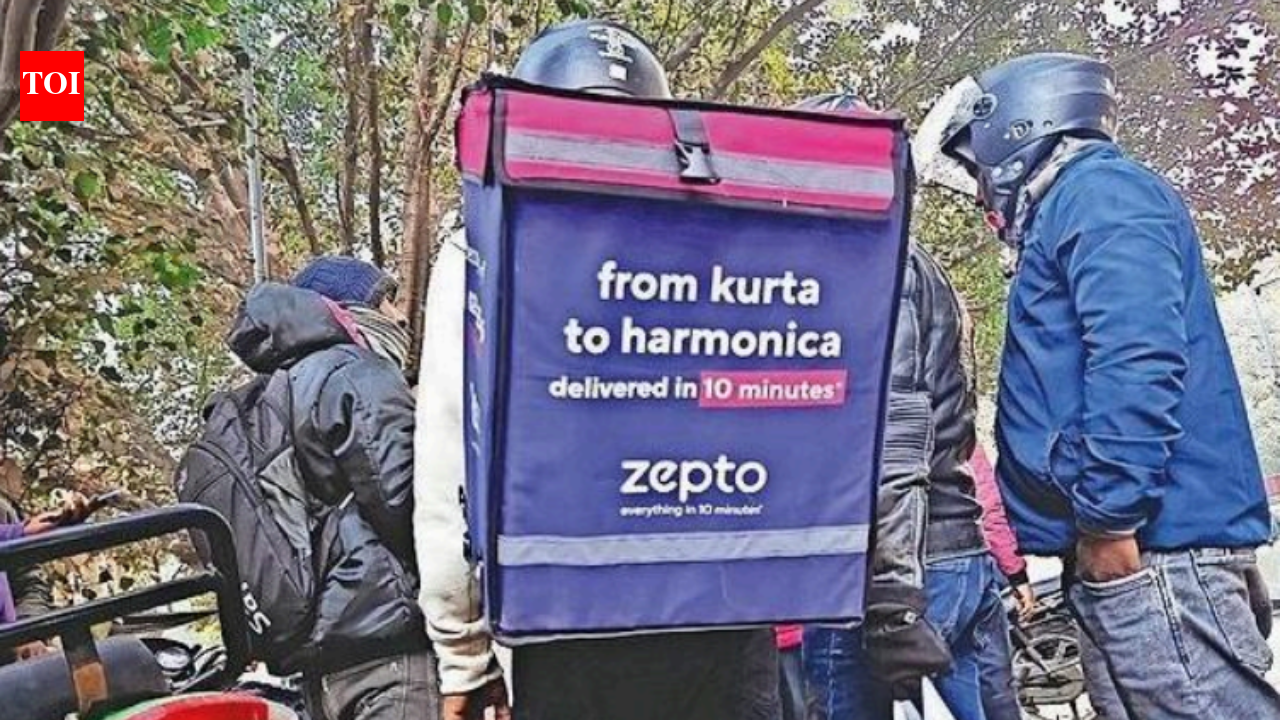
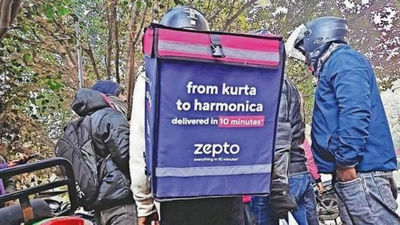
The day after labour ministry’s nudge to delivery platforms to drop the 10-minute branding, a breathless Sumit Singh appeared on the landing of my floor with my order. While I waited by the lift, seeing Singh emerge from the stairwell of my Noida apartment gave me a mild shock. “You climbed 17 floors?” I asked.“Ji, ma’am,” he replied, adjusting the voluminous bag strapped to his shoulders and wiping sweat from his forehead as I stood wrapped in three layers on one of NCR’s coldest days. “I can’t wait for the lift. Every minute I save gives me a chance to earn more.” Though the app I was using, Zepto, wasn’t promising 10-minute delivery, just as told, nothing had changed for Sumit. Not the daily 10-12-hour race against the clock, not the business model geared towards survival of the quickest, not the expectation of the customer sitting with fruits and expecting milk for cereal, and certainly not the class system hardcoded into NCR apartment culture of allowing delivery boys only into service lifts (meant for garbage).Sumit had waited five minutes – for him, “the outer limit of time wastage” – for the service lift to arrive at the ground floor and decided to sprint up when it didn’t. When I told him about the 10-minute promise being removed, he laughed. “That is only an announcement. Reality remains the same. The faster I finish an order, the faster I get the next one. That’s how this works. My income depends on how many deliveries I complete in a day. If one order gets delayed, it has a ripple effect,” he said.Over the last few weeks, more so since govt brought in the new labour code and gig workers’ unions called a strike during Christmas and New Year, the superfast commerce model has come under the scanner for exploitative practices. Though the strikes weren’t disruptive, they brought main concerns of the gig economy – harsh working conditions, stiff targets and lack of job or income security – into public discourse. Govt’s intervention on the 10-minute branding was a nod to those concerns.But it’s the medley of the invisibles – the stopwatch that a ping for an order starts, performance metrics and work allocation algorithms, and the incentive structure – that choreographs the delivery gig. Changing the branding doesn’t change this, or Sumit’s deliverables, or the next steep climb.Discontinuation of 10-minute deliveries was among the main demands of the gig workers’ unions that called the strike to prioritise safety of riders. That will, however, mean taking ‘quick’ out of commerce, which is a foundational challenge to the business model. Why is saving time so important?For every kilometre travelled, Sumit says he earns around Rs 14 per order. Longer-distance orders fetch slightly more, but they also take more time and burn more fuel or battery charge. To earn between Rs 25,000 and Rs 30,000 a month after deducting fuel costs and traffic challans – the minimum that delivery riders say they need to earn to survive in Delhi-NCR – they must, according to Sumit, complete 30-35 deliveries a day. “That means working 10-12 hours daily without any weekly off. On a good day, I earn up to Rs 850,” he explains.Income varies from one platform to another. Gaurav Kumar, who delivers for Swiggy Instamart, says, “Today, I earned Rs 366 after working 8 hours and 33 minutes. I completed 14 deliveries. Scrapping of the 10-minute rule has not changed anything for me. What I want is a steady income.”Customer behaviour adds another layer of stress. Dhruv Rajput, who works with Blinkit in Gurgaon, says people have become used to lightning quick deliveries and get irritated by delays. “People still want their orders fast, whether or not it’s a 10-minute promise. Sometimes, in cash on delivery cases, there are customers who refuse to pay if we get late. They don’t want to hear about traffic congestion. There is no option then but to take the blame and apologise,” he says.What’s worse than an unhappy customer?If there’s something riders fear more than an irritable customer, it’s being blocked out of the app. All riders TOI spoke to said reasons for blocking IDs are arbitrary, ranging from rejections to customer complaints. “Even if there is an emergency to attend to, if a rider rejects orders a few times on the app, it can lead to deductions, or worse, blocking,” says Deepak Kumar, a Zepto rider in Delhi. “Rejecting an order can lead to a deduction of Rs 5-10 or more, depending on distance and order quantity. Accounts can get blocked too. Then you can’t work at all.”Riders also run a huge risk of traffic fines. To save time, they often drive on the wrong side, take turns they aren’t supposed to, hoping they won’t get caught. Sumit, who delivers in Noida, says Dec 2025 was a particularly unlucky month. “I paid Rs 6,000 in traffic fines.”A critical part of the job that does not get any attention, say delivery riders, is the weight of orders they carry. Raju, a Blinkit rider in Delhi, says: “I’m often climbing stairs and carrying around with me a bag weighing 25-30kg. This takes a toll on the body like back and knee pain. Govt should bring in clear weight limits.” TOI wrote to Blinkit, Zepto and Instamart for a comment, but did not receive a response.What are our rights? Educate usRiders said they were aware of the new labour code govt has brought, but details are vague to them. They urged govt to organise awareness camps for them, so they can be educated about what their rights are. A rider said awareness about rights is not something the industry takes seriously. The rider’s app showed he has a total health coverage of Rs 1 lakh, OPD coverage of Rs 10,000 and accidental coverage of Rs 10 lakh. Although the status of ‘Health and Accident Insurance’ was ‘Active’ on the app, the rider said he had no idea how to claim it and no one from the company had explained it to him. “There is an option to ‘Raise a Claim’ but it asks for several details when you press it. Riders need help with that. One of my friends recently met with an accident while on a delivery and broke his leg. He wasn’t able to claim insurance because he is not very conversant with the technicalities. If govt wants actual change, it should provide training to gig workers on our rights, insurance, finances and safety measures,” said the rider.
About the Author