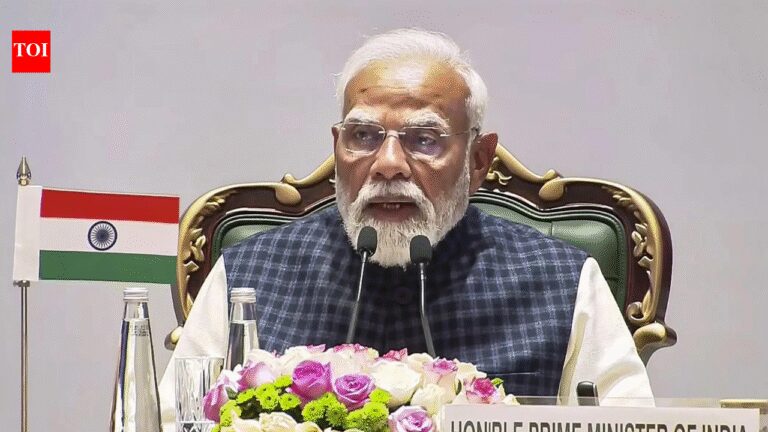
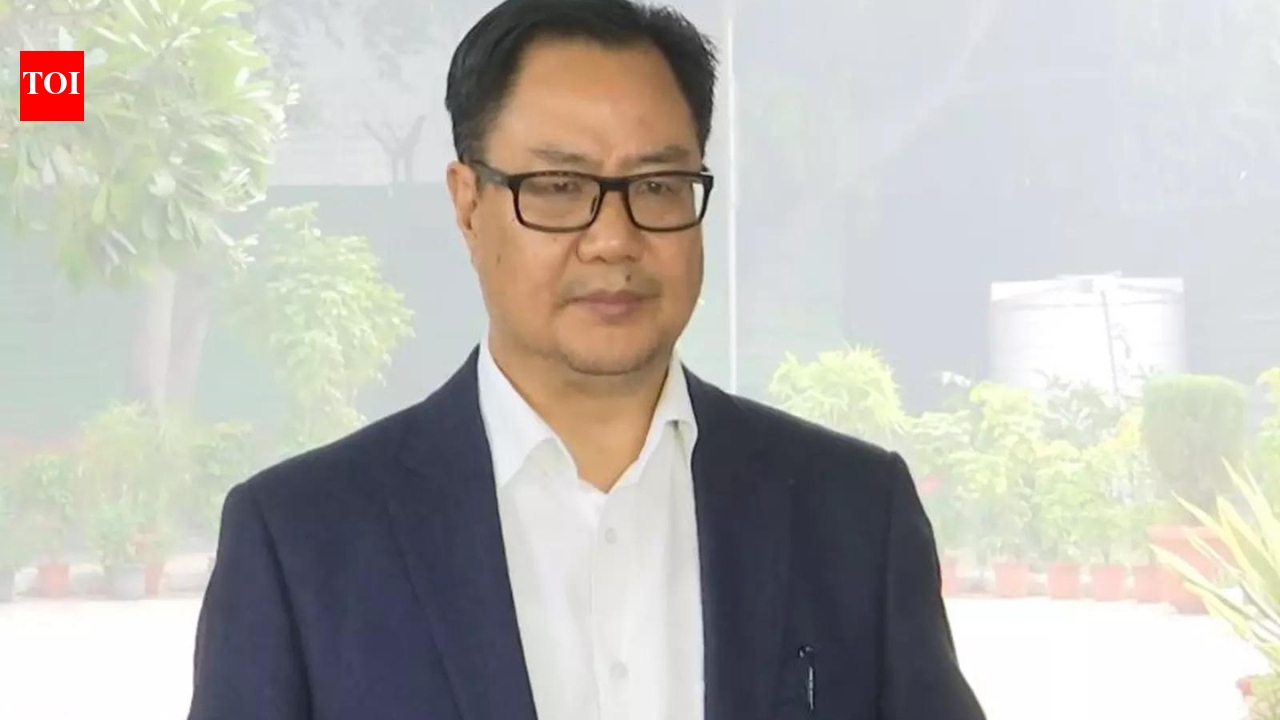
NEW DELHI: Union minister of parliamentary affairs Kiren Rijiju on Tuesday made it clear that the government will not roll back the newly introduced VB–GRAM–G law, stating that the Parliament cannot “reverse gear” on legislation already placed before the nation. The statement comes even as opposition parties pressed for wider debates during the upcoming Budget Session.Rijiju was speaking to reporters after an all-party meeting held ahead of the Budget Session of Parliament. The meeting was chaired by defence minister Rajnath Singh and attended by senior leaders, including Leader of the House in the Rajya Sabha JP Nadda, ministers Arjun Ram Meghwal and L Murugan and floor leaders of various parties.“Once law is before the nation, we have to follow it. We can’t reverse gear and go back to the past. It cannot happen,” he said.Setting the government’s priorities for the session, Rijiju said the focus would remain on budgetary business. “We have noted the suggestions given by floor leaders of various parties. As per the rules, the discussions should revolve around the Budget only,” he said.He said the Budget Session, the first Parliament session of the year, will begin with the President’s address to a joint sitting, followed by the tabling of the Economic Survey on January 29 and presentation of the Union Budget on February 1.“Since this is a Budget Session, the main focus of this session will be on the budget,” Rijiju said, while urging parties to ensure smooth functioning of Parliament.Responding to opposition demands for discussions on multiple issues, including new UGC guidelines, Rijiju said the government was not averse to debate but stressed constitutional responsibilities.“Why should we talk about just one issue? The government is always ready to discuss various issues. However, this is Budget Session, we have to pass the Budget, run the country, serve the people,” he said.The union minister also rejected allegations that the legislative agenda was not shared in advance. “Government business is shared after the President’s address in the first session of the year,” Rijiju said.Emphasising parliamentary conduct, the minister said, “We are elected to raise people’s issues and have freedom of speech, but it is also our duty to listen,” adding that various issues could be raised during the debate on the motion of thanks to the President’s address and during Budget discussions.Opposition parties, however, reiterated their demands for wider debates during the Budget Session, stating that several issues of public importance must be discussed on the floor of Parliament.Speaking after the all-party meeting, Trinamool Congress MP Sagarika Ghose said that her party had strongly pushed for a discussion on the ongoing Special Intensive Revision (SIR) process in West Bengal. She alleged that the manner in which the exercise is being conducted raises serious concerns.“On behalf of the Trinamool Congress and the All India Trinamool Congress, we reiterated in the all-party meeting that the ongoing SIR process in West Bengal must be discussed on the floor of Parliament during the Budget Session,” Ghose said.She further claimed that the exercise lacks transparency and neutrality and flagged large-scale discrepancies. “A so-called ‘logical discrepancy list’ has been prepared, containing the names of around 1.5 crore people, and this too must be debated. More than 130 people have reportedly lost their lives during the SIR exercise, and this issue must also be discussed in Parliament,” she said.Raising broader concerns, Ghose said opposition-ruled states were being unfairly treated. “Funds meant for states, especially opposition-ruled states, cannot be withheld in this manner and must be released. The misuse of central agencies in poll-bound states, including the filing of ED cases, must also be taken up for discussion,” she said.Emphasising the role of the opposition, Ghose added, “Parliament is not a one-way street. The opposition must be given an opportunity to speak, and its voice must be heard. Bills cannot be passed in two or three minutes; they should be sent to committees and sufficient time should be given for proper study.”Indian Union Muslim League (IUML) MP ET Mohammed Basheer also said that key issues needed parliamentary discussion. “Parliament has become a mockery. I have raised several issues, including SIR, that must be discussed during the Budget Session,” he said.Biju Janata Dal (BJD) MP Sasmit Patra said his party would raise multiple concerns during the session. “The first relates to farmers and their welfare, and the second relates to the situation in Odisha,” he said, adding that farmers were under distress, law and order was deteriorating in the state, youth unemployment remained a major concern, and employment opportunities under the new GRAM-G bill were limited.The remarks came amid opposition criticism of the Centre’s proposal to repeal the Mahatma Gandhi National Rural Employment Guarantee Act (MGNREGA) and replace it with the Viksit Bharat Guarantee for Rozgar and Ajeevika Mission (Gramin) (VB–GRAM G) Bill, 2025. The bill, listed in the supplementary business for the session, seeks to expand guaranteed rural employment from 100 to 125 days and align rural development with the government’s Viksit Bharat 2047 vision.
About the Author