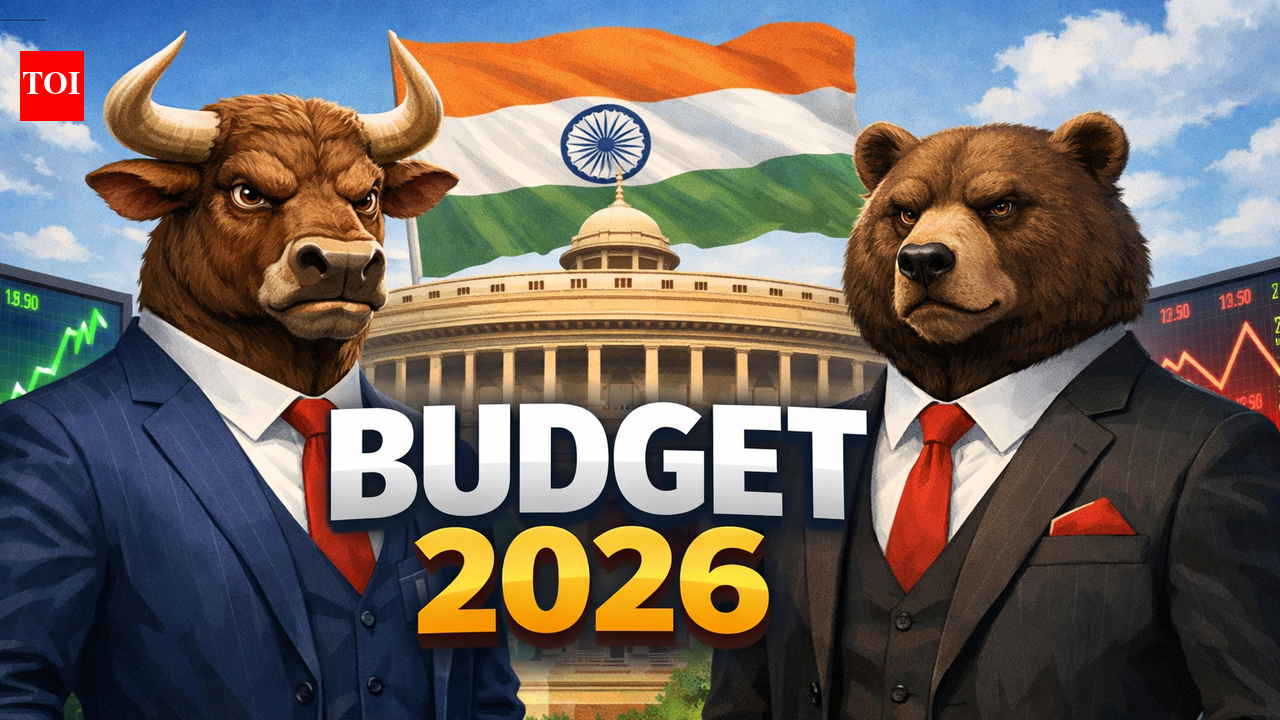
Union Budget 2026–27 is just a day away and investors are seeking clarity on whether stock markets will operate or remain shut. The Budget is scheduled to be presented on February 1, which falls on a Sunday, raising questions over market activity as stock exchanges typically remain closed on weekends.
Will stock market remain closed or open for trading on February 1?
The stock market will remain open for trading on the day of Budget presentation, on February 1. The Bombay Stock Exchange (BSE) and National Stock Exchange (NSE) have each issued circulars confirming that regular trading will take place on Budget day. The exchanges stated that market timings will remain the same as on a normal trading day.According to the notices, the pre-open session will begin at 9 am and conclude at 9:08 am. Equity market trading will follow from 9:15 am to 3:30 pm.The BSE clarified that while major segments including equity, futures and options, and commodity derivatives will function normally, select specialised sessions will not be held. “Trading Members may note that trading in T+0 Settlement Session and Auction Session for settlement default will not be conducted on Sunday, February 01, 2026,” the exchange said.Trading on Sunday is a rare occurrence for Dalal Street, as both NSE and BSE are closed on weekends and designated public holidays. February 1 will therefore stand out as one of the rare working Sundays in recent times. It will also mark the first occasion since 2000 that the Union Budget is being presented on a Sunday.
Segments in operation
Core trading segments will remain open throughout standard market hours on Budget day. However, the BSE has confirmed that the T+0 settlement session and the auction session for settlement defaults will remain suspended. The NSE has similarly announced normal operations for capital markets and derivatives.
Holiday schedule for Dalal Street
The decision to open markets on February 1 does not alter the stock exchanges’ holiday calendar for 2026. Apart from weekends, markets will observe 16 public holidays during the year.In the first half of the year, markets will be shut on Holi (March 3), Ram Navami (March 26), Mahavir Jayanti (March 31) and Good Friday (April 3). Additional holidays include Ambedkar Jayanti (April 14), Maharashtra Day (May 1) and Bakri Id (May 28).Trading will also remain suspended in the latter half of the year on Muharram (June 26), Ganesh Chaturthi (September 14), Gandhi Jayanti (October 2), Dussehra (October 20), Diwali Balipratipada (November 10) and Guru Nanak Jayanti (November 24). Christmas on December 25 will be the final market holiday of 2026.
About the Author