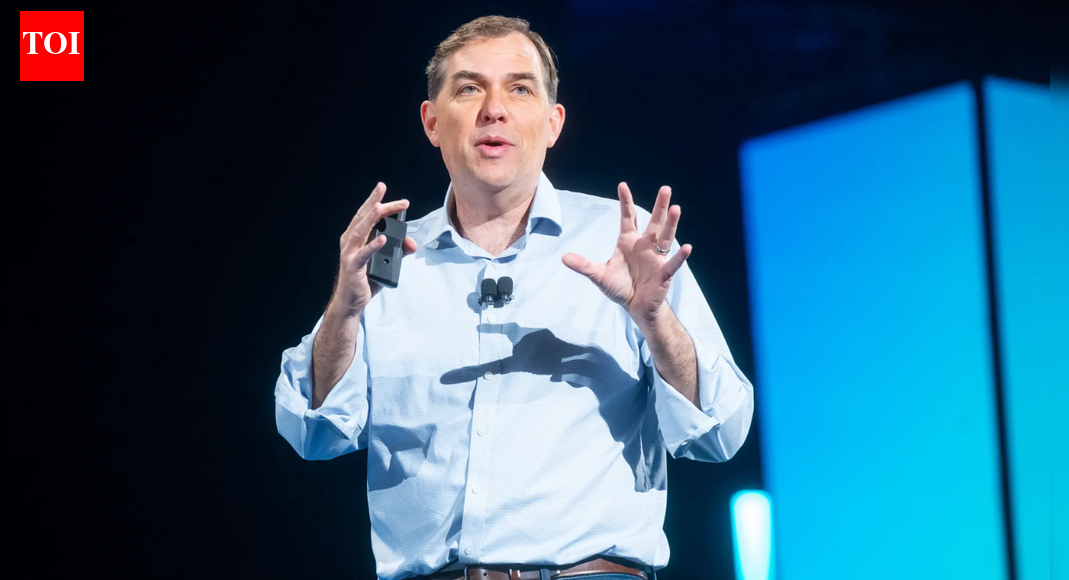

Amazon Web Services CEO Matt Garman is drawing a clear line on artificial intelligence’s role in the workplace: the technology amplifies human capability rather than eliminating jobs outright.In an interview with Wired before AWS’s re:Invent conference in Las Vegas, Garman emphasized that AI agents work best as productivity tools, not workforce substitutes. The technology proves most valuable when handling tasks that employees already know how to execute, he said, allowing teams to work faster without fundamentally replacing human judgment.“Agents are most effective when you ask them to do things that you actually know how to do yourself,” Garman explained to Wired. “So these are not replacements for people. They are ways to make people more effective at their jobs.”
Amazon sees dramatic efficiency gains from AI implementation
The efficiency gains Garman describes aren’t theoretical. One AWS team recently rewrote an internal codebase with just six people in 71 days—work originally scoped for 30 employees over 18 months. These results emerge as Amazon pours resources into AI infrastructure, having added 3.8 gigawatts of capacity in the past year alone. The company recently announced up to $50 billion in planned investments for AI data centers serving U.S. government customers.Yet Garman’s framing sits uneasily alongside Amazon’s recent workforce reductions. The company cut approximately 14,000 corporate positions in October—4% of its corporate workforce—with Reuters reporting potential total cuts reaching 30,000 jobs. Though CEO Andy Jassy later told investors the layoffs were “culture” driven rather than AI-motivated, internal communications told a different story. Amazon’s HR leadership explicitly cited AI as “the most transformative technology we’ve seen since the Internet,” requiring organizations to become “more leanly” structured.
Over 1,000 employees challenge company’s AI strategy
The disconnect hasn’t gone unnoticed internally. More than 1,000 Amazon employees signed an open letter last week warning that the company’s “aggressive” AI rollout threatens democracy, employment, and climate goals. The petition noted Amazon’s carbon emissions have climbed since 2019 despite its 2040 net-zero commitment, pointing to AI infrastructure’s environmental costs.Amazon disputes abandoning its climate pledges, highlighting investments in nuclear energy and 600-plus renewable projects globally. Meanwhile, AWS posted strong third-quarter growth—up 20% year-over-year to $33 billion—though rivals Microsoft Azure and Google Cloud continue capturing market share with higher growth rates in the AI era.
About the Author