

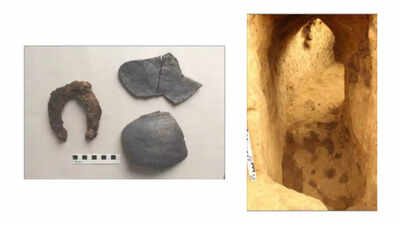
Archaeologists in the German state of Saxony-Anhalt have uncovered an unusual underground tunnel inside a much older prehistoric burial site near the village of Reinstedt. The discovery was made during routine excavations carried out before the construction of wind turbines. The area was already known for its Neolithic and Bronze Age remains, but the tunnel came as an unexpected addition. At first, it appeared to be a simple pit in the soil. As digging continued, it became clear that the feature belonged to a much later period, likely the late Middle Ages. Its position inside an ancient burial landscape has drawn attention, raising quiet questions about how people in different eras reused places shaped long before their time. Mentioned in a press release.
Medieval tunnels found inside 6000-year-old Neolithic site in Germany
Archaeologists working in Saxony-Anhalt have uncovered an unexpected underground structure inside a much older prehistoric burial site near the village of Reinstedt in the Harz district. The discovery was made during routine excavations carried out ahead of a planned wind energy project. What first appeared to be a simple feature in the soil slowly revealed something more complex, cutting across layers of history already known at the site.
A landscape shaped by thousands of years of burial activity
The location had long been recognised as archaeologically significant. A large trapezoid-shaped ditch from the Baalberg culture, dating to the fourth millennium BC, dominates the area. Nearby were traces of poorly preserved burials from the third millennium BC and remains that may belong to a Bronze Age burial mound dating to around the second millennium BC. The site had been used, reused, and reshaped over thousands of years.
A pit that did not behave like a grave
While examining the southern section of the Neolithic ditch, researchers noticed a long oval pit slicing across it at a near right angle. At first glance, it resembled a grave. But as excavation continued, the feature extended deeper into the loess soil without coming to an expected end. The fill contained late mediaeval pottery, loose stones, and small hollow spaces. The context no longer fit a burial.
Erdstall tunnel points to medieval activity
What emerged instead was an Erdstall, a narrow underground tunnel system dug by hand into firm soils. These structures are known from parts of central Europe and are usually dated to the late Middle Ages. Their purpose remains unclear. Some are thought to have served as hiding places, others as spaces with symbolic or ritual meaning.
Artefacts and animal remains inside the passage
At Reinstedt, the tunnel curves gently toward the northwest. Inside, archaeologists found a horseshoe, the skeleton of a fox, and numerous bones from small animals. At the lowest level lay a thin layer of charcoal. The soil beneath showed no signs of prolonged heat, suggesting a short-lived fire rather than sustained use.
Signs the tunnel entrance was deliberately sealed
The passage itself is cramped, barely a metre high in places and no wider than 70 centimetres. A stack of stones at the entrance may indicate it was deliberately sealed. A carved step and a small niche in the wall hint at careful planning rather than hurried digging.
Why a medieval tunnel was built inside a Neolithic grave site
Why it was built here remains open. The prehistoric ditch may have still been visible in the medieval landscape, making the spot easy to locate. Or the ancient burial ground, possibly avoided by local people, may have offered the privacy needed for a hidden place. The tunnel keeps its silence.
About the Author